A Multispecies Systematic and Critical Review of Intranasal Administration in Veterinary Anaesthesia and Emergency Care: Promising Evidence and Overlooked Challenges.
Intranasal (IN) drug delivery has increasingly considered as an easy, practical and non-invasive alternative to parenteral administration in veterinary medicine, offering rapid systemic and potential nose-to-brain effects. The first part of this review systematically collected and synthesized published evidence on IN administration across animal species, while the second part critically analysed the anatomical, pharmacological and technical factors that determine its success and limitations. Part I consisted a total of 110 eligible studies published between 1991 and 2025, encompassing dogs, cats, rabbits, pigs, ruminants, birds and reptiles. IN delivery has been investigated for a range of purposes and produced clinically meaningful sedation, analgesia and drug reversal, often comparable to intramuscular administration but generally characterized by slower onset and greater variability among species. Despite encouraging and favourable results, IN delivery was not without limitations. Its effectiveness can be strongly influenced by species-specific nasal anatomy and physiology, formulation characteristics and dosing volume. Defensive reactions, poor tolerability, sneezing, nasopharyngeal irritations, hypersalivation or swallowing of the drug are frequently reported. Future progress requires species-specific case selection guidelines and dosing standards, pharmacokinetic validation and developing safe concentrated formulations. Transparent reporting and balanced assessment of both benefits and drawbacks are essential to ensure the safe, effective and ethically responsible integration of IN administration into veterinary anaesthesia and critical care practice.
Introduction
Intranasal (IN) drug delivery has gained increasing attention in veterinary medicine as a convenient and non‐invasive alternative to parenteral administration (Araghi et al.2016; Lin et al.2024; Marjani et al.2015). The thin, highly vascularized nasal epithelium provides a large absorptive surface that facilitates the rapid uptake of lipophilic, low‐molecular‐weight compounds while bypassing gastrointestinal degradation and hepatic first‐pass metabolism (Bustamante et al.2024; Micieli, Santangelo, Reynaud, et al.2017). In addition, direct ‘nose‐to‐brain’ transport via the olfactory and trigeminal nerves, as well as through cerebrospinal fluid pathways, can partially circumvent the blood–brain barrier (Jafarbeglou and Marjani2019; López‐Ramis et al.2022). These mechanisms are particularly advantageous for centrally acting agents and have generated growing interest in IN administration, especially in situations where intravenous (IV) access or intramuscular (IM) injection is impractical, stressful or unsafe (Charalambous et al.2019; Hommuang et al.2022; Santangelo et al.2019). Reported applications include sedation and chemical restraint, anaesthetic induction, analgesia and pain management and emergency interventions such as seizure control, reversal of accidental exposure or overdose, anaphylaxis and cardiopulmonary resuscitation.
Despite encouraging results across species and drug classes, IN delivery is not without limitations. Absorption may be affected by dosing volume, formulation and interspecies or interindividual variability (Rabelo et al.2024; Schnellbacher et al.2012). Our own decade‐long clinical experience with this route in veterinary patients suggests that IN delivery is not free from complications, a perspective echoed in multiple studies. Defensive reactions, poor tolerability, sneezing, nasopharyngeal irritations, hypersalivation or swallowing of the drug are frequently reported, potentially reducing drug bioavailability and clinical efficacy (Breitenlechner et al.2024; Bustamante et al.2024; Jafarbeglou, Marjani, Bakhshi‐Khanghah, et al.2024; Santangelo, Micieli, Mozzillo, et al.2016; Vlerick et al.2020).
To the author's knowledge, although several reviews exist in human medicine, no comprehensive review has yet addressed IN drug delivery in veterinary medicine. Therefore, the objective of Part I of this review is to systematically collect, organize and synthesize the scattered but steadily expanding evidence on IN administration across different animal species. Part II aims to critically evaluate the techniques used, and to explore whether, alongside its promising potential, there remain underexplored or overlooked limitations or ‘blind spots’ that could constrain the safe, consistent and reliable adoption of IN delivery in veterinary anaesthesia and critical care.
Search Strategy and Data Extraction
A comprehensive literature search was conducted in Google Scholar, PubMed, Scopus and ResearchGate up to 16 September 2025. The search strategy combined controlled vocabulary (e.g., MeSH terms) and free‐text keywords related to IN administration and veterinary applications. Search terms included ‘intranasal’, ‘nasal’, ‘transnasal’, ‘veterinary’, ‘sedation’, ‘analgesia’ ‘anesthesia’ and specific drug names combined with species names. Articles about IN administration in veterinary species reporting outcomes relevant to anaesthesia or emergency care were included. The search was supplemented by manual screening of the reference lists and citation networks of eligible articles to identify additional relevant publications not captured by database searches.
Exclusion criteria were non‐English publications without reliable translation, lack of full‐text access, studies on CNS‐acting drugs unrelated to veterinary anaesthesia or critical care (e.g., oxytocin), non‐CNS‐acting drugs (e.g., vaccines, antibiotics) and studies limited to local effects (e.g., decongestants, local anaesthetics). In addition, two publications on dogs and rabbits by the same authors from journals listed in Beall's list of potential predatory journals (beallslist.net/standalone‐journals) were excluded. Most rodent studies were conducted purely as experimental pharmaceutical models without translational relevance to veterinary anaesthesia or emergency medicine, and therefore omitted. Two Portuguese articles from Brazil with English abstract, as well as some shorter publications (case reports, conference abstracts and letters to the editor), were included because they contained valuable information.
The final dataset included 110 eligible studies, published between 1991 and 2025, covering a wide range of species including dogs, cats, rabbits, birds, ruminants and reptiles. Flow diagram showing inclusion of studies is shown in Figure1. For each included study, data were extracted using a standardized template capturing: bibliographic information, species, sample size, drug(s), dosage, method of IN delivery, outcomes and reported adverse reactions, as summarized in Tables1,2,3,4,5,6,7.
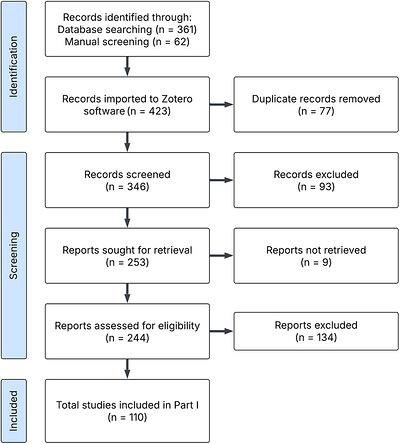
Flow diagram showing the process of identification, screening, eligibility assessment and inclusion of studies in the systematic review.
Table: Summary of published studies on intranasal administration in dogs.
Table: Summary of published studies on intranasal administration in felines.
Table: Summary of published studies on intranasal administration in pigs.
Table: Summary of published studies on intranasal administration in domestic and wild ruminants.
Table: Summary of published studies on intranasal administration in rabbits, rats and mice.
Table: Summary of published studies on intranasal administration in birds.
Table: Summary of published studies on intranasal administration in reptiles.
To ensure consistent classification, studies were categorized using predefined criteria rather than studies’ self‐labelling. Trials were considered clinical if conducted in routine practice; otherwise, they were deemed experimental. Experimental studies were defined as crossover if a washout period were explicitly reported. Studies were classified as randomized if the method used to generate the allocation sequence was clearly described. They were considered blinded if blinding procedures were explicitly stated and the individuals aware of group allocation at different stages were clearly identified: single‐blinded (outcome evaluators), double‐blinded (evaluators and treatment providers) or triple‐blinded (evaluators, providers and statisticians). Sample size was considered appropriately calculated only when sufficient methodological detail and valid assumptions were reported.
Formal methodological quality assessment and risk of bias analysis were not performed, as these were beyond the scope of the current review. Consequently, included studies may carry variable methodological and reporting biases. Readers are therefore encouraged to critically appraise individual studies before extrapolating their findings to research or clinical practice.
Part I: IN Administration in Animal Species
Dogs
IN administration of sedatives, analgesics and emergency drugs has been extensively studied in dogs (Table1). Among these, dexmedetomidine and medetomidine are the most frequently studied agents. Their IN administration generally produces sedation comparable to IM route, while being easier to perform and, in some studies, associated with reduced bradycardia and cardiovascular depression (Jafarbeglou and Marjani2019; Lin et al.2024; López‐Ramis et al.2022; Micieli, Santangelo, Reynaud, et al.2017; Santangelo et al.2019). Addition of ketamine or methadone deepens sedation; whereas co‐administration with midazolam has yielded variable results, including occasional paradoxical excitement (Bustamante et al.2024; Jafarbeglou, Marjani, Bakhshi‐Khanghah, et al.2024). Opioids such as buprenorphine and tramadol delivered IN reach therapeutically useful levels and provide clinical analgesia despite lower plasma concentrations versus IV (Di Salvo et al.2020; Enomoto et al.2022).
IN delivery is also valuable in emergencies: commercial IN naloxone is rapidly absorbed and effective for opioid reversal (Barr et al.2023; Essler et al.2019; Wahler et al.2019), while IN atipamezole reliably antagonizes α2 adrenergic agonists’ sedation (Focken et al.2024; Jafarbeglou, Marjani, Oghbaei, et al.2024). IN apomorphine provides a practical emetic option when IV is not feasible (Manley et al.2024). For seizure management, IN diazepam and midazolam rapidly achieve anticonvulsant concentrations, offering effective and often superior seizure control compared with rectal administration (Charalambous et al.2019, Charalambous et al.2017; Eagleson et al.2012; Musulin et al.2011; Platt et al.2000). Earlier animal‐model research demonstrated rapid nasal absorption of benzodiazepines with high cerebrospinal fluid exposure (Henry et al.1998; Lui et al.1991). Recent investigations have extended IN applications to cannabidiol and levetiracetam (Polidoro et al.2022; Wagner2024). Finally, several animal‐model studies show IN epinephrine achieves rapid absorption comparable to IM/IV during cardiopulmonary resuscitation or anaphylaxis (Bleske et al.1992; Dretchen et al.2020a,2020b; Sparapani et al.2023; Tuttle et al.2020).
Felines
In cats (Table2), medetomidine (Kaya and Yanmaz2025), dexmedetomidine alone (Hommuang et al.2022; Liu et al.2025) or with opioids (Hommuang et al.2023) and dissociative‐benzodiazepine combinations (Marjani et al.2015; Yanmaz, Doğan, Ersöz, et al.2017, Yanmaz, Doğan, Okumuş, et al.2017, Yanmaz et al.2016) were well tolerated and produced effective sedation. Sedation onset was slower than IM but of comparable quality.
Pigs
In adult or weaned pigs (Table3), azaperone alone or with midazolam or ketamine provided sedation broadly comparable to IM, though high volumes often led to swallowing (Rabelo et al.2024; Svoboda et al.2023). While alfaxalone produced only mild and insufficient sedation (Hampton et al.2021), midazolam reported to be effective for sedation/anxiolysis (Lacoste et al.2000). On other hand, for piglet castration anaesthesia, azaperone‐based protocols were generally unsatisfactory (Axiak et al.2007; Becker et al.2021; Breitenlechner et al.2024).
Ruminants
Data for domestic and wildlife ruminants are shown in Table4. In neonatal calves and adult sheep detomidine provided clinically relevant sedation, whereas xylazine in calves was less consistent and often unreliable (Cinar et al.2025; Ede et al.2019; Tahmasbi et al.2023). Field studies investigating IN xylazine and medetomidine in Cervidae have demonstrated rapid, predictable sedation, with improved stress markers compared to controls following net gun capture (Cattet et al.2004; Mathieu et al.2022). In addition, IN naltrexone‐atipamezole has been shown to effectively reverse medetomidine‐carfentanil immobilization (Shury et al.2010).
Small Mammals
In rabbits (Table5), dexmedetomidine (0.1 mg/kg) or its equipotent doses of medetomidine (0.2 mg/kg), ketamine (10–20 mg/kg), butorphanol (0.2–0.5 mg/kg) and midazolam (2 mg/kg) are the most frequent used drugs in combination (Cinar et al.2024; Cinar and Yanmaz2024; Degerfeld et al.2023; Okur et al.2023; Santangelo, Micieli, Mozzillo, et al.2016; Santangelo, Micieli, Marino, et al.2016; Yanmaz et al.2022). While medetomidine alone produces dose‐dependent sedation (Wei, Chen, et al.2023), alfaxalone was clinically ineffective (Wei, Nakagawa, et al.2023). An early report, available only in abstract form, noted that IN fentanyl/droperidol caused severe adverse effects and high mortality, and its use is not recommended (Robertson and Eberhart1994). IN midazolam is also described in exotic species such as hedgehogs and sugar gliders (Doss and De Miguel Garcia2022). For rodents, although most studies derive from pharmaceutical models, selected reports with clinical relevance (as identified by the author) are summarized in Table5.
Birds
IN sedation in birds shows highly variable efficacy across species, drugs and doses (Table6). Across a wide range of taxa, midazolam generally provides short‐acting, reversible sedation suitable for handling or minor procedures. In contrast, α2 adrenergic agonists are less predictable and often impractical due to slow onset and residual sedative effects (Altundag et al.2021; Araghi et al.2016; Net et al.2019; Vesal and Eskandari2006; Vesal and Zare2006). Combining midazolam or diazepam with opioids or ketamine can enhance sedation depth and reliability (Doss et al.2018; Raisi et al.2016). Reversal agents are also effective: flumazenil rapidly antagonizes benzodiazepines (Hawkins et al.2025; Mans et al.2012), and yohimbine or atipamezole can reverse α2 adrenergic agonists (Hornak et al.2015; Vesal and Eskandari2006).
Despite abundant evidence, many avian reports remain poorly documented or appear only as personal observations in guidelines. For instance, one author reported that, combining midazolam (2 mg/kg) with butorphanol (0.5–2.0 mg/kg, IM or IN) deepens sedation in Galliformes but increases cardiopulmonary depression (Heard2025). At a Raptor Centre, IN midazolam in bald eagles (Haliaeetus leucocephalus) and other raptors produced inconsistent effects compared with IM (Willette et al.2025). A personal observation reported mild‐to‐moderate sedation with IN midazolam in little blue and Fiordland penguins (Bodley and Schmitt2025), and its use has been reported in a yellow‐collared macaw (Primolius auricollis, Coutant et al.2018).
Reptiles
In reptiles (Table7), IN midazolam generally failed to produce adequate sedation, often causing only mild effects or adverse reactions such as oral discharge (Emery et al.2014; Sarri et al.2025; Schnellbacher et al.2012). Dexmedetomidine alone was ineffective (Emery et al.2014), and ketamine alone has not been evaluated. However, dexmedetomidine and ketamine combinations produced clinically useful sedation in terrapins, reversible with atipamezole, whereas no significant effect was observed in tortoises (Cermakova et al.2018; Knotek and Cermakova2014; Schnellbacher et al.2012).
Part II: IN Delivery Techniques and Practical Challenges
The main factors influencing IN drug delivery, associated challenges and adverse events are summarized in Figure2, which illustrates their interrelationships and potential impact on absorption and tolerability. The following sections discuss these factors in detail.
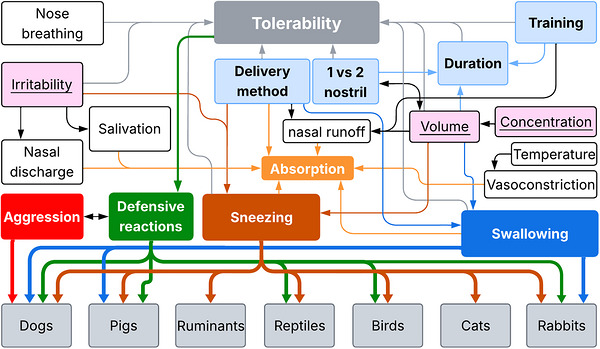
Conceptual summary illustrating factors that influence intranasal drug delivery, their interrelationships and their potential impact on absorption and tolerability. Factors related to the administration technique are shown in light blue rectangles with bold black font, those related to the drug or formulation are shown in pink rectangles with underlined black font, and other factors, including physiological and environmental variables, are shown in white rectangles with black font. The direction of the arrows indicates the influence of the starting rectangle on the ending rectangle (positive or negative effect). Major factors and commonly reported adverse reactions are emphasized with full coloured rectangles and bold white font. Representative adverse events and the species in which they were reported are noted at the bottom of the figure.
Interspecies Anatomical and Physiological Differences
A frequently overlooked factor influencing IN administration over species is the anatomical evolution of the nasal cavity. Mammals generally possess more complex nasal and concha structures than birds (Xi et al.2023), whereas many reptiles have simplified anatomy or lack conchae entirely (Martinez et al.2024). Greater concha complexity increases absorptive surface area (Gizurarson2012,1990), which may explain the higher efficacy of IN delivery in mammals and birds compared with reptiles.
On the other hand, the olfactory epithelium has been proposed as a potential route for direct brain delivery in animals (Bustamante et al.2024; Micieli, Santangelo, Reynaud, et al.2017; Wei, Nakagawa, et al.2023). However, in macrosmatic species with highly developed concha systems such as dogs, rabbits and rats (Xi et al.2023), access to the olfactory region located deep within the ethmoidal conchae is limited (Gizurarson2012,1990; Wei et al.2022). In rabbits and rats, drugs appear to reach the brain primarily through systemic absorption rather than direct nasal‐to‐brain transport (Kaur and Kim2008), with little or no deposition on the nasal conchae (Wei et al.2022). Therefore, while complex concha anatomy may enhance systemic absorption, it can also hinder direct nose‐to‐brain delivery compared with primates (Gizurarson2012,1990).
Species‐specific respiratory physiology is another critical consideration. In contrast to humans and dogs which can alternate between nasal and oral respiration; mammalian neonates and adults in other species such as cats, rabbits, rodents, equids, suids, camelids, ruminants, chelonians and birds exhibit anatomical and physiological adaptations that render them obligate or near‐obligate (preferential) nasal breathers (Fröhlich2024; Kerr and Teixeira‐Neto2024; Mazan2022; Trabalon and Schaal2012; West et al.2025). In these animals, IN administration, particularly when large volumes are delivered bilaterally, may cause significant distress and potentially compromise airway patency (Santangelo, Micieli, Marino, et al.2016). In one rabbit study, two animals died after IN dosing in dorsal recumbency; although the exact cause was undetermined, the potential role of airway obstruction cannot be excluded (Weiland et al.2017).
Delivery Method
Three main techniques are reported for IN administration (Table8): (1) the IN drops (IND) technique (2) IN atomization (INA) and (3) IN catheterization (INC).
Table: Comparison of three intranasal administration methods: Intranasal atomization (INA), intranasal drops (IND) and intranasal catheterization (INC).
Intranasal Drops (IND)
This method uses a pipette or needleless syringe to deliver drops directly into the nostrils (Musulin et al.2011; Vesal and Zare2006). It is simple, inexpensive and feasible in small species. However, IND is often associated with slower onset and weaker efficacy, probably due to higher caudal runoff (Jafarbeglou, Marjani, Oghbaei, et al.2024; Jafarbeglou and Marjani2019).
Intranasal Atomization (INA)
INA uses mucosal atomizers, also known as sprays, to create a fine mist (30–100 µm). The aerosol increases mucosal surface contact, improves distribution and promotes faster absorption while reducing caudal runoff compared with IND (Musulin et al.2011; Wagner2024). Some studies report faster onset or higher cerebrospinal fluid to plasma concentration ratios with INA (Henry et al.1998; Jafarbeglou and Marjani2019), whereas others find no clear advantage over IND (Ede et al.2019; Musulin et al.2011). Similarly, although atomizers are sometimes claimed to improve animal comfort (Musulin et al.2011), other studies have found no significant difference in ease of administration, as assessed by animal resistance scales (Jafarbeglou and Marjani2019; López‐Ramis et al.2022). A potential limitation of INA is the noise from spraying (Jafarbeglou et al.2018), which may cause stress in certain animals.
MAD Nasal Atomizer: Advantages and Disadvantages
Most veterinary studies have used the MAD Nasal (mucosal atomization device; Teleflex Medical), originally developed for humans (Charalambous et al.2019; Degerfeld et al.2023; Lin et al.2024; Svoboda et al.2023). According to the manufacturer, correct use in humans requires directing the nozzle toward the conchae and olfactory mucosa, with the soft conical plug fitting snugly in the nostril to prevent drug expulsion (MAD Nasal Device Procedure Guide2025). A cadaveric study suggested that correct insertion and alignment toward the conchae are also critical in mesocephalic dogs. The nozzle should pass medially beyond the alar fold, then align parallel to the rostral surface of the nasal bone and nasal septum for optimal delivery to the nasal and ethmoidal conchae (Jafarbeglou et al.2018). In practice, this corresponds approximately to the direction of the ipsilateral eye (author's note, Figure3). However, as discussed earlier, effectively targeting the ethmoidal conchae in macrosmatic animals is nearly impossible (Gizurarson2012,1990).
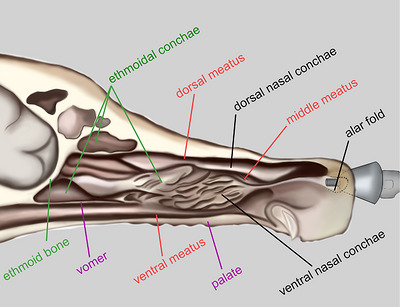
Schematic illustration showing the positioning of the MAD Nasal atomization device in a sagittal section of a mesocephalic large‐breed dog's head (nasal septum removed), emphasizing the importance of correct atomization angle. The nozzle should first be advanced medially beyond the alar fold and then oriented parallel to the rostral surface of the nasal bone, directed toward the ipsilateral eye, which is not visible in this view. The canine nasal cavity contains highly complex conchae that, while increasing the absorptive surface area, may restrict effective clearance and limit spray penetration into caudal regions. As a result, the ethmoidal conchae are unlikely to be reached, and deposition occurs primarily in the rostral nasal cavity. This schematic adapted and redrawn from Jafarbeglou et al. (2018).
An absent discussed aspect in veterinary reports is that spray formation follows fluid dynamic principles. In summary, after leaving the nozzle, the liquid exits as a coherent jet until the breakup length, where it fragments into droplets that expand into a cone‐shaped spray area (Figure4). The spray angle and cone diameter determine dispersion and deposition efficiency, and the clearance needed for proper spray formation (Morita et al.2025; Shrestha et al.2023). If the nasal cavity is narrower than the spray cone diameter or lacks clearance, atomization fails and the liquid reverts to jets or drips. A supplemental video demonstrated that MAD Nasal produces a wide cone and short breakup length, requiring adequate space both in length and diameter (Jafarbeglou et al.2018). These engineering requirements limit its use in species with narrow nasal passages such as cats, rabbits, brachycephalic and small‐breed dogs (Gizurarson1990). Even in larger‐breed dogs, the high complexity of the nasal conchae may restrict effective clearance.
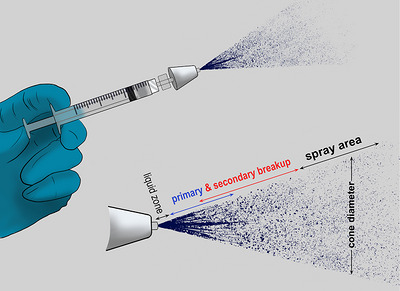
Schematic illustration of spray formation of the MAD Nasal atomization device. After exiting the nozzle, the liquid forms a jet that breaks into fine droplets at the breakup distance. The cone width and breakup length influence distribution and deposition of the drug. MAD Nasal produces a wide spray cone and a short breakup length, which requires sufficient intranasal clearance in both length and diameter. This schematic adapted and redrawn from Jafarbeglou et al. (2018).
Brachycephalic dogs pose particular challenges due to shortened nasal passages and irregular nostrils, reducing IN efficiency compared with mesocephalic or dolichocephalic breeds (Ekenstedt et al.2020; Gizurarson1990). Successful application often requires holding the muzzle to secure the plug (Jafarbeglou, Marjani, Bakhshi‐Khanghah, et al.2024; Lin et al.2024), and poor fit is reported for small nostrils of some dogs (Charalambous et al.2017). Consequently, many studies excluded small or brachycephalic dogs or limited experiments to mesocephalic breeds (Bustamante et al.2024; Focken et al.2024; Jafarbeglou, Marjani, Oghbaei, et al.2024; Jafarbeglou, Marjani, Bakhshi‐Khanghah, et al.2024; López‐Ramis et al.2022).
In cats and rabbits, the challenge may be even greater. The device plug is substantially larger than their nostrils, making correct placement impossible. In a rabbit study, the 4.3 mm nozzle (MAD Nasal Device Procedure Guide2025) had to be used without the plug, which caused expulsion and nasal runoff (Wei et al.2022). Contrast medium in that study drained primarily into the ventral nasal meatus and pharynx (Wei et al.2022), indicating a shift from atomization to dripping (Jafarbeglou et al.2018). The manufacturer explicitly cautions that such dripping negates the benefits of atomization (MAD Nasal Device Procedure Guide2025).
Clinically, these anatomical and engineering limitations explain why MAD Nasal often shows slower and weaker effects in cats and rabbits compared with IM injection (Degerfeld et al.2023; Kaya and Yanmaz2025), comparable to what reported for IND in dogs (Jafarbeglou, Marjani, Oghbaei, et al.2024; Jafarbeglou and Marjani2019). Thus, for small species, MAD Nasal may not offer significant advantages over the simpler, less costly IND technique. A clear understanding of spray dynamics and species‐specific nasal anatomy is therefore essential when adapting human‐designed atomizers for veterinary use.
Other Reported Atomizers
Although MAD Nasal is the most common device, several alternatives have been used. A study employed a Wuxi NEST nasal atomizer (Liu et al.2025), which has a similar design. Commercial single‐dose human sprays such as Narcan (Adapt Pharma; naloxone 4 mg, Barr et al.2023; Essler et al.2019; Wahler et al.2019) and Neffy (ARS Pharma; epinephrine 1 mg, Sparapani et al.2023), have also been used. Other studies described metered‐dose atomizers (Axiak et al.2007; Henry et al.1998). In two studies conducted on caribou and pigs, the MADgic laryngo‐tracheal atomization device (Teleflex Medical) was applied, functioning as a hybrid between INA and INC (Mathieu et al.2022; Wiloch et al.2024).
Intranasal Catheterization (INC)
This method has been evaluated in rabbits (Freitag et al.2022; Santangelo, Micieli, Marino, et al.2016; Santangelo, Micieli, Mozzillo, et al.2016; Weiland et al.2017), cats (Yanmaz, Doğan, Okumuş, et al.2017) and birds (Altundag et al.2021; Net et al.2019; Schaffer et al.2017, Schaffer et al.2016; Sha et al.2022). Although it may reduce rostral runoff, advancing a foreign object into the nasal cavity can be highly uncomfortable and may trigger sneeze reflex (Dias et al.2020; Songu and Cingi2009). Furthermore, catheter should be advance into the ventral meatus toward nasopharynx (Freitag et al.2022; Weiland et al.2017), which can increase the risk of swallowing. Adverse outcomes have also been documented: in one rabbit study, mucosal trauma, bleeding and two deaths occurred, although the exact cause was not definitively established (Weiland et al.2017).
Swallowing, Nasal Runoff and Drug Loss
Among the factors influencing IN delivery, the administered volume is particularly critical (Bustamante et al.2024; Hampton et al.2021; Sha et al.2022). Using low‐concentration formulations or diluting drugs for blinding purposes increases total volume. In some studies, the total volume exceeded the nasal cavity's capacity for a single administration, necessitating divided and repeated dosing (Wei, Chen, et al.2023;[Wei, Nakagawa, et al](#ref-Wei, Nakagawa, et al).2023). The nasal cavity has limited retention capacity; when this threshold is exceeded, rostral or caudal runoff occurs, resulting in drug loss and reduced efficacy (Becker et al.2021; Gao et al.2020; Wei et al.2022).
Swallowing is one of the most frequent adverse effects, reported in dogs (Bustamante et al.2024; Jafarbeglou, Marjani, Bakhshi‐Khanghah, et al.2024; López‐Ramis et al.2022; Santangelo et al.2019), pigs (Hampton et al.2021; Rabelo et al.2024) and rabbits (Santangelo, Micieli, Mozzillo, et al.2016; Weiland et al.2017), even in studies employing atomizers intended to minimize this problem. In dogs, swallowing occurred at volumes as low as 0.01 mL/kg per nostril (López‐Ramis et al.2022), while several studies used volumes up to 0.04 mL/kg per nostril (Bustamante et al.2024; Jafarbeglou, Marjani, Bakhshi‐Khanghah, et al.2024; Jafarbeglou and Marjani2019).
In pigs, administered volumes were substantially higher. For example, in a study combining azaperone, midazolam and ketamine, the total IN volume reached approximately 21 mL per animal (∼10 mL per nostril; ≈ 0.1 mL/kg). Audible gurgling sounds captured in the supplemental video confirms extensive runoff and swallowing (Rabelo et al.2024). In another report on suckling piglets, an even higher total volume of 1.24 mL/kg (0.62 mL/kg per nostril) was described (Becker et al.2021). By contrast, studies administering flunixin meglumine (2.2 mg/kg, 0.44 mL/kg), did not report swallowing (Lopez‐Soriano et al.2023; Wiloch et al.2024).
Concentrated formulations designed for IN use reduce required volume and improve retention. For example, Narcan delivers 4 mg naloxone in 0.1 mL (Essler et al.2019), about 400 times more concentrated than standard injectable ampoules, which would require ∼10 mL to achieve the same dose (Wahler et al.2019).
In the absence of nasal‐specific products, wildlife formulations may offer practical off‐label alternatives. These preparations are designed to achieve therapeutic effects with minimal volumes suitable for dart injection. The author has successfully used such concentrated wildlife formulations without complications. For instance, midazolam 50 mg/mL (≈ 10× standard concentration) was used in a ∼25‐kg dog for the management of status epilepticus, effectively reducing the required IN volume from 1.0 mL to 0.1 mL for a 0.2 mg/kg dose. Similar anecdotal use of concentrated wildlife‐formulated midazolam has been reported in hedgehogs (Doss and De Miguel Garcia2022). To the best of the author's knowledge, concentrated wildlife formulations of other commonly used anaesthetic and sedative agents, such as ketamine, medetomidine, butorphanol, xylazine and atipamezole, are also commercially available. Nevertheless, further studies are warranted to confirm the safety of such preparations before widespread adoption.
Another approach to minimize swallowing is to divide the dose between both nostrils, thereby reducing per‐side volume and increasing the absorptive surface area (Gao et al.2020). However, single‐nostril administration is faster, requires less restraint, may cause less distress and is often better tolerated (Jafarbeglou, Marjani, Bakhshi‐Khanghah, et al.2024; Jafarbeglou and Marjani2019). It also remains the standard approach for emergency, single‐use products (Barr et al.2023; Sparapani et al.2023).
Nasopharyngeal Irritations and Related Adverse Reactions
Across nearly all reviewed species, the most common adverse reactions to IN administration are sneezing, reverse sneezing or sneezing‐like behaviours (Axiak et al.2007; Ede et al.2019; Enomoto et al.2022; Marjani et al.2015; Trevisan et al.2016; Vlerick et al.2020). These reactions are clinically relevant because they can compromise drug absorption and reduce efficacy (Breitenlechner et al.2024; Jones et al.2025; Yanmaz et al.2022). As discussed earlier, nasal mucosa is highly sensitive, and both physical and chemical stimuli readily trigger the sneeze reflex (Songu and Cingi2009); drug formulations, as chemical stimuli, are no exception.
In humans, the baseline nasal mucosal pH is approximately 6.3, which is slightly acidic. To minimize irritation, IN formulations are generally recommended to maintain a pH between 4.5 and 6.5 (Keller et al.2022). Although species‐specific data on physiological nasal pH are limited, acidic injectable solutions such as midazolam are known to irritate the nasopharyngeal mucosa, causing pain or a burning sensation in humans (Antonio et al.2011; Wermeling et al.2006). Similar signs of nasopharyngeal irritation and discomfort have been reported in animals following IN administration of such compounds (Charalambous et al.2017; Jafarbeglou, Marjani, Bakhshi‐Khanghah, et al.2024; Mans et al.2012; Schnellbacher et al.2012; Vlerick et al.2020).
Other physicochemical properties, including odour and taste, can also influence tolerability in both humans and animals (Antonio et al.2011; Jafarbeglou, Marjani, Bakhshi‐Khanghah, et al.2024). For instance, bitter taste has been reported after IN administration of midazolam and ketamine in paediatric patients (Reynolds et al.2017; Wermeling et al.2006). Related signs such as hypersalivation, drooling or oral frothing, reported in several animal studies (Bustamante et al.2024; Dretchen et al.2020a,2020b; Jafarbeglou, Marjani, Bakhshi‐Khanghah, et al.2024; Schnellbacher et al.2012), may stem from similar taste‐mediated responses and can affect both absorption efficiency and tolerability. Conversely, compounds that are odourless, tasteless and less irritating, such as dexmedetomidine, tend to be better tolerated in human children and dogs (Cheng et al.2024; Jafarbeglou, Marjani, Bakhshi‐Khanghah, et al.2024; Talon et al.2009).
Other Reported Factors
The mucociliary clearance rate is a key determinant limiting drug absorption following IN administration (Gizurarson2012). A few veterinary studies have evaluated IN gels designed to slow mucociliary clearance and reported superior outcomes compared with liquid formulations (Al‐Shebani2011; Eagleson et al.2012). By prolonging mucosal contact time, gels may enhance absorption efficiency (Eagleson et al.2012).
Is IN Administration Truly Less‐Stressful, Painless and Non‐Invasive?
In medical terminology, ‘noninvasive’ refers to procedures that do not involve penetration of the body or disruption of body tissue (dictionary.com). IN delivery is often described as non‐invasive and painless due to its needle‐free administration (Micieli, Santangelo, Napoleone, et al.2017; Robertson and Eberhart1994; Svoboda et al.2023). However, as discussed earlier, adverse reactions, potential irritations and practical limitations have been consistently reported. In dogs and pigs, successful administration frequently requires muzzle or snout restraint (Jafarbeglou, Marjani, Bakhshi‐Khanghah, et al.2024; Jafarbeglou and Marjani2019; Lin et al.2024; Lopez‐Soriano et al.2023), which may be poorly tolerated by fearful, aggressive or anxious animals (Lin et al.2024); ironically, the very patients most in need of sedation or chemical restraint (Axiak et al.2007; Breitenlechner et al.2024). Even in studies conducting on cooperative and non‐aggressive dogs, intolerance, defensive reactions and aggression have been reported (Bustamante et al.2024; Essler et al.2019; Jafarbeglou, Marjani, Bakhshi‐Khanghah, et al.2024; López‐Ramis et al.2022). Similar reactions are described in cats (Robertson et al.2005), pigs (Breitenlechner et al.2024), rabbits (Wei, Chen, et al.2023, Wei, Nakagawa, et al.2023; Weiland et al.2017), reptiles (Emery et al.2014; Sarri et al.2025) and birds (Araghi et al.2016).
IN administration can be performed smoothly in sedated or anesthetized animals (Barr et al.2023; Dretchen et al.2020b; Focken et al.2024; Jafarbeglou, Marjani, Oghbaei, et al.2024) or during ictal and postictal periods (Musulin et al.2011). However, in conscious animals, it often requires prolonged or forceful restraint, with the head and neck immobilized, sometimes by two handlers (Jafarbeglou, Marjani, Bakhshi‐Khanghah, et al.2024). Although shorter delivery times are generally better tolerated (Jafarbeglou, Marjani, Bakhshi‐Khanghah, et al.2024), some procedures last over one minute, including pre‐ and post‐delivery restraint (Bustamante et al.2024; Liu et al.2025; Net et al.2019; Zhuang et al.2015). Such extended restraint can increase distress and complicate handling (Chastain and Vellios2017), and often reflects larger administration volumes, which further elevate the risk of swallowing and reduced bioavailability.
Therefore, while IN administration may be less invasive physiologically, it is not necessarily less stressful in behavioural and welfare perspectives. Its overall value varies considerably between individuals and is influenced by species, temperament, arousal level and clinical context. On the other hand, despite certain advantages, IN delivery frequently yields comparable or inferior results to IM injection. Therefore, its use should be guided by critical questions: Is IN truly preferable in this case? Is it clinically necessary? Will the patient tolerate it better?
Conclusions
IN administration claimed as a valuable non‐invasive alternative to parenteral routes in veterinary medicine, offering rapid sedation, analgesia and emergency intervention. Evidence across multiple species supports its clinical potential, though efficacy remains variable due to anatomical differences, formulation issues and adverse reactions. Future progress requires establishing species‐specific case selection criteria, standardized dosing supported by pharmacokinetic and pharmacodynamic data, and safety studies assessing repeated or long‐term use. Developing concentrated, stable and well‐tolerated formulations may enhance practicality and consistency. Continued research should focus on balanced evaluation of benefits and limitations to ensure safe, effective and ethical clinical application.
Author Contributions
Majid Jafarbeglou: conceptualization, methodology, investigation, visualization, data curation, formal analysis, writing – review and editing, writing – original draft.
Funding
The author has nothing to report.
Ethics Statement
The author confirms that the ethical policies of the journal, as noted on the journal's author guidelines page, have been adhered to. No ethical approval was required as this is a review article with no original research data.
Conflicts of Interest
The author declares no conflicts of interest.
Acknowledgements
The author gratefully acknowledges Nasrin Amani for her contribution in illustrating the schematic figures. During the preparation of this work, the author used ChatGPT 5.0 to enhance the clarity and readability of the manuscript. The author subsequently reviewed and edited the content as needed and takes full responsibility for the publication.
Data Availability Statement
The data that support the findings of this study are available from the corresponding author upon reasonable request.
Associated Data
Data Availability Statement
The data that support the findings of this study are available from the corresponding author upon reasonable request.
References
- Adão, F. M. , Martins I. D., Passos Á. A. M. S. D., Moraes R. F. F. D., Balthazar D. D. A., and Carvalho E. B. D.. 2024. “Anesthetic Effects of the Ketamine and Midazolam Association by Intranasal or Intramuscular Route in Domestic Chickens: Prospective, Blinded, Randomized and Crossover Study.” Brazilian Journal of Veterinary Medicine 46: e005953. 10.29374/2527-2179.bjvm005923. doi.org/10.29374/2527-2179.bjvm005923
- Al‐Shebani, W. H. S. 2011. “The Sedative Effect of Intranasal Administration of Some Sedative Agents in Budgerigar (Melopsittacus undulatus).” Al‐Anbar Journal of Veterinary Sciences 4: 171–177.
- Altundag, Y. , Kurt T., Özsoy S., and Altundag İ.. 2021. “Clinical Evaluation of the Intranasal Administration of Midazolam and Reverse Effects of Flumazenil in Eurasian Buzzards (Buteo buteo).” Veterinary Archives 91: 655–644. 10.24099/vet.arhiv.1112. doi.org/10.24099/vet.arhiv.1112
- Antonio, C. , Zurek J., Creighton P., Johnson K., and Heard C.. 2011. “Reducing the Pain of Intranasal Drug Administration.” Pediatric Dentistry 33: 415–419.
- Araghi, M. , Azizi S., Vesal N., and Dalir‐Naghade B.. 2016. “Evaluation of the Sedative Effects of Diazepam, Midazolam, and Xylazine After Intranasal Administration in Juvenile Ostriches (Struthio camelus).” Journal of Avian Medicine and Surgery 30: 221–226. 10.1647/2015-110. doi.org/10.1647/2015-110
- Axiak, S. M. , Jäggin N., Wenger S., Doherr M. G., and Schatzmann U.. 2007. “Anaesthesia for Castration of Piglets: Comparison Between Intranasal and Intramuscular Application of Ketamine, Climazolam and Azaperone.” Schweizer Archiv für Tierheilkunde 149: 395–402. 10.1024/0036-7281.149.9.395. doi.org/10.1024/0036-7281.149.9.395
- Barr, C. A. , Haughan J., Gianotti G., et al. 2023. “Pharmacokinetics and Pharmacodynamics of Intranasal and Intramuscular Administration of Naloxone in Working Dogs Administered Fentanyl.” Journal of Veterinary Internal Medicine 37: 2422–2428. 10.1111/jvim.16901. doi.org/10.1111/jvim.16901
- Bechgaard, E. , Gizurarson S., and Hjortkjær R. K.. 1997. “Pharmacokinetic and Pharmacodynamic Response After Intranasal Administration of Diazepam to Rabbits.” Journal of Pharmacy and Pharmacology 49: 747–750. 10.1111/j.2042-7158.1997.tb06105.x. doi.org/10.1111/j.2042-7158.1997.tb06105.x
- Becker, S. , Maier A., Peters S., Büttner K., and Reiner G.. 2021. “S‐Ketamine and Intranasal Application: Alternatives for the Castration of Male Suckling Piglets?” BMC Veterinary Research 17: 122. 10.1186/s12917-021-02826-9. doi.org/10.1186/s12917-021-02826-9
- Bigham‐Sadegh, A. 2013. “Comparison of Intranasal Administration of Xylazine, Diazepam, and Midazolam in Budgerigars (Melopsittacus undulatus): Clinical Evaluation.” Journal of Zoo and Wildlife Medicine 44: 241–244. 10.1638/2009-0116R3.1. doi.org/10.1638/2009-0116R3.1
- Bigham‐Sadegh, A. , and Zamani‐Moghadam A.. 2013. “Finch (Taeneopygia guttata) Sedation With Intranasal Administration of Diazepam, Midazolam or Xylazine.” Journal of Veterinary Pharmacology and Therapeutics 36: 102–104. 10.1111/j.1365-2885.2009.01102.x. doi.org/10.1111/j.1365-2885.2009.01102.x
- Bitencourt, E. H. , Padilha V. S., Lima M. P. A. D., Beier S. L., Moraes A. N. D., and Oleskovicz N.. 2013. “Sedative Effects of the Association Ketamine and Kidazolam Administered Intranasally or Intramuscular in Parrots (Amazona aestivaandAmazona vinacea).” Pesquisa Veterinária Brasileira 33: 1125–1129. 10.1590/S0100-736x2013000900013. doi.org/10.1590/S0100-736x2013000900013
- Bleske, B. E. , Warren E. W., Rice T. L., Shea M. J., Amidon G., and Knight P.. 1992. “Comparison of Intravenous and Intranasal Administration of Epinephrine During CPR in a Canine Model.” Annals of Emergency Medicine 21: 1125–1130. 10.1016/S0196-0644(05)80657-2. doi.org/10.1016/S0196-0644(05)80657-2
- Bodley, K. , and Schmitt T. L.. 2025. “Penguins.” In Zoo Animal and Wildlife Immobilization and Anesthesia, edited by West G., Heard D., and Caulkett N., 569–581. Wiley. 10.1002/9781119539278.ch20. doi.org/10.1002/9781119539278.ch20
- Bozkan, Z. , Yaygıngül R., and Bulut O.. 2021. “Comparison of Anesthetic Efficacy of Intranasal Administration of Medetomidine /Ketamine and Diazepam / Ketamine Combinations on New Zealand White Rabbits.” Harran Üniversitesi Veteriner Fakültesi Dergisi 10: 161–167. 10.31196/huvfd.982469. doi.org/10.31196/huvfd.982469
- Breitenlechner, A. , Bünger M., Ruczizka U. K., Dolezal M., Auer U., and Buzanich‐Ladinig A.. 2024. “Comparison Between Intramuscular and Intranasal Administration of Sedative Drugs Used for Piglet Castration.” Animals 14: 2325. 10.3390/ani14162325. doi.org/10.3390/ani14162325
- Bulut, O. , and Yaygingul R.. 2023. “The Effect of Intranasal Medetomidine/Ketamine and Diazepam/Ketamine Combinations on Tear Production and Intraocular Pressure in Dogs.” Thai Journal of Veterinary Medicine 53: 207–212. 10.56808/2985-1130.3528. doi.org/10.56808/2985-1130.3528
- Bustamante, R. , Canfrán S., and Gómez De Segura I. A.. 2024. “Clinical Evaluation of the Sedative, Antinociceptive and Cardiorespiratory Effects of Intranasal Dexmedetomidine Combined With Methadone in Healthy Dogs.” Veterinary Journal 303: 106065. 10.1016/j.tvjl.2024.106065. doi.org/10.1016/j.tvjl.2024.106065
- Cattet, M. R. L. , Caulkett N. A., Wilson C., Vandenbrink T., and Brook R. K.. 2004. “Intranasal Administration of Xylazine to Reduce Stress in Elk Captured by Net Gun.” Journal of Wildlife Diseases 40: 562–565. 10.7589/0090-3558-40.3.562. doi.org/10.7589/0090-3558-40.3.562
- Cermakova, E. , Ceplecha V., and Knotek Z.. 2018. “Efficacy of Two Methods of Intranasal Administration of Anaesthetic Drugs in Red‐Eared Terrapins (Trachemys scripta elegans).” Veterinární Medicína 63: 87–93. 10.17221/74/2017-VETMED. doi.org/10.17221/74/2017-VETMED
- Charalambous, M. , Bhatti S. F. M., Van Ham L., et al. 2017. “Intranasal Midazolam Versus Rectal Diazepam for the Management of Canine Status Epilepticus: A Multicenter Randomized Parallel‐Group Clinical Trial.” Journal of Veterinary Internal Medicine 31: 1149–1158. 10.1111/jvim.14734. doi.org/10.1111/jvim.14734
- Charalambous, M. , Volk H. A., Tipold A., et al. 2019. “Comparison of Intranasal Versus Intravenous Midazolam for Management of Status Epilepticus in Dogs: A Multi‐Center Randomized Parallel Group Clinical Study.” Journal of Veterinary Internal Medicine 33: 2709–2717. 10.1111/jvim.15627. doi.org/10.1111/jvim.15627
- Chastain, C. B. , and Vellios L.. 2017. Animal Handling and Physical Restraint. 1st ed. CRC Press. 10.1201/9781315153315. doi.org/10.1201/9781315153315
- Cheng, T. , Liu Y., Li B.‐H., Wu X.‐R., Xia B., and Yang X.‐D.. 2024. “Dexmedetomidine Versus Midazolam as Intranasal Premedication for Intravenous Deep Sedation in Pediatric Dental Treatment.” Journal of Dental Sciences 19: 285–291. 10.1016/j.jds.2023.04.009. doi.org/10.1016/j.jds.2023.04.009
- Cinar, H. , and Yanmaz L. E.. 2024. “Comparison of the Effects of Intranasal and Intramuscular Midazolam–Butorphanol–Ketamine on Intraocular Pressure, Tear Production and Sedation in New Zealand White Rabbits.” Veterinary Anaesthesia and Analgesia 51: 475–481. 10.1016/j.vaa.2024.06.011. doi.org/10.1016/j.vaa.2024.06.011
- Cinar, H. , Yanmaz L. E., Cetin M. N., Polat D., and Ozbeyli A.. 2025. “A Comparative Study of Detomidine Delivery via Intranasal or Intramuscular Routes in Calves Undergoing Disbudding.” Veterinary Anaesthesia and Analgesia 52: 19–24. 10.1016/j.vaa.2024.10.134. doi.org/10.1016/j.vaa.2024.10.134
- Cinar, H. , Yanmaz L. E., and Sirin M. Y.. 2024. “Effects of Intranasal and Intramuscular Administration of Butorphanol and Zolazepam‐Tiletamine Combination on Intraocular Pressure and Tear Secretion in New Zealand White Rabbits.” Veterinary Ophthalmology 27: 469–474. 10.1111/vop.13192. doi.org/10.1111/vop.13192
- Claudino, R. , Nones C., Araya E., and Chichorro J.. 2018. “Analgesic Effects of Intranasal Ketamine in Rat Models of Facial Pain.” Journal of Oral & Facial Pain and Headache 32: 238–246. 10.11607/ofph.1973. doi.org/10.11607/ofph.1973
- Conner, C. M. , Hoppes S. M., Stevens B. J., and Simon B. T.. 2022. “Intranasal Butorphanol and Midazolam Administered Prior to Intramuscular Alfaxalone Provides Safe and Effective Sedation in Quaker Parrots (Myiopsitta monachus).” American Journal of Veterinary Research 83: ajvr.22.08.0140. 10.2460/ajvr.22.08.0140. doi.org/10.2460/ajvr.22.08.0140
- Coutant, T. , Vergneau‐Grosset C., and Langlois I.. 2018. “Overview of Drug Delivery Methods in Exotics, Including Their Anatomic and Physiologic Considerations.” Veterinary Clinics of North America Exotic Animal Practice 21: 215–259. 10.1016/j.cvex.2018.01.006. doi.org/10.1016/j.cvex.2018.01.006
- Degerfeld, M. M. V. , Serpieri M., Bonaffini G., Ottino C., and Quaranta G.. 2023. “Intranasal Atomization of Ketamine, Medetomidine and Butorphanol in Pet Rabbits Using a Mucosal Atomization Device.” Animals 13: 2076. 10.3390/ani13132076. doi.org/10.3390/ani13132076
- Dias, M. J. , Mouro S., Englar R. E., and Leal R. O.. 2020. “Nasal Foreign Bodies Identified by Rhinoscopy in Dogs: 42 Cases.” Journal of Small Animal Practice 61: 752–756. 10.1111/jsap.13220. doi.org/10.1111/jsap.13220
- Di Salvo, A. , Conti M. B., Nannarone S., et al. 2020. “Pharmacokinetics and Analgesic Efficacy of Intranasal Administration of tramadol in Dogs After Ovariohysterectomy.” Veterinary Anaesthesia and Analgesia 47: 557–566. 10.1016/j.vaa.2019.12.011. doi.org/10.1016/j.vaa.2019.12.011
- Doss, G. A. , and De Miguel Garcia C.. 2022. “African Pygmy Hedgehog (Atelerix albiventris) and Sugar Glider (Petaurus breviceps) Sedation and Anesthesia.” Veterinary Clinics of North America Exotic Animal Practice 25: 257–272. 10.1016/j.cvex.2021.08.005. doi.org/10.1016/j.cvex.2021.08.005
- Doss, G. A. , Fink D. M., and Mans C.. 2018. “Assessment of Sedation After Intranasal Administration of Midazolam and Midazolam‐Butorphanol in Cockatiels (Nymphicus hollandicus).” American Journal of Veterinary Research 79: 1246–1252. 10.2460/ajvr.79.12.1246. doi.org/10.2460/ajvr.79.12.1246
- Dretchen, K. L. , Mesa Z., Robben M., et al. 2020a. “Intranasal Epinephrine in Dogs: Pharmacokinetic and Heart Rate Effects.” Pharmacology Research & Perspectives 8: e00587. 10.1002/prp2.587. doi.org/10.1002/prp2.587
- Dretchen, K. L. , Mesa Z., Robben M., et al. 2020b. “Effects of Intranasal Epinephrine on Cerebrospinal Fluid Epinephrine Pharmacokinetics, Nasal Mucosa, Plasma Epinephrine Pharmacokinetics, and Cardiovascular Changes.” Pharmaceutical Research 37: 103. 10.1007/s11095-020-02829-5. doi.org/10.1007/s11095-020-02829-5
- Eagleson, J. S. , Platt S. R., Strong D. L. E., et al. 2012. “Bioavailability of a Novel Midazolam Gel After Intranasal Administration in Dogs.” American Journal of Veterinary Research 73: 539–545. 10.2460/ajvr.73.4.539. doi.org/10.2460/ajvr.73.4.539
- Ede, T. , Von Keyserlingk M. A. G., and Weary D. M.. 2019. “Efficacy of Xylazine in Neonatal Calves via Different Routes of Administration.” Veterinary Journal 247: 57–60. 10.1016/j.tvjl.2019.02.012. doi.org/10.1016/j.tvjl.2019.02.012
- Ekenstedt, K. J. , Crosse K. R., and Risselada M.. 2020. “Canine Brachycephaly: Anatomy, Pathology, Genetics and Welfare.” Journal of Comparative Pathology 176: 109–115. 10.1016/j.jcpa.2020.02.008. doi.org/10.1016/j.jcpa.2020.02.008
- Emery, L. , Parsons G., Gerhardt L., Schumacher J., and Souza M.. 2014. “Sedative Effects of Intranasal Midazolam and Dexmedetomidine in 2 Species of Tortoises (Chelonoidis carbonariaandGeochelone platynota).” Journal of Exotic Pet Medicine 23: 380–383. 10.1053/j.jepm.2014.07.015. doi.org/10.1053/j.jepm.2014.07.015
- Enomoto, H. , Love L., Madsen M., Wallace A., and Messenger K. M.. 2022. “Pharmacokinetics of Intravenous, Oral Transmucosal, and Intranasal Buprenorphine in Healthy Male Dogs.” Journal of Veterinary Pharmacology and Therapeutics 45: 358–365. 10.1111/jvp.13056. doi.org/10.1111/jvp.13056
- Essler, J. L. , Smith P. G., Berger D., et al. 2019. “A Randomized Cross‐Over Trial Comparing the Effect of Intramuscular Versus Intranasal Naloxone Reversal of Intravenous Fentanyl on Odor Detection in Working Dogs.” Animals 9: 385. 10.3390/ani9060385. doi.org/10.3390/ani9060385
- Focken, A. P. , Woodsworth J. M., and Loewen J. M.. 2024. “Evaluation of the Use of Intranasal Atipamezole to Reverse the Sedative Effects of Xylazine in Dogs.” Journal of Veterinary Emergency and Critical Care 34: 57–62. 10.1111/vec.13357. doi.org/10.1111/vec.13357
- Freitag, F. A. V. , Ferreira A. A., Teixeira W. T., Kerr C. L., and Duque J. C. M.. 2022. “Sedative Effects of an Intramuscular or Intranasal Combination of Sufentanil and Midazolam in New Zealand White Rabbits.” Veterinary Anaesthesia and Analgesia 49: 468–472. 10.1016/j.vaa.2022.04.006. doi.org/10.1016/j.vaa.2022.04.006
- Fröhlich, E. 2024. “Animals in Respiratory Research.” International Journal of Molecular Sciences 25: 2903. 10.3390/ijms25052903. doi.org/10.3390/ijms25052903
- Gao, M. , Shen X., and Mao S.. 2020. “Factors Influencing Drug Deposition in the Nasal Cavity Upon Delivery via Nasal Sprays.” Journal of Pharmaceutical Investigation 50: 251–259. 10.1007/s40005-020-00482-z. doi.org/10.1007/s40005-020-00482-z
- Gizurarson, S. 1990. “Animal Models for Intranasal Drug Delivery Studies: A Review Article.” Acta Pharmaceutica Nordica 2: 105–122.
- Gizurarson, S. 2012. “Anatomical and Histological Factors Affecting Intranasal Drug and Vaccine Delivery.” Current Drug Delivery 9: 566–582. 10.2174/156720112803529828. doi.org/10.2174/156720112803529828
- Goswami, N. , Aleem M., and Manda K.. 2021. “Intranasal Ketamine for Acute Pain: Behavioral and Neurophysiological Safety Analysis in Mice.” Current Therapeutic Research 94: 100627. 10.1016/j.curtheres.2021.100627. doi.org/10.1016/j.curtheres.2021.100627
- Goswami, N. , Aleem M., and Manda K.. 2023. “Intranasal (2R, 6R)‐Hydroxynorketamine for Acute Pain: Behavioural and Neurophysiological Safety Analysis in Mice.” Clinical and Experimental Pharmacology & Physiology 50: 169–177. 10.1111/1440-1681.13737. doi.org/10.1111/1440-1681.13737
- Hampton, C. E. , Takawira C., Ross J. M., and Liu C.‐C.. 2021. “Sedation Characteristics of Intranasal Alfaxalone in Adult Yucatan Swine.” Journal of the American Association for Laboratory Animal Science 60: 184–187. 10.30802/AALAS-JAALAS-20-000099. doi.org/10.30802/AALAS-JAALAS-20-000099
- Hawkins, M. G. , Chen S., Rushanaedy C., Hirota R. M., and Beaufrère H.. 2025. “Comparison of Intramuscular and Intranasal Midazolam in Great Horned Owls (Bubo virginianus).” Journal of Avian Medicine and Surgery 39: 139–144. 10.1647/AVIANMS-D-24-00047. doi.org/10.1647/AVIANMS-D-24-00047
- Heard, D. 2025. “Chickens, Quail, Turkeys, Pheasants, Peafowl, and Other Galliformes.” In Zoo Animal and Wildlife Immobilization and Anesthesia, edited by West G., Heard D., and Caulkett N., 521–532. Wiley. 10.1002/9781119539278.ch17. doi.org/10.1002/9781119539278.ch17
- Henry, R. J. , Ruano N., Casto D., and Wolf R. H.. 1998. “A Pharmacokinetic Study of Midazolam in Dogs: Nasal Drop vs. Atomizer Administration.” Pediatric Dentistry 20: 321–326.
- Hommuang, K. , Koatsang N., Srikullabutr S., Sattasathuchana P., and Thengchaisri N.. 2023. “Intranasal Dexmedetomidine With Morphine or Tramadol: A Comparative Study of Effects on Alfaxalone Requirements for Anesthesia in Cats.” Veterinary World 16, no. 6: 1201–1208. 10.14202/vetworld.2023.1201-1208. doi.org/10.14202/vetworld.2023.1201-1208
- Hommuang, K. , Sattasathuchana P., and Thengchaisri N.. 2022. “Effects of Intranasal and Intramuscular Dexmedetomidine in Cats Receiving Total Intravenous Propofol Anesthesia.” Veterinary World 15, no. 7: 1706–1713. 10.14202/vetworld.2022.1706-1713. doi.org/10.14202/vetworld.2022.1706-1713
- Hornak, S. , Liptak T., Ledecky V., et al. 2015. “A Preliminary Trial of the Sedation Induced by Intranasal Administration of Midazolam Alone or in Combination With Dexmedetomidine and Reversal by Atipamezole for a Short‐Term Immobilization in Pigeons.” Veterinary Anaesthesia and Analgesia 42: 192–196. 10.1111/vaa.12187. doi.org/10.1111/vaa.12187
- Hussain, M. A. , and Aungst B. J.. 1997. “Intranasal Absorption of Oxymorphone.” Journal of Pharmaceutical Sciences 86: 975–976. 10.1021/js960513x. doi.org/10.1021/js960513x
- Jafarbeglou, M. , and Marjani M.. 2019. “Comparison of the Sedative Effects of Medetomidine Administered Intranasally, by Atomization or Drops, and Intramuscular Injection in Dogs.” Veterinary Anaesthesia and Analgesia 46: 815–819. 10.1016/j.vaa.2019.05.003. doi.org/10.1016/j.vaa.2019.05.003
- Jafarbeglou, M. , Marjani M., Bakhshi‐Khanghah R., Paryani M., and Oghbaei M.. 2024. “Intranasal Atomized Dexmedetomidine Alone or in Combination With Ketamine or Midazolam to Sedate Healthy Dogs.” Veterinary Journal 307: 106224. 10.1016/j.tvjl.2024.106224. doi.org/10.1016/j.tvjl.2024.106224
- Jafarbeglou, M. , Marjani M., Oghbaei M., Paryani M., and Bakhshi‐Khanghah R.. 2024. “Comparison of Intranasal Atipamezole by Atomization or Drops With Intramuscular Injection for Reversing Sedative Effects of Medetomidine in Healthy Dogs.” Journal of Veterinary Emergency and Critical Care 34: 530–538. 10.1111/vec.13439. doi.org/10.1111/vec.13439
- Jafarbeglou, M. , Marjani M., and Paryani M.. 2018. “Using an Intranasal Atomizer (MAD NasalTM) in Dogs: A Cadaveric and Pilot Test.” Paper presented at Presented at the 7th National Small Animal Veterinary Congress, Tehran, Iran, October 3–5. 218. 10.13140/RG.2.2.20608.70409. doi.org/10.13140/RG.2.2.20608.70409
- Jones, S. M. , Petritz O. A., Cassady K. R., Love K., and Balko J. A.. 2025. “Intranasal Alfaxalone in Cockatiels (Nymphicus hollandicus) Does Not Produce Sedation Compared to Intramuscular Alfaxalone With or Without Midazolam.” American Journal of Veterinary Research 86: ajvr.24.11.0361. 10.2460/ajvr.24.11.0361. doi.org/10.2460/ajvr.24.11.0361
- Kaur, P. , and Kim K.. 2008. “Pharmacokinetics and Brain Uptake of Diazepam After Intravenous and Intranasal Administration in Rats and Rabbits.” International Journal of Pharmaceutics 364: 27–35. 10.1016/j.ijpharm.2008.07.030. doi.org/10.1016/j.ijpharm.2008.07.030
- Kaya, Z. , and Yanmaz L. E.. 2025. “Intranasal Administration and Intramuscular Administration of Medetomidine Are Effective for Sedation and May Increase Cardiac Size in Cats.” Journal of the American Veterinary Medical Association 263: 599–603. 10.2460/javma.24.11.0731. doi.org/10.2460/javma.24.11.0731
- Keller, L.‐A. , Merkel O., and Popp A.. 2022. “Intranasal Drug Delivery: Opportunities and Toxicologic Challenges During Drug Development.” Drug Delivery and Translational Research 12: 735–757. 10.1007/s13346-020-00891-5. doi.org/10.1007/s13346-020-00891-5
- Kerr, C. L. , and Teixeira‐Neto F. J.. 2024. “Respiratory Physiology and Pathophysiology.” In Veterinary Anesthesia and Analgesia, edited by Lamont L., Grimm K., Robertson S., Love L., and Schroeder C., 697–749. Wiley. 10.1002/9781119830306.ch37. doi.org/10.1002/9781119830306.ch37
- Knotek, Z. , and Cermakova E.. 2014. “The Practical Use of Intranasal Anesthesia in Tortoises and Terrapins.” In Proceedings of the 21st International Congress of ARAV , 67. Association of Reptile and Amphibian Veterinarians.
- Lacoste, L. , Bouquet S., Ingrand P., Caritez J. C., Carretier M., and Debaene B.. 2000. “Intranasal Midazolam in Piglets: Pharmacodynamics (0.2vs0.4 mg/kg) and Pharmacokinetics (0.4 mg/kg) With Bioavailability Determination.” Lab Animal 34: 29–35. 10.1258/002367700780578073. doi.org/10.1258/002367700780578073
- Lin, P.‐J. , Lin L.‐S., and Chung C.‐S.. 2024. “Intranasal Dexmedetomidine as Premedication for Magnetic Resonance Imaging Examinations in Dogs With Neurological Disorders Mitigates Hypotension and Hypothermia.” Journal of the American Veterinary Medical Association 262: 193–200. 10.2460/javma.23.06.0322. doi.org/10.2460/javma.23.06.0322
- Lindhardt, K. , Bagger M., Andreasen K. H., and Bechgaard E.. 2001. “Intranasal Bioavailability of Buprenorphine in Rabbit Correlated to Sheep and Man.” International Journal of Pharmaceutics 217: 121–126. 10.1016/S0378-5173(01)00591-9. doi.org/10.1016/S0378-5173(01)00591-9
- Lindhardt, K. , Ravn C., Gizurarson S., and Bechgaard E.. 2000. “Intranasal Absorption of Buprenorphine: In Vivo Bioavailability Study in Sheep.” International Journal of Pharmaceutics 205: 159–163. 10.1016/S0378-5173(00)00499-3. doi.org/10.1016/S0378-5173(00)00499-3
- Liu, Z. , Yang H., Li S., et al. 2025. “Sedative and Echocardiographic Effects of Intranasal or Intramuscular Administration of Dexmedetomidine in Healthy Cats.” Journal of Feline Medicine and Surgery 27: 1098612×251360418. 10.1177/1098612x251360418. doi.org/10.1177/1098612x251360418
- López‐Ramis, V. , Canfrán S., and Gómez De Segura I. A.. 2022. “Comparison of the Sedative Effects of Intranasal or Intramuscular Dexmedetomidine at Low Doses in Healthy Dogs: A Randomized Clinical Trial.” Veterinary Anaesthesia and Analgesia 49: 572–579. 10.1016/j.vaa.2022.08.003. doi.org/10.1016/j.vaa.2022.08.003
- Lopez‐Soriano, M. , Merenda V. R., Anderson S., et al. 2023. “Efficacy of Inguinal Buffered Lidocaine and Intranasal Flunixin Meglumine on Mitigating Physiological and Behavioral Responses to Pain in Castrated Piglets.” Frontiers in Pain Research 4: 1156873. 10.3389/fpain.2023.1156873. doi.org/10.3389/fpain.2023.1156873
- Lui, C. Y. , Amidon G. L., and Goldberg A.. 1991. “Intranasal Absorption of Flurazepam, Midazolam, and Triazolam in Dogs.” Journal of Pharmaceutical Sciences 80: 1125–1129. 10.1002/jps.2600801207. doi.org/10.1002/jps.2600801207
- Machin, K. L. , and Caulkett N. A.. 1998. “Investigation of Injectable Anesthetic Agents in Mallard Ducks (Anas platyrhynchos): A Descriptive Study.” Journal of Avian Medicine and Surgery 12: 255–262.
- MAD Nasal Device Procedure Guide . 2025. “Teleflex.”https://www.teleflex.com/usa/en/product‐areas/anesthesia/atomization/mad‐nasal‐device/index.html.
- Manley, S. R. , Berg A. N., Rozanski E. A., Sweigart B. A., and Lynch A. M.. 2024. “Intranasal and Intravenous Apomorphine Outperform Ropinirole Ocular Drops for Induction of Emesis in Dogs Within Ten Minutes: A Randomized, Controlled Clinical Trial.” Journal of the American Veterinary Medical Association 262: 635–639. 10.2460/javma.23.11.0628. doi.org/10.2460/javma.23.11.0628
- Mans, C. , Guzman D. S.‐M., Lahner L. L., Paul‐Murphy J., and Sladky K. K.. 2012. “Sedation and Physiologic Response to Manual Restraint After Intranasal Administration of Midazolam in Hispaniolan Amazon Parrots (Amazona ventralis).” Journal of Avian Medicine and Surgery 26: 130–139. 10.1647/2011-037R.1. doi.org/10.1647/2011-037R.1
- Marjani, M. , Akbarinejad V., and Bagheri M.. 2015. “Comparison of Intranasal and Intramuscular Ketamine‐Midazolam Combination in Cats.” Veterinary Anaesthesia and Analgesia 42: 178–181. 10.1111/vaa.12183. doi.org/10.1111/vaa.12183
- Martinez, Q. , Amson E., Ruf I., et al. 2024. “Turbinal Bones Are Still One of the Last Frontiers of the Tetrapod Skull: Hypotheses, Challenges and Perspectives.” Biological Reviews 99: 2304–2337. 10.1111/brv.13122. doi.org/10.1111/brv.13122
- Mathieu, A. , Vander Vennen L. M., Ried A., Legebokow C., and Schwantje H. M.. 2022. “Translocation of Southern Mountain Caribou Using a Soft‐Release Technique.” Rangifer 42: 1–16. 10.7557/2.42.1.5930. doi.org/10.7557/2.42.1.5930
- Mazan, M. 2022. “Equine Exercise Physiology‐Challenges to the Respiratory System.” Animal Frontiers 12: 15–24. 10.1093/af/vfac035. doi.org/10.1093/af/vfac035
- Micieli, F. , Santangelo B., Napoleone G., Di Dona F., Mennonna G., and Vesce G.. 2017. “Intranasal Fentanyl for Acute Severe Pain Episodes Control in a Dog.” Veterinary Anaesthesia and Analgesia 44: 1400–1401. 10.1016/j.vaa.2017.06.003. doi.org/10.1016/j.vaa.2017.06.003
- Micieli, F. , Santangelo B., Reynaud F., et al. 2017. “Sedative and Cardiovascular Effects of Intranasal or Intramuscular Dexmedetomidine in Healthy Dogs.” Veterinary Anaesthesia and Analgesia 44: 703–709. 10.1016/j.vaa.2016.08.009. doi.org/10.1016/j.vaa.2016.08.009
- Morita, T. , Yoshida H., Miyazaki T., Tomita N., and Sato Y.. 2025. “Analysis of Spray Pattern and Plume Geometry Differences Between Generic and Brand‐Name Nasal Sprays.” Journal of Drug Delivery Science and Technology 108: 106949. 10.1016/j.jddst.2025.106949. doi.org/10.1016/j.jddst.2025.106949
- Musulin, S. E. , Mariani C. L., and Papich M. G.. 2011. “Diazepam Pharmacokinetics After Nasal Drop and Atomized Nasal Administration in Dogs.” Journal of Veterinary Pharmacology and Therapeutics 34: 17–24. 10.1111/j.1365-2885.2010.01186.x. doi.org/10.1111/j.1365-2885.2010.01186.x
- Net, R. L. , Mulcahy D. M., Santamaria‐Bouvier A., et al. 2019. “Intranasal Administration of Midazolam Hydrochloride Improves Survival in Female Surf Scoters (Melanitta perspicillata) Surgically Implanted With Intracoelomic Transmitters.” Journal of Zoo and Wildlife Medicine 50: 167. 10.1638/2018-0115. doi.org/10.1638/2018-0115
- Okur, S. , Yanmaz L. E., Golgeli A., et al. 2023. “Sedative and Cardiopulmonary Effects of Intranasal Butorphanol With Midazolam or Dexmedetomidine in New Zealand White Rabbits.” Veterinary Record 193: e2999. 10.1002/vetr.2999. doi.org/10.1002/vetr.2999
- Platt, S. R. , Randell S. C., Scott K. C., Chrisman C. L., Hill R. C., and Gronwall R. R.. 2000. “Comparison of Plasma Benzodiazepine Concentrations Following Intranasal and Intravenous Administration of Diazepam to Dogs.” American Journal of Veterinary Research 61: 651–654. 10.2460/ajvr.2000.61.651. doi.org/10.2460/ajvr.2000.61.651
- Polidoro, D. , Temmerman R., Devreese M., et al. 2022. “Pharmacokinetics of Cannabidiol Following Intranasal, Intrarectal, and Oral Administration in Healthy Dogs.” Frontiers in Veterinary Science 9: 899940. 10.3389/fvets.2022.899940. doi.org/10.3389/fvets.2022.899940
- Rabelo, I. P. , Gujanwski C. D. A., Viana I. S., et al. 2024. “Intranasal vs. Intramuscular Administration of Azaperone, Midazolam and Ketamine in Pigs.” Frontiers in Veterinary Science 11: 1408103. 10.3389/fvets.2024.1408103. doi.org/10.3389/fvets.2024.1408103
- Raisi, A. , Taati M., Rostami M., and Hajitabar E.. 2016. “Anesthesia and Sedation in chough (Pyrrhocorax pyrrhocorax) Following Intranasal Administration of Diazepam, Midazolam, Xylazine With or Without Ketamine: Clinical Evaluation.” Iranian Journal of Veterinary Surgery 11: 23–27.
- Reynolds, S. L. , Bryant K. K., Studnek J. R., et al. 2017. “Randomized Controlled Feasibility Trial of Intranasal Ketamine Compared to Intranasal Fentanyl for Analgesia in Children With Suspected Extremity Fractures.” Academic Emergency Medicine 24: 1430–1440. 10.1111/acem.13313. doi.org/10.1111/acem.13313
- Robertson, S. A. , and Eberhart S.. 1994. “Efficacy of the Intranasal Route for Administration of Anesthetic Agents to Adult Rabbits.” Laboratory Animal Science 44: 159–165.
- Robertson, S. A. , Taylor P. M., Sear J. W., and Keuhnel G.. 2005. “Relationship Between Plasma Concentrations and Analgesia After Intravenous Fentanyl and Disposition After Other Routes of Administration in Cats1.” Journal of Veterinary Pharmacology and Therapeutics 28: 87–93. 10.1111/j.1365-2885.2004.00628.x. doi.org/10.1111/j.1365-2885.2004.00628.x
- Santangelo, B. , Harel M., Fourel I., et al. 2019. “Intranasal Dexmedetomidine in Healthy Beagles: An Echocardiographic and Pharmacokinetic/Pharmacodynamic Study.” Veterinary Journal 251: 105346. 10.1016/j.tvjl.2019.105346. doi.org/10.1016/j.tvjl.2019.105346
- Santangelo, B. , Micieli F., Marino F., et al. 2016. “Plasma Concentrations and Sedative Effects of a Dexmedetomidine, Midazolam, and Butorphanol Combination After Transnasal Administration in Healthy Rabbits.” Journal of Veterinary Pharmacology and Therapeutics 39: 408–411. 10.1111/jvp.12282. doi.org/10.1111/jvp.12282
- Santangelo, B. , Micieli F., Mozzillo T., et al. 2016. “Transnasal Administration of a Combination of Dexmedetomidine, Midazolam and Butorphanol Produces Deep Sedation in New Zealand White Rabbits.” Veterinary Anaesthesia and Analgesia 43: 209–214. 10.1111/vaa.12278. doi.org/10.1111/vaa.12278
- Sarri, B. M. , Ghussn L. R., Ferruccio C. A., Sanches M. C., and Carregaro A. B.. 2025. “Intranasal Midazolam in Green Iguanas (Iguana iguana).” Ciência Rural 55: e20230156. 10.1590/0103-8478cr20230156. doi.org/10.1590/0103-8478cr20230156
- Schaffer, D. P. H. , De Araújo N. L. L. C., Raposo A. C. S., Filho E. F. M., Vieira J. V. R., and Oriá A. P.. 2017. “Sedative Effects of Intranasal Midazolam Administration in Wild Caught Blue‐Fronted Amazon (Amazona aestiva) and Orange‐Winged Amazon (Amazona amazonica) Parrots.” Journal of Avian Medicine and Surgery 31: 213–218. 10.1647/2016-201. doi.org/10.1647/2016-201
- Schaffer, D. P. H. , Raposo A. C. S., Libório F. A., Silva R. M., Araujo N. L., and Oriá A. P.. 2016. “Intranasal Administration of Midazolam in Blue‐and‐Yellow Macaws (Ara araruana): Evaluation of Sedative Effects.” Veterinary Anaesthesia and Analgesia 43: 459–460. 10.1111/vaa.12355. doi.org/10.1111/vaa.12355
- Schnellbacher, R. W. , Hernandez S. M., Tuberville T. D., Mayer J., Alhamhoom Y., and Arnold R. D.. 2012. “The Efficacy of Intranasal Administration of Dexmedetomidine and Ketamine to Yellow‐Bellied Sliders (Trachemys scripta scripta).” Journal of Herpetological Medicine and Surgery 22: 91–98. 10.5818/1529-9651-22.3.91. doi.org/10.5818/1529-9651-22.3.91
- Sha, J. , Kongara K., Singh P., Jacob A., and Ponnampalam J.. 2022. “Pharmacokinetics and Pharmacodynamics of Butorphanol and Dexmedetomidine After Intranasal Administration in Broiler Chickens (Gallus gallus domesticus).” Veterinary Sciences 9: 212. 10.3390/vetsci9050212. doi.org/10.3390/vetsci9050212
- Shrestha, K. , Van Strien J., Fletcher D. F., and Inthavong K.. 2023. “Primary Spray Breakup From a Nasal Spray Atomizer Using Volume of Fluid to Discrete Phase Model.” Physics of Fluids 35: 053312. 10.1063/5.0150890. doi.org/10.1063/5.0150890
- Shury, T. K. , Caulkett N. A., and Woodbury M. R.. 2010. “Intranasal Naltrexone and Atipamezole for Reversal of White‐Tailed Deer Immobilized With Carfentanil and Medetomidine.” Canadian Veterinary Journal 51: 501–505.
- Songu, M. , and Cingi C.. 2009. “Sneeze Reflex: Facts and Fiction.” Therapeutic Advances in Respiratory Disease 3: 131–141. 10.1177/1753465809340571. doi.org/10.1177/1753465809340571
- Sparapani, S. , Authier S., Lowenthal R., and Tanimoto S.. 2023. “The Impact of Anaphylaxis on the Absorption of Intranasal Epinephrine in Anaesthetized Non‐Naive Beagle Dogs.” Journal of Allergy and Clinical Immunology: Global 2: 100165. 10.1016/j.jacig.2023.100165. doi.org/10.1016/j.jacig.2023.100165
- Sudo, S. , Montagnoli T., Dematté B., et al. 2025. “Intranasal Administration of the Combination of Dextro‐Ketamine and Dexmedetomidine for Treatment of Diabetic Neuropathic Pain in Rats.” Journal of Pain Research 18: 127–136. 10.2147/JPR.S480894. doi.org/10.2147/JPR.S480894
- Svoboda, M. , Blahova J., Jarkovsky J., et al. 2023. “Efficacy of the Intranasal Application of Azaperone for Sedation in Weaned Piglets.” Veterinární Medicína 68: 145–151. 10.17221/21/2023-VETMED. doi.org/10.17221/21/2023-VETMED
- Taati, M. , and Raisi A.. 2017. “Electrocardiogram Assessment in chough (Pyrrhocorax pyrrhocorax) Following Intranasal Administration of Anesthetics.” Iranian Journal of Veterinary Surgery 12, no. 2: 1–18. 10.22034/ivsa.2018.106258.1129. doi.org/10.22034/ivsa.2018.106258.1129
- Tahmasbi, T. , Raisi A., Zakian A., and Khaldari M.. 2023. “Comparing the Effects of Intravenous Injection and Intranasal Atomisation of Detomidine in Sheep.” Veterinary Medicine and Science 9: 353–362. 10.1002/vms3.1023. doi.org/10.1002/vms3.1023
- Talon, M. D. , Woodson L. C., Sherwood E. R., Aarsland A., McRae L., and Benham T.. 2009. “Intranasal Dexmedetomidine Premedication Is Comparable With Midazolam in Burn Children Undergoing Reconstructive Surgery.” Journal of Burn Care & Research 30: 599–605. 10.1097/BCR.0b013e3181abff90. doi.org/10.1097/BCR.0b013e3181abff90
- Trabalon, M. , and Schaal B.. 2012. “It Takes a Mouth to Eat and a Nose to Breathe: Abnormal Oral Respiration Affects Neonates' Oral Competence and Systemic Adaptation.” International Journal of Pediatrics 2012: 207605. 10.1155/2012/207605. doi.org/10.1155/2012/207605
- Trevisan, G. A. , Silva E. L. D., Carvalho A. L. D., and Luiz R. M.. 2016. “Anesthetics Effects of Intranasal or Intramuscular Association of Midazolam and Racemic or s+Ketamine in Budgerigars (Melopsittacus undulatus).” Ciência Animal Brasileira 17: 126–132. 10.1590/1089-6891v17i131271. doi.org/10.1590/1089-6891v17i131271
- Tuttle, R. , Popescu L., Hill S., et al. 2020. “Intranasal Epinephrine Effects on Epinephrine Pharmacokinetics and Heart Rate in a Nasal Congestion Canine Model.” Respiratory Research 21: 78. 10.1186/s12931-020-01343-x. doi.org/10.1186/s12931-020-01343-x
- Vajdi, N. , and Alian‐Samakkhah S.. 2023. “Clinical Evaluation Over Intranasal Administration of Acepromazine and Diazepam in Pigeons (Columba livia domestica).” Iranian Journal of Veterinary Surgery 18: 145–149. 10.30500/ivsa.2023.390682.1342. doi.org/10.30500/ivsa.2023.390682.1342
- Vesal, N. , and Eskandari M. H.. 2006. “Sedative Effects of Midazolam and Xylazine With or Without Ketamine and Detomidine Alone Following Intranasal Administration in Ring‐Necked Parakeets.” Journal of the American Veterinary Medical Association 228: 383–388. 10.2460/javma.228.3.383. doi.org/10.2460/javma.228.3.383
- Vesal, N. , and Zare P.. 2006. “Clinical Evaluation of Intranasal Benzodiazepines, α2‐Agonists and Their Antagonists in Canaries.” Veterinary Anaesthesia and Analgesia 33: 143–148. 10.1111/j.1467-2995.2005.00244.x. doi.org/10.1111/j.1467-2995.2005.00244.x
- Vlerick, L. , Devreese M., Peremans K., et al. 2020. “Pharmacokinetics, Absolute Bioavailability and Tolerability of Ketamine After Intranasal Administration to Dexmedetomidine Sedated Dogs.” PLoS ONE 15: e0227762. 10.1371/journal.pone.0227762. doi.org/10.1371/journal.pone.0227762
- Wagner, J. L. 2024. “Single‐Dose Pharmacokinetics of Intranasal Levetiracetam in Healthy Dogs.” Master's thesis, University of Illinois at Urbana‐Champaign. doi.org/10.1111/jvp.70046
- Wahler, B. M. , Lerche P., Ricco Pereira C. H., et al. 2019. “Pharmacokinetics and Pharmacodynamics of Intranasal and Intravenous Naloxone Hydrochloride Administration in Healthy Dogs.” American Journal of Veterinary Research 80: 696–701. 10.2460/ajvr.80.7.696. doi.org/10.2460/ajvr.80.7.696
- Wei, Y. , Chen I.‐Y., Tamogi H., et al. 2023. “The Sedative Effect of Intranasal Administration of Medetomidine Using a Mucosal Atomization Device in Japanese White Rabbits.” Journal of Veterinary Medical Science 85: 471–478. 10.1292/jvms.22-0484. doi.org/10.1292/jvms.22-0484
- Wei, Y. , Hori A., Chen I.‐Y., et al. 2022. “Maximum Volume of Nasal Administration Using a Mucosal Atomization Device Without Aspiration in Japanese White Rabbits.” Journal of Veterinary Medical Science 84: 792–798. 10.1292/jvms.21-0648. doi.org/10.1292/jvms.21-0648
- Wei, Y. , Nakagawa M., Chen I.‐Y., et al. 2023. “Sedative and Cardiorespiratory Effects of Intranasal Atomized Alfaxalone in Japanese White Rabbits.” Veterinary Anaesthesia and Analgesia 50: 255–262. 10.1016/j.vaa.2023.02.001. doi.org/10.1016/j.vaa.2023.02.001
- Weiland, L. C. , Kluge K., Kutter A. P. N., and Kronen P. W.. 2017. “Clinical Evaluation of Intranasal Medetomidine–Ketamine and Medetomidine–S(+)‐Ketamine for Induction of Anaesthesia in Rabbits in Two Centres With Two Different Administration Techniques.” Veterinary Anaesthesia and Analgesia 44: 98–105. 10.1111/vaa.12408. doi.org/10.1111/vaa.12408
- Wermeling, D. P. , Record K. A., Kelly T. H., Archer S. M., Clinch T., and Rudy A. C.. 2006. “Pharmacokinetics and Pharmacodynamics of a New Intranasal Midazolam Formulation in Healthy Volunteers.” Anesthesia and Analgesia 103: 344–349. 10.1213/01.ane.0000226150.90317.16. doi.org/10.1213/01.ane.0000226150.90317.16
- West, G. , Heard D., and Caulkett N., eds. 2025. Zoo Animal and Wildlife Immobilization and Anesthesia, 3rd ed. Wiley. 10.1002/9781119539278. doi.org/10.1002/9781119539278
- Willette, M. , Redig P., Franzen‐Klein D., and Ponder J.. 2025. “Raptors.” In Zoo Animal and Wildlife Immobilization and Anesthesia, edited by West G., Heard D., and Caulkett N., 533–552. Wiley. 10.1002/9781119539278.ch18. doi.org/10.1002/9781119539278.ch18
- Wiloch, E. E. , Enomoto H., Smith L., Baynes R. E., and Messenger K. M.. 2024. “Pharmacokinetics of Intranasal and Intramuscular Flunixin in Healthy Grower Pigs.” Journal of Veterinary Pharmacology and Therapeutics 47: 150–153. 10.1111/jvp.13426. doi.org/10.1111/jvp.13426
- Xi, J. , Si X. A., and Malvè M.. 2023. “Nasal Anatomy and Sniffing in Respiration and Olfaction of Wild and Domestic Animals.” Frontiers in Veterinary Science 10: 1172140. 10.3389/fvets.2023.1172140. doi.org/10.3389/fvets.2023.1172140
- Yanmaz, L. E. , Doğan E., Ersöz U., Okumuş Z., and Doğan V.. 2017. “Anaesthesia in a Eurasian Lynx With an Intranasal Zolazepam–Tiletamine Combination.” Veterinary Anaesthesia and Analgesia 44: 193–194. 10.1111/vaa.12403. doi.org/10.1111/vaa.12403
- Yanmaz, L. E. , Doğan E., Okumuş Z., Şenocak M. G., Ersöz U., and Okur S.. 2017. “Comparison of Intranasal and Intramuscular Administration of Zolazepam‐Tiletamine Combination in Cats.” Ataturk Universitesi Veteriner Bilimleri Dergisi 12: 124–129. 10.17094/ataunivbd.347957. doi.org/10.17094/ataunivbd.347957
- Yanmaz, L. E. , Dogan E., Okur S., Okumus Z., and Ersoz U.. 2016. “Comparison of the Effects of Intranasal and Intramuscular Administrations of Zolazepam–Tiletamine Combination on Intraocular Pressure in Cats.” Veterinary Ophthalmology 19: 115–118. 10.1111/vop.12400. doi.org/10.1111/vop.12400
- Yanmaz, L. E. , Okur S., Turgut F., and Golgeli A.. 2022. “Effects of Intramuscular and Intranasal Administration of Midazolam–Dexmedetomidine on Sedation and Some Cardiopulmonary Variables in New Zealand White Rabbits.” Veterinary Anaesthesia and Analgesia 49: 113–117. 10.1016/j.vaa.2021.10.003. doi.org/10.1016/j.vaa.2021.10.003
- Yayla, S. , Kılıç E., Aydın U., et al. 2018. “Comparative Evaluation of Intramuscular, Intranasal, Oral and Intraosseal Administration of Midazolam, Ketamine Combination in Quail (Coturnix coturnix japonica).” Dicle Üniversitesi Veteriner Fakültesi Dergisi 11: 60–63.
- Yener, K. , and Hurma M. S.. 2025. “Intraosseous, Intranasal and Intramuscular Administration of Butorphanol and Midazolam on Intraocular Pressure in Pigeon.” Revista MVZ Córdoba 30: e3749. 10.21897/rmvz.3749. doi.org/10.21897/rmvz.3749
- Zamani‐Moghadam, A. , Bigham‐Sadegh A., Sharifi S., and Habibian S.. 2009. “Comparison of Intranasal Administration of Diazepam, Midazolam and Xylazine in Pigeons: Clinical Evaluation.” Iranian Journal of Veterinary Science and Technology 1, no. 1: 19–26. 10.22067/veterinary.v1i1.2269. doi.org/10.22067/veterinary.v1i1.2269
- Zhao, Y. , Tao T., Wu J., et al. 2008. “Pharmacokinetics of Tramadol in Rat Plasma and Cerebrospinal Fluid After Intranasal Administration.” Journal of Pharmacy and Pharmacology 60: 1149–1154. 10.1211/jpp.60.9.0005. doi.org/10.1211/jpp.60.9.0005
- Zhuang, X. , Wang X., Wang J., et al. 2015. “Comparative Pharmacokinetics and Bioavailability of Intranasal and Rectal Midazolam Formulations Relative to Buccal Administration in Rabbits.” RSC Advances 5: 58880–58888. 10.1039/C5RA10549H. doi.org/10.1039/C5RA10549H
Republished from the open web under CC-BY. Authors: Jafarbeglou M. Read the original.