Fall risk assessment scale for hemodialysis patients (ERQUE_HD): development and validation.
Introduction Hemodialysis patients present multiple comorbidities and complications during therapy, factors that increase the risk of falls. Adequate risk assessment is essential for implementing effective preventive measures. Objective To develop and validate a scale for assessing fall risk in hemodialysis patients. Method A methodological study with quantitative and qualitative approaches, conducted in five stages: integrative review, focus groups, instrument development, content validation, and scale validation. Results The integrative review included 17 articles and supported the initial item development. Nine focus groups with patients and healthcare professionals enabled the identification of additional risk factors, resulting in the construction of the ERQUE_HD (Fall Risk Assessment Scale for Hemodialysis Patients), composed of 17 items distributed across four domains: health history, dialysis-related factors, functional capacity, and nutrition. Content validation reached a content validity index (CVI) of 0.95, considered highly satisfactory. The scale was then applied to 66 patients and analyzed using logistic regression with generalized estimating equations (GEE), including variables such as post-dialysis fatigue, interdialytic weight gain, and intradialytic hypotension. Patients classified as high-risk were 8.7 times more likely to experience falls compared to the moderate-risk group. The ERQUE-HD demonstrated good accuracy (AUC = 0.817). Post-dialysis fatigue and interdialytic weight gain >4% were identified as significant fall predictors. Conclusion The ERQUE-HD proved to be effective in assessing and predicting fall risk among hemodialysis patients.
Introduction
The demands associated with safety and quality of care have increased and spread worldwide over recent decades, generating substantial efforts to improve the patient safety culture in healthcare institutions1. According to the Global Action Plan, a new definition of patient safety has been established: a structured set of activities that promotes cultures, processes, procedures, behaviors, technologies, and environments in healthcare delivery that consistently and sustainably reduce risks, minimize the occurrence of preventable harm, make errors less likely, and reduce the impact of harm when it occurs2.
One of the patient safety protocols focuses on the prevention of falls, which may occur both in hospitalized patients and in those receiving outpatient care. Individuals with chronic kidney disease frequently require dialysis, with hemodialysis (HD) being one of the most commonly used modalities. Annual studies conducted in Brazilian dialysis centers indicate that, in July 2023, the total number of patients undergoing dialysis was 157,357, and 51,153 patients initiated the therapy in the same year3.
Hemodialysis (HD) can be performed in a hospital setting or in outpatient clinics, where the patient undergoes the therapy and is discharged after the procedure. It is considered a highly complex therapy due to the need for specialized equipment, the performance of invasive procedures to obtain vascular access, and the use of medications, such as anticoagulants, during the sessions4.
Given this context, it is essential to mitigate the risks of potential adverse events (AEs) that may occur in patients undergoing hemodialysis, such as abrupt reductions in blood pressure, vascular access infections, medication errors, and falls. Patients requiring this therapy are often in unfavorable clinical conditions and present multiple comorbidities, and any type of failure may result in serious consequences for their health5.
Although it is recognized that it is not possible to eliminate the risk of falls, an accurate assessment that considers individual characteristics and different patient profiles can significantly reduce this risk and enable the implementation of individualized measures for each patient6,7. In this context, the use of a validated scale is of great importance. However, the existing tools used to measure this risk were mostly developed in the 1990s and primarily focus on hospitalized clinical, geriatric, and surgical patients8.
Nevertheless, there are still no validated scales capable of adequately supporting the stratification of fall risk in adult patients undergoing hemodialysis, highlighting an important gap in care for this population.
The present study aimed to develop and validate a scale to assess the risk of falls in patients undergoing hemodialysis.
Methods
This is a methodological study with both quantitative and qualitative approaches, aimed at the development and validation of the scale entitledFall Risk Assessment Scale for Patients Undergoing Hemodialysis(ERQUE_HD). Methodological studies support knowledge construction by seeking the most appropriate ways to measure a given phenomenon, whether through the development, validation, or evaluation of research tools and methods. In general, they are non-experimental in nature and focus on the creation of new instruments9,10. The project was approved by the Research Ethics Committee under CAAE number 65446322.5.0000.5345, in accordance with the requirements ofPlataforma Brasil. The study was conducted following the stages described inFigure 1.
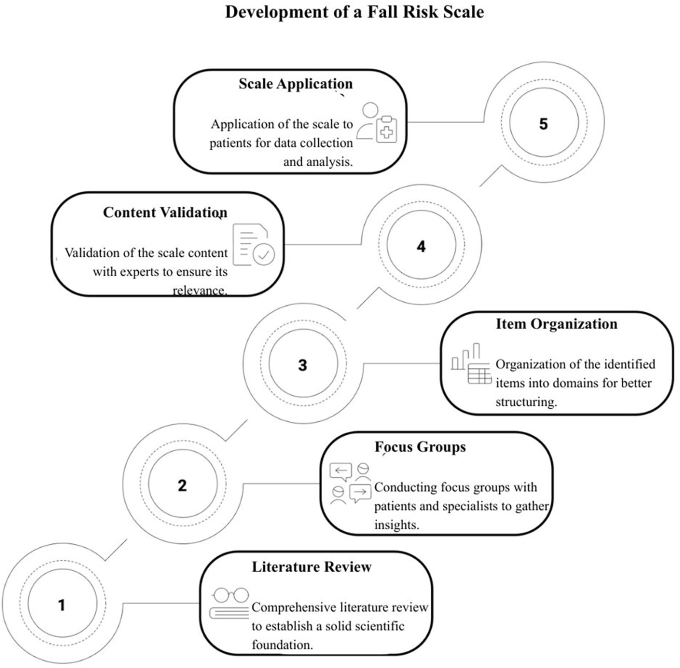
Stages of the ERQUE_HD scale development.
Each stage was developed as described below:
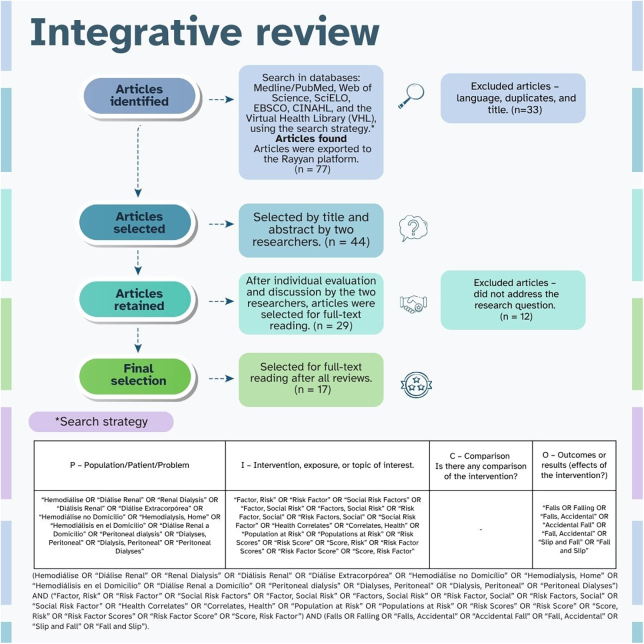
Integrative review process.
Results
The results are described according to the stages of the study, following the same order presented in the Methods section.
Table: Summary of the selected articles with the main risk factors for falls
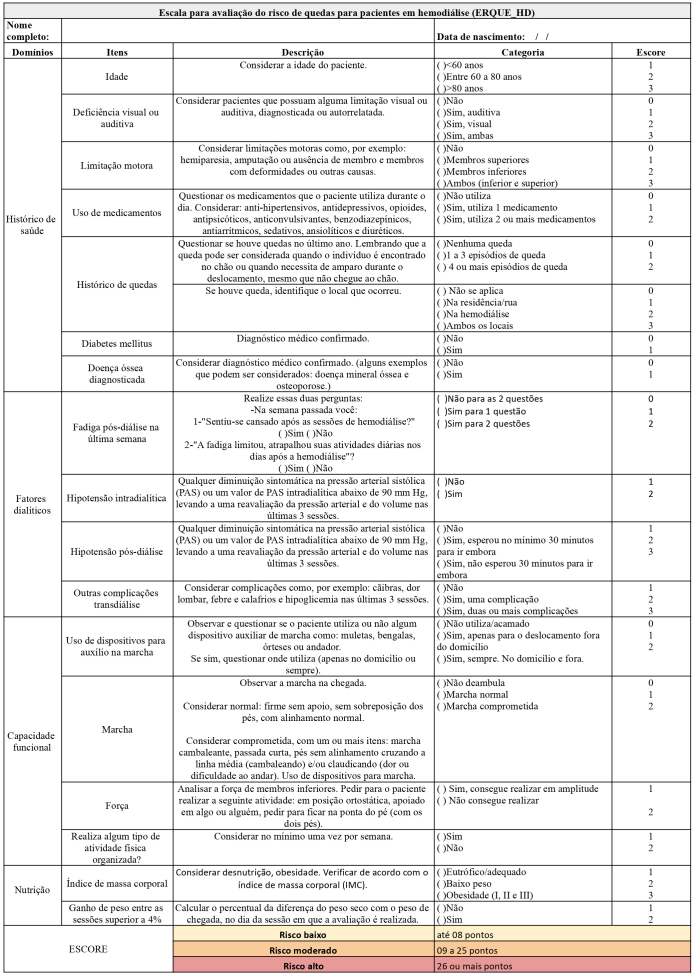
ERQUE_HD scale.
Table: Scale items according to the content validity index (CVI)
Table 3presents the characterization of the sample in each week, considering variations in the number and composition of the patients followed. According to the results, no statistically significant differences were detected when comparing the investigated variables across the weeks. Thus, although variations in the patient sample and in the reported responses occurred, these were not considered relevant, indicating that the weeks showed similar characteristics regarding the investigated variables.
Table: Absolute and relative distribution of the general sample characteristics by follow-up week
Information on falls and risk classification according to the scale was also analyzed. In S1, 40.9% of patients reported one to three falls in the past year, and 30.3% reported four or more episodes, with no statistically significant differences between the weeks. Most falls occurred at home or on streets, ranging from 51.5% to 55.9%. Regarding risk classification using the ERQUE_HD, moderate risk predominated in all weeks, with proportions ranging from 80.3% to 83.3%. Concerning falls in the past week, there was no statistically significant variation throughout the follow-up (p = 0.366); most patients did not experience falls during this period, ranging from 71.7% in S3 to 79.7% in S4. Among those who reported recent falls, episodes of one to three events were the most common, accounting for up to 19.7% of cases. In terms of fall risk classification in the past week, most respondents were classified as moderate risk.
An attempt was made to identify how the general characteristics of the sample were related to the occurrence of falls. Considering the original classification of fall occurrence, both in the past year and in the past week, statistically significant results were identified.
Analyses of fall-related outcomes showed significant associations between events in the past year and several clinical variables. In S3, visual and hearing impairment were associated with more episodes (≥4). Post-dialysis fatigue showed a significant association in S1: patients without fall events reported less fatigue, whereas those with more episodes reported greater limitations in activities after dialysis. Intradialytic hypotension was strongly associated with falls in weeks S2 and S4, especially among those who experienced four or more episodes. Post-dialysis hypotension was significant in S2 and occurred more frequently among affected patients. In S3, impaired gait was associated with a higher number of events, while preserved gait was observed among those with fewer episodes. Finally, interdialytic weight gain (>4%) was associated with the occurrence of falls in weeks S3 and S4, being more common among patients who reported such episodes, whereas those without falls maintained stable weight between sessions.
The absolute and relative distributions of the characteristics that showed statistically significant differences when compared with fall episodes in the past week were analyzed. The results revealed statistically significant associations with several clinical factors. Intradialytic hypotension was strongly associated with fall occurrence in weeks S3 and S4: patients who did not experience falls were associated with the absence of hypotension—67.4% (n = 29) and 72.3% (n = 34), respectively—while those with fall episodes, especially the ones with four or more, showed a strong association with this condition. In S3 and S4, patients with four or more episodes showed a 100.0% (n = 6) association with the presence of hypotension. Post-dialysis hypotension was also related to the occurrence of falls in the past week, in S3, being more common among patients who reported this event. The use of gait-assistive devices was significantly associated with fall occurrence, particularly in weeks S2 and S3, especially among those who reported constant use of these devices. In addition, impaired gait was also associated with falls in S3, while normal gait was predominant in patients who did not experience falls.
To assess the relationship between ERQUE_HD risk classification and the occurrence of falls, comparisons were performed for each week, considering both fall episodes in the past year and in the past week. Initially, the events were analyzed in three categories and subsequently grouped into a dichotomous variable (yes/no). The results indicated a statistically significant association between risk classification and fall occurrence in the past year. Patients classified as moderate risk were mostly associated with the absence of events, while those classified as high risk showed a significant association with four or more episodes. This association remained significant even after dichotomization of the variable, reinforcing that high-risk classification is related to fall occurrence in the past year, as shown inTable 4.
Table: Absolute and relative distribution of falls in the past year by risk classification
Another analysis compared fall episodes in the past week with risk classification, and significant associations were observed. Patients classified as high risk showed a significant association with four or more fall events in the past year, with results evident in weeks S2 and S3. When the comparison was performed between risk classification and falls using a dichotomous response, a significant difference was observed in all three weeks evaluated.
To evaluate the predictive capacity of the scale regarding the occurrence of falls in the past year, GEE modeling with logistic regression adjusted for the four-week follow-up period was used. The outcome considered was fall occurrence (yes/no), and the model also investigated the impact of covariates associated with this outcome or risk classification. Among the predictors with potential significance were visual/hearing impairment, post-dialysis fatigue (p <0.001), intradialytic hypotension, post-dialysis hypotension, impaired gait, and weight gain greater than 4%. Initially, individual models were tested for each predictor to analyze their isolated contribution to explaining falls in the past year.
Bivariate analysis of univariate logistic regression models, using the GEE method to predict/explain the occurrence of falls in the past year (OR and 95%CI), demonstrated that ERQUE_HD risk classification has significant predictive capacity for falls in the past year (p < 0.0001). Patients classified as high risk had 6.764-fold higher odds of falling compared with those at moderate risk. Among the covariates with predictive potential, visual/hearing impairment stood out (p = 0.006), increasing fall risk by 1.856 times, and post-dialysis fatigue (p = 0.003), which increased the risk by 5.588 times among patients who answered positively to both fatigue-related questions. Post-dialysis hypotension was also significant, with patients who waited at least 30 minutes before leaving presenting 2.696-fold higher odds of falling. Although hypotension without waiting suggested an increased risk, the result was not statistically significant, likely due to the small number of cases. Interdialytic weight gain greater than 4% was another relevant factor (p < 0.001), increasing the odds of falls by 2.292-fold. Finally, intradialytic hypotension and gait variables did not remain significant, possibly due to a loss of effect over the follow-up period.
Based on the results obtained from the univariate models, variables that showed significant results in predicting/explaining the occurrence of falls were selected for inclusion in the multivariate model. Thus, the initial multivariate model included ERQUE_HD risk classification, visual/hearing impairment, bone disease, fatigue, post-dialysis hypotension, and weight gain. According to the results, the optimal model identified as a predictor of fall occurrence in the past year included the following predictors: risk classification (high risk—OR; 95% CI), post-dialysis fatigue (yes to both questions—OR; 95% CI), and weight gain greater than 4% between sessions (yes—OR; 95% CI).
Notably, risk classification, as a predictor of the occurrence of falls, showed increased predictive power in the presence of fatigue and interdialytic weight gain exceeding 4%. In the simple model, the OR for high risk was estimated at 6.764, whereas in the multivariate model, the OR increased to 8.731, indicating an enhanced predictive performance of the risk classification variable, as shown inTable 5.
Table: Multivariate logistic regression model using GEE to predict/explain the occurrence of falls in the past year
Regarding model performance, the robustness of the classification accuracy achieved by logistic regression was investigated in relation to the actual classification of falls observed in the past year. The area under the ROC curve was used; in addition to estimating the AUC to identify statistical significance of the model’s predictive capacity, sensitivity and specificity values were also reported.
According to the results, the AUC was estimated at 0.817 (95% CI: 0.745–0.889; p <0.001). In the analysis of sensitivity and specificity of the predictive model for falls in the past year, the estimates were 0.876 and 0.684, respectively. It is noteworthy that ROC curve estimates were based on the ERQUE_HD scale scores according to the predictive model classification, with the cutoff point for fall occurrence set at scores greater than 23 (cutoff point > 23).
The analysis involving the accuracy achieved by the univariate model, which used risk classification alone to predict the occurrence of falls, yielded a ROC curve estimate of 0.702 (95% CI: 0.614–0.811). These results indicate that the accuracy was also relevant for predicting fall episodes in the past year. Sensitivity and specificity estimates for the univariate predictive model were 0.814 and 0.568, respectively.
Discussion
The development and validation of the ERQUE_HD represent a complex process, requiring scientific knowledge combined with clinical outcomes and a broad range of expertise from specialists and the population undergoing this therapy. The results of this study identified several fall risk factors specific to the target population. After multiple stages, the items were defined, culminating in the final version of the scale, with a CVI of 0.95, reinforcing that the content of the scale was validated according to the recommended values9,13.
The relevance of this instrument becomes even more evident in the context of global population aging. Within this scenario, age was included as a risk factor in the scale based on evidence identified in the focus groups and the integrative review. Reinforcing this context, the World Health Organization (WHO) reports that by 2050 more than 2 billion people worldwide will be over 60 years of age17. It is estimated that within a twelve-month period, one-third of the population aged 65 years or older will experience at least one fall, and half of these individuals will have recurrent episodes18.
In this context, according to the 2023 Brazilian Dialysis Census, 62.5% of patients undergoing hemodialysis were between 20 and 64 years of age, and the remaining 33.6% were 65 years of age or older3. When analyzing the results of the present study, it was observed that 42.03% of the participants undergoing hemodialysis were aged 65 years or older, a proportion higher than that reported by the census. This discrepancy may be partly attributed to the smaller sample size of the current study compared with that of the population evaluated in the census.
This study revealed that 76% of participants undergoing hemodialysis experienced falls in the past year, a percentage substantially higher than estimates reported in the literature, such as a study that reported an incidence of 23.3%19. This difference can largely be attributed to the methodology used in this study, particularly the active ascertainment of fall-related information through direct and detailed patient interviews.
In contrast, many studies in the literature rely on secondary data or spontaneous reporting, which may result in underreporting of events such as falls, especially when they do not lead to severe injuries or hospitalizations. Thus, the findings of this study reinforce the importance of active monitoring strategies and systematic investigation of falls among hemodialysis patients, as the high prevalence observed indicates a significant and potentially underrecognized health problem. One study reported that active surveillance resulted in a prevalence up to eight times higher than that obtained through spontaneous reporting, reiterating its importance as an epidemiological monitoring method for a more reliable situational diagnosis and as a fundamental tool in patient safety20.
Although studies indicate a strong association between the use of certain medications and increased risk of hypotension and falls—particularly antihypertensive agents and those acting on the central nervous system, such as antiparkinsonian drugs, psychotropics, psychoanaleptics, and antiepileptics21—there is no conclusive evidence of a significant correlation in clinical practice. Nevertheless, it is essential, whenever possible, to obtain a comprehensive review of the medications used by patients to enable more effective management. Although the ERQUE_HD does not assign specific scores to individual medications related to fall risk, 93.9% of participants used more than two medications daily. This reinforces the importance of including an item that broadly assesses medication use without assigning scores to specific drugs.
Regarding health history, previous studies indicate a strong association between diabetes and fall risk. One of the most common complications of diabetes is neuropathy—both sensory and motor—which may be characterized by symptoms such as loss of proprioception, atrophy, and weakness of the intrinsic foot muscles, leading to foot deformities and gait abnormalities, thereby significantly increasing fall risk22. However, after applying the ERQUE_HD scale, neither the presence of diabetes nor possible motor impairment—a factor related to disease progression—showed statistical significance when compared with other dialysis-related complications. Nevertheless, considering the analyzed studies and the focus group discussions, it was decided to assign a score to patients with a confirmed diagnosis of this condition.
A study evaluating patients with mineral bone disease secondary to chronic kidney disease found that these patients had a high risk of falls and greater impairment in physical aspects and quality of life23. Similarly, visual/hearing impairment and bone disease, when assessed in isolation, showed high statistical significance; however, when considered in conjunction with other risk factors, their relevance was significantly reduced. These factors were therefore included in the scale assessment.
Other complications may occur during therapy and be associated with additional fall risk factors, such as cramps, low back pain, fever, chills, hypoglycemia, and symptomatic intradialytic hypotension24. The occurrence of symptomatic hypotension likely depends on the amount and rate of intravascular fluid removal during the procedure. In response to ultrafiltration (UF), a significant reduction in circulating volume leads to decreased atrial filling, reduced cardiac output, and ultimately hypotension, unless sufficient interstitial fluid is available for intravascular refilling25. Although these factors are highly relevant for monitoring during hemodialysis treatment to enable appropriate interventions and improve patients’ quality of life, they are not, in themselves, predictive of the occurrence of falls.
Post-dialysis hypotension is associated with fall episodes, suggesting that hemodynamic instability in the post-session period is a critical factor to monitor23. In addition, excessive interdialytic weight gain—an indicator of fluid overload—was also associated with an increased risk of falls, possibly due to its contribution to balance disturbances and blood pressure fluctuations. One study reported that 32% of fall events in patients undergoing hemodialysis were related to weight variation during treatment, identifying this change as a significant risk factor. Excessive fluid removal is often associated with symptoms such as dizziness and weakness, which may precede falls19. These results corroborate the findings of the present study, in which 45.3% of participants reported post-dialysis hypotension and 51.5% had interdialytic weight gain greater than 4%. Consequently, 72.3% of fall events occurred at home or on streets after the hemodialysis session. Such events have previously been associated with falls, and the present study directly identifies weight fluctuations during HD sessions, fatigue, and intradialytic hypotension as factors directly related to the risk of falls.
The development of a fall risk assessment scale for hemodialysis patients represents a relevant strategy to strengthen patient safety actions in this high-risk group. The adoption of this instrument aims to provide a more comprehensive and accurate analysis of individual risk factors, considering clinical, functional, and environmental aspects that predispose patients to falls. The systematic application of the scale enabled early identification of the most vulnerable patients. It is expected to contribute significantly to the development of targeted and individualized preventive interventions, the standardization of care provided by the multidisciplinary team, the reduction in fall incidence, and the minimization of associated complications, ultimately improving the quality of life of patients undergoing dialysis therapy.
This study has as a limitation the application of the ERQUE_HD scale in only one dialysis center. Future studies should apply the scale in other centers with different patient profiles.
Conclusions
The ERQUE_HD scale is predictive of fall risk, particularly among patients classified as being at high risk of this outcome. It is expected that the scale will assist in the implementation of preventive measures for this specific population, contributing to a reduction in the occurrence of this adverse event and promoting safer care for patients undergoing hemodialysis.
References
- HesselsAJPaliwalMWeaverSHSiddiquiDWurmserTAImpact of patient safety culture on missed nursing care and adverse patient events. J Nurs Care Qual201934428794 doi.org/10.1097/NCQ.0000000000000378
- World Health Organization. Global patient safety action plan 2021–2030: towards eliminating avoidable harm in health care. GenevaWHO2021
- NerbassFBLimaHNMoura-NetoJALugonJRSessoRBrazilian Dialysis Survey 2022. Braz J Nephrol. 2024462e20230062 doi.org/10.1590/2175-8239-JBN-2023-0062en
- LessaSROBezerraJNMBarbosaSMCLuzGOABorbaAKOTPrevalência e fatores associados para a ocorrência de eventos adversos no serviço de hemodiálise. Texto Contexto Enferm2018273 doi.org/10.1590/0104-07072018003830017
- SousaMRGSilvaAEBCBezerraALQPrevalência de eventos adversos em uma unidade de hemodiálise. Rev Enferm UERJ. 2016246e18237 doi.org/10.12957/reuerj.2016.18237
- Powell-CopeGQuigleyPBesterman-DahanKSmithMStewartJMelilloCHaunJFriedmanYA qualitative understanding of patient falls in inpatient mental health units. J Am Psychiatr Nurses Assoc. 2014Sep-oct20532839 doi.org/10.1177/1078390314553269
- ZhaoYLBottMHeJKimHParkSHDuntonNEvidence on fall and injurious fall prevention interventions in acute care hospitals. J Nurs Adm. 201924928692 doi.org/10.1097/NNA.0000000000000715
- AndradeDOliveiraRATurriniRNTPovedaVBEscalas de avaliação de risco para queda: revisão integrativa da literatura. Rev Baiana Enferm201933e27981 doi.org/10.18471/rbe.v33.27981
- PolitDFBeckCTFundamentos de pesquisa em enfermagem: avaliação de evidências para a prática da enfermagem. 9. ed. Porto AlegreArtmed Editora2019
- MedeirosHPTeixeiraEMetodologia da pesquisa para a enfermagem e saúde: resenha de livro. Rev Bras Enferm201669510001 doi.org/10.1590/0034-7167-2015-0135
- SouzaMTSilvaMDCarvalhoRRevisão integrativa: o que é e como fazer. Einstein (Sao Paulo)2010811026 doi.org/10.1590/s1679-45082010rw1134
- MendesKDSSilveiraRCCPGalvãoCMUse of the bibliographic reference manager in the selection of primary studies in integrative reviews. Texto Contexto Enferm201928e20170204 doi.org/10.1590/1980-265x-tce-2017-0204
- AlexandreNMCColuciMZOValidade de conteúdo nos processos de construção e adaptação de instrumentos de medidas. Ciênc saúde coletiva. 201116730618 doi.org/10.1590/S1413-81232011000800006
- RubioDMBerg-WegerMTebbSSLeeESRauchSObjectifying content validity: conducting a content validity study in social work research. Soc Work Res200327294104 doi.org/10.1093/swr/27.2.94
- HosmerDWJrLemeshowSSturdivant RX. Applied logistic regression. HobokenWiley2013 doi.org/10.1002/9781118548387
- GrantJSDavisLLSelection and use of content experts for instrument development. Res Nurs Health199720326974 doi.org/10.1002/(SICI)1098-240X(199706)20:3<269::AID-NUR9>3.0.CO;2-G
- World Health Organization (WHO)Number of people over 60 years set to double by 2050; major societal changes requiredGeneva3092015Disponível em:
- DiasALPereiraFABarbosaCPAraújo-MonteiroGKSantos-RodriguesRCSoutoRQRisco de quedas e a síndrome da fragilidade no idoso. Acta Paul Enferm202336eAPE006731 doi.org/10.37689/acta-ape/2023AO006731
- de JesusLASLucindaLMFCobucciRFde OliveiraHBRangelPRBde OliveiraBCBQuedas em pacientes em hemodiálise: um estudo piloto prospectivo de 12 meses. HU Rev. 20214719 doi.org/10.34019/1982-8047.2021.v47.34069
- NazárioSSCruzEDABatistaJSilvaDPPedroRLLaynesRLCaracterização de eventos adversos hospitalares: busca ativa versus notificação espontânea. Cogitare Enferm20222727 doi.org/10.5380/ce.v27i0.82040
- da SilvaTPVenancioJBOliveiraMJLimaACSantosBMPFerreiraBMA influência da utilização de medicamentos no risco de quedas em idosos de instituições de longa permanência do Distrito Federal. Braz J Dev. 20228318195213 doi.org/10.34117/bjdv8n3-182
- AntonioGAFRibeiroARibeiroAMFernandesBAMDouradoCTorresFCVNeuropatia diabética: conhecer para reconhecer. Conhecimento em Redeexplorando a multidisciplinaridade2025197687
- CarvalhoTCDiniAPRisk of falls in people with chronic kidney disease and related factors. Rev Lat Am Enfermagem202028e3289 doi.org/10.1590/1518-8345.3911.3289
- DaugirdasJTBlakePGIngTSManual de diálise. Rio de JaneiroGuanabara Koogan2017658
- MeiraFSFigueiredoAEZemiarckiJPachecoJPoli-de-FigueiredoCEd’AvilaDOTwo variable sodium profiles and adverse effects during hemodialysis: a randomized crossover study. Ther Apher Dial201014332833 doi.org/10.1111/j.1744-9987.2009.00787.x
- McAdams-DeMarcoMASureshSLawASalterMLGimenezLFJaarBGFrailty and falls among adult patients undergoing chronic hemodialysis: a prospective cohort study. BMC Nephrol2013141224 doi.org/10.1186/1471-2369-14-224
- DelgadoCShiehSGrimesBChertowGMDalrympleLSKaysenGAAssociation of self-reported frailty with falls and fractures among patients new to dialysis. Am J Nephrol201542213440 doi.org/10.1159/000439000
- ErkenEOzelsancakRSahinSYılmazEETorunDLeblebiciBThe effect of hemodialysis on balance measurements and risk of fall. Int Urol Nephrol20164810170511 doi.org/10.1007/s11255-016-1388-7
- BowlingCBBromfieldSGColantonioLDGutiérrezOMShimboDReynoldsKAssociation of Reduced eGFR and Albuminuria with Serious Fall Injuries among Older Adults. Clin J Am Soc Nephrol2016117123643 doi.org/10.2215/CJN.11111015
- KonoKNishidaYYabeHMoriyamaYMoriTShirakiRDevelopment and validation of a Fall Risk Assessment Index for dialysis patients. Clin Exp Nephrol201822116772 doi.org/10.1007/s10157-017-1431-8
- PlantingaLCPatzerREFranchHABowlingCBSerious fall injuries before and after initiation of hemodialysis among older ESRD Patients in the United States: a retrospective Cohort Study. Am J Kidney Dis20177017683 doi.org/10.1053/j.ajkd.2016.11.021
- van LoonINJoostenHIyasereOJohanssonLHamakerMEBrownEAThe prevalence and impact of falls in elderly dialysis patients: Frail elderly Patient Outcomes on Dialysis (FEPOD) study. Arch Gerontol Geriatr20198328591 doi.org/10.1016/j.archger.2019.05.015
- WangHHWuJLLeeYCHoLCChangMYLiouHHRisk of serious falls between hemodialysis and peritoneal dialysis patients: a nationwide population-based Cohort Study. Sci Rep20201017799 doi.org/10.1038/s41598-020-64698-7
- ZanottoTMercerTHvan der LindenMLRushRTraynorJPPetrieCJThe relative importance of frailty, physical and cardiovascular function as exercise-modifiable predictors of falls in haemodialysis patients: a prospective cohort study. BMC Nephrol202021199 doi.org/10.1186/s12882-020-01759-z
- Vanden WyngaertKCelieBCaldersPElootSHolvoetEVan BiesenWMarkers of protein-energy wasting and physical performance in haemodialysis patients: A cross-sectional study. PLoS One2020157e0236816 doi.org/10.1371/journal.pone.0236816
- Perez-GurbindoIMaría Álvarez-MéndezAPérez-GarcíaRCoboPACarrereMTAFactors associated with falls in hemodialysis patients: a case-control study. Rev Lat Am Enfermagem202129e3505 doi.org/10.1590/1518-8345.5300.3505
- ShiraiNYamamotoSOsawaYTsubakiAMorishitaSNaritaIDysfunction in dynamic, but not static balance is associated with risk of accidental falls in hemodialysis patients: a prospective cohort study. BMC Nephrol2022231237 doi.org/10.1186/s12882-022-02877-6
- ShiraiNInoueTOgawaMOkamuraMMorishitaSSuguruYRelationship between nutrition-related problems and falls in hemodialysis patients: a narrative review. Nutrients202214153225 doi.org/10.3390/nu14153225
- LiuXChenSLiuCDangXWeiMXinXNovel risk-factor analysis and risk-evaluation model of falls in patients receiving maintenance hemodialysis. Ren Fail20234512182608 doi.org/10.1080/0886022X.2023.2182608
- LiangJWangYZhangWDingHGaoYWangRIncidence and risk factors of falls in patients undergoing hemodialysis: a multicenter survey in northern China. Hemodial Int202327215564 doi.org/10.1111/hdi.13064
- IshiiTMatsumotoWHoshinoYKagawaYIwasakiETakadaHWalking aids and complicated orthopedic diseases are risk factors for falls in hemodialysis patients: an observational study. BMC Geriatr2023231319 doi.org/10.1186/s12877-023-04015-9
Republished from the open web under CC-BY. Authors: Farina VA, Canabarro ST, Souza G, Negrello LT, Figueiredo AEPL. Read the original.