Hearing Loss in Adults With Diabetes and Prediabetes: A Systematic Review and Meta-Analysis.
Diabetes impairs hearing through microvascular damage and neuropathy, yet the prevalence of moderate-to-severe hearing loss (≥ 40 dB HL) remains inadequately explored. Variations by age, diabetes duration, and socioeconomic factors are inadequately characterised. This systematic review quantified the prevalence and comparative risk of moderate-to-severe hearing loss in diabetes and prediabetes, exploring variations across age, national income level, and disease duration. We searched PubMed, Scopus, Web of Science, SPORTDiscus, and CINAHL (2000-2025) for observational studies reporting audiometric thresholds in diabetic or prediabetic subjects (PROSPERO: CRD42018100742). Quality was assessed using the Newcastle-Ottawa Scale. Random-effects meta-analyses generated pooled prevalence and odds ratios (ORs) with 95% confidence intervals (CIs). Publication bias was evaluated via funnel plots and Egger's regression. Of 3490 records, 29 studies qualified. Most examined type 2 diabetes; one included prediabetes. Twenty-three studies (n = 5221) yielded a pooled prevalence of 24% (95% CI: 19%-30%; I 2 = 94%). Eleven studies showed diabetes doubled hearing loss odds versus controls (OR = 2.41, 95% CI: 1.62-3.60; I 2 = 86.6%). Risk was significantly elevated in younger adults (< 60 years: OR = 3.03, 95% CI: 2.17-4.22) but not in older adults (≥ 60 years: OR = 1.52, 95% CI: 0.72-3.22). Low- and middle-income countries showed the highest risk (OR = 4.51, 95% CI: 2.43-8.40) versus high-income countries (OR = 1.78, 95% CI: 1.05-3.02). Diabetes duration < 10 years conferred elevated risk (OR = 2.68). Small-study effects were detected (Egger's p = 0.019) but sensitivity analyses confirmed robustness. One in four diabetic adults has clinically significant hearing loss, particularly in younger individuals and resource-limited populations. These findings support the integration of routine audiometric screening into diabetes care.
Introduction
Diabetes mellitus (DM) represents an escalating global health crisis, currently impacting over 537 million adults worldwide, with projections indicating a rise to 783 million by 2045 [1]. While retinopathy, nephropathy, and neuropathy are conventionally recognised and routinely monitored microvascular complications of diabetes, hearing impairment has emerged as a significant, yet frequently overlooked, sensory complication [2]. Compelling evidence suggests that chronic hyperglycaemia causes damage to the microvasculature and neural pathways within the cochlea. This damage, mediated by mechanisms such as microangiopathy, oxidative stress, and neuropathy, ultimately culminates in sensorineural hearing loss [3]. On average, individuals with diabetes experience nearly double the incidence of hearing loss compared with non‐diabetic individuals, although evidence for prediabetes remains limited and inconsistent [4]. Despite these clear pathophysiological links, hearing loss is not yet systematically integrated into diabetes care protocols, leading to an incompletely characterised true burden [4].
Hearing impairment is far from a benign sensory deficit; its effects are profound, impacting communication, social engagement, mental health, and increasing listening effort [5]. The detrimental impacts of hearing loss become especially pronounced at moderate‐to‐severe levels (defined as audiometric hearing thresholds ≥ 40 dB hearing level [HL]), where conversational understanding is substantially compromised [6]. Individuals with moderate‐to‐severe hearing loss struggle to follow speech in noisy environments and often require hearing aids or other assistive devices [7]. Hearing loss progresses gradually, with patients remaining unaware of their auditory decline until functional limitations become evident [8]. Crucially, clinically significant hearing loss is detectable through straightforward, low‐cost audiometric screening, presenting a vital opportunity for early diagnosis and intervention [9]. For individuals with diabetes already navigating complex disease management, disabling hearing loss represents a compounding challenge that further erodes the quality of life and impairs self‐care behaviours [9,10].
Despite the clear clinical and public health implications of diabetes‐associated hearing loss, the existing epidemiological evidence remains fragmented and inconsistent [10]. Previous systematic reviews and meta‐analyses, while establishing a connection, have largely encompassed hearing impairment of any severity [11,12]. These often include mild or subclinical deficits that, despite audiometric detectability, hold limited functional relevance for daily communication and typically do not warrant immediate clinical intervention. While meta‐analyses indicate that individuals with diabetes have approximately twice the odds of hearing loss (OR = 2.15; 95% CI: 1.72–2.68) [11], with recent reviews of Type 2 Diabetes reporting similar elevations [13,14], their inclusion of all severity levels may overstate the clinically actionable burden. These analyses also highlight higher mean audiometric thresholds in diabetic individuals and an association between longer diabetes duration and poorer glycaemic control with greater hearing loss prevalence [13,14].
However, by largely aggregating all hearing loss severity levels, prior syntheses have inadvertently obscured the true scope of functionally disabling hearing loss. Consequently, critical knowledge gaps persist. Foremost, no meta‐analysis has specifically quantified the burden of moderate‐to‐severe hearing loss (≥ 40 dB HL), a crucial omission given this threshold signifies auditory dysfunction warranting clinical intervention, with its pooled prevalence and risk uncharacterised [15]. Furthermore, the modifying influence of age is insufficiently understood; presbycusis may obscure effects in older adults, while younger adults offer clearer insights into metabolic mechanisms [16,17]. The socioeconomic context is also largely unexplored: burden in LMICs may be disproportionately high due to suboptimal care, potentially attenuated in HICs [18]. Additionally, diabetes duration warrants specific exploration for clinically significant hearing loss, as prolonged hyperglycaemia contributes to cumulative cochlear damage [19].
To address these critical gaps comprehensively, we conducted a systematic review and meta‐analysis focussing exclusively on screen‐detected, clinically significant hearing loss (≥ 40 dB HL) among adults with diabetes and prediabetes. The aims of this study were to: (1) estimate the pooled prevalence of moderate‐to‐severe hearing loss in diabetic populations; (2) quantify the comparative risk versus normoglycemic controls; and (3) examine effect modification by age, diabetes duration, and national income level where sufficient data were available. By focussing on clinically meaningful thresholds and systematically exploring heterogeneity sources, this review provides precise, policy‐relevant estimates of the diabetes‐related hearing impairment burden. Ultimately, these findings support integrating routine audiometric screening into diabetes care pathways, prioritising resource‐limited settings and younger populations where early intervention yields the greatest benefit.
Methods
Protocol Registration and Reporting Standards
This systematic review and meta‐analysis were prospectively registered with the International Prospective Register of Systematic Reviews (PROSPERO; registration number: CRD42018100742) and conducted in accordance with the Preferred Reporting Items for Systematic Reviews and Meta‐Analyses (PRISMA) guidelines to ensure methodological transparency and reproducibility [20]. Complete PRISMA compliance was verified through systematic application of both the main 27‐item reporting checklist (Supporting InformationS1) and the abstract‐specific 12‐item checklist (Supporting InformationS2).
Search Strategy and Information Sources
A comprehensive systematic literature search was conducted across five electronic databases: PubMed, Scopus, Web of Science, SPORTDiscus, and CINAHL, covering the period from January 2000 to August 2025. These databases were selected for their extensive coverage of health sciences literature and multidisciplinary research. To minimise publication bias, grey literature searches were performed using Google Scholar, ProQuest Dissertations and Theses, and websites of relevant professional organisations, including diabetes associations, audiology societies, and public health agencies. Additionally, reference lists of all included studies underwent manual screening to identify potentially eligible sources not captured through database searches. The search strategy was developed and refined in consultation with a qualified medical research librarian to optimise sensitivity and specificity (Supporting InformationS3).
Study Selection Process
Retrieved articles underwent a two‐stage screening process. Initially, titles and abstracts were assessed by two independent reviewers (M.N. and S.K.) to identify potentially eligible studies. Subsequently, full‐text articles of potentially relevant studies were independently evaluated by two reviewers (M.N. and A.R.) against predefined eligibility criteria. Any discrepancies between reviewers were resolved through discussion, with a third independent reviewer (B.N.A.) consulted when consensus could not be reached.
Eligibility Criteria
Studies were included if they met the following criteria: (1) peer‐reviewed original research published in English; (2) observational study designs (cohort, case‐control, or cross‐sectional); (3) adult participants (≥ 18 years) with clinically diagnosed diabetes or prediabetes; (4) hearing assessment conducted using objective audiometric methods (like, pure‐tone audiometry); (5) reporting of hearing loss prevalence data, particularly moderate‐to‐severe impairment (≥ 40 dB HL); and (6) publication between January 2000 and 31st August 2025.
Studies were excluded if they: (1) reported only incidence data rather than prevalence; (2) contained duplicate datasets already included from other publications; (3) focused on gestational diabetes, occupational noise exposure, ototoxic medication use, or known ear pathologies such as chronic otitis media or conductive hearing loss, as these could confound the association between diabetes and sensorineural hearing impairment; or (4) relied solely on self‐reported hearing status without objective audiometric confirmation.
Data Extraction
Data extraction was performed independently by two reviewers (M.N. and A.R.) using a standardised, piloted data extraction template to ensure consistency and completeness. Discrepancies were resolved through discussion, with unresolved conflicts adjudicated by a third reviewer. Extracted variables included: publication year, study location, sample size, participant age (mean or range), sex distribution (proportion female), study design, recruitment setting (hospital‐based, community‐based, or population‐based), diabetes type (type 1, type 2, or mixed), diabetes duration, hearing assessment methodology, hearing loss threshold definitions, and prevalence estimates for moderate‐to‐severe hearing loss (≥ 40 dB HL).
Quality Assessment
Methodological quality of the included studies was independently assessed by two reviewers (M.N. and A.R.) using the Newcastle‐Ottawa Scale (NOS), a validated tool for evaluating non‐randomised studies [21]. The NOS assigns scores ranging from 0 to 9 based on three domains: selection of study groups, comparability of groups, and ascertainment of exposure/outcome. Studies were categorised as poor quality (0–2), fair quality (3–5), or good/high quality (6–9). Quality scores were used for sensitivity analyses but did not serve as exclusion criteria [22].
Statistical Analysis
Random‐effects meta‐analyses were conducted using the meta package in R Studio to generate pooled prevalence estimates [23] of moderate‐to‐severe hearing loss (≥ 40 dB HL) with 95% confidence intervals (CIs). Pooled odds ratios (ORs) quantified the association between diabetes and hearing impairment relative to non‐diabetic controls. Between‐study heterogeneity was assessed using theI2statistic (25%, 50%, 75% indicating low, moderate, high heterogeneity, respectively). Subgroup analyses explored effect modification by: (1) mean age (< 60 vs. ≥ 60 years) to account for presbycusis [16], (2) national income level (LMICs vs. HICs, per World Bank classifications), examining socioeconomic disparities [24] and (3) diabetes duration (< 10 vs. ≥ 10 years), assessing dose‐response relationships where data permitted. We conducted pre‐specified subgroup analyses stratified by age, national income level, and diabetes duration to investigate heterogeneity sources. Given the limited number of included studies (n= 11), we employed this approach rather than multivariable meta‐regression, which would provide insufficient statistical power and risk overfitting, consistent with Cochrane recommendations for meta‐analyses with limited study numbers [25]. Publication bias was evaluated via funnel plot inspection and Egger’s regression test (p< 0.10 indicating small‐study effects). Sensitivity analyses assessed robustness by sequentially excluding lower‐quality studies and evaluating individual study influence on pooled estimates [23].
Results
Search Results
The database search identified 3490 records from PubMed, Scopus, Web of Science, SPORTDiscus, and CINAHL between January 2000 and 31st August 2025. After removal of duplicates and screening of titles and abstracts, 126 articles underwent full‐text review. Of these, 29 studies met the inclusion criteria [26,27,28,29,30,31,32,33,34,35,36,37,38,39,40,41,42,43,44,45,46,47,48,49,50,51,52,53,54] and were included in the results synthesis, and 27 studies of fair‐to‐good quality contributed data to the quantitative meta‐analysis [26,27,28,29,30,31,32,33,34,35,36,37,38,39,40,41,42,43,44,45,46,47,48,49,50,51,52]. The selection process is summarised in the PRISMA flow diagram (Figure1). Most of the studies were excluded from non‐audiometric or self‐reported hearing data, gestational diabetes, or overlapping populations.
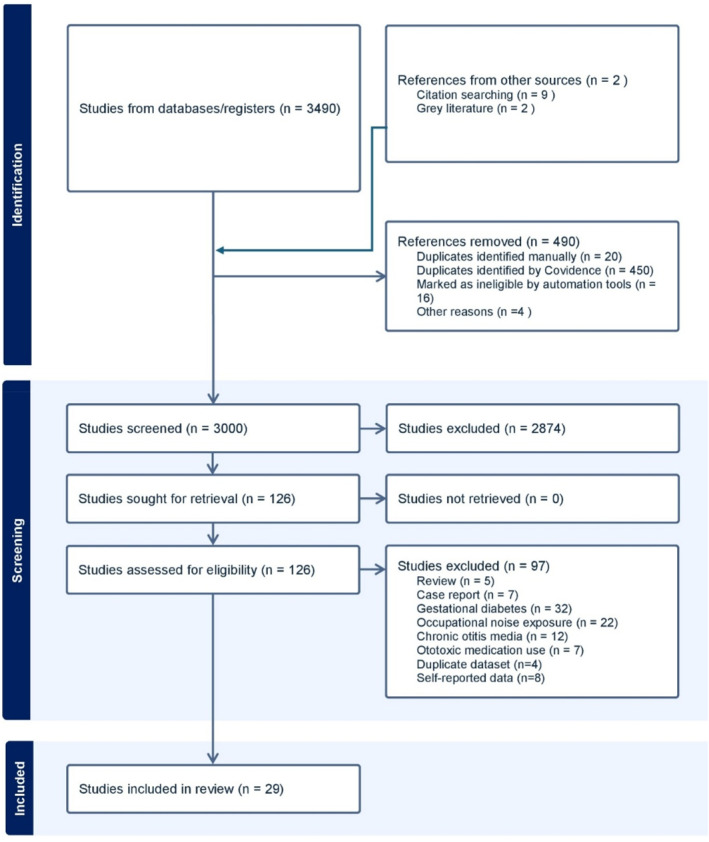
PRISMA flow diagram of study selection process.
Characteristics of Included Studies
The detailed characteristics of the included studies are provided in Table1. Included studies were conducted across Asia (n= 14), Africa (n= 4), the Middle East (n= 3), Europe (n= 3), North America (n= 3), and Australia (n= 2), representing a broad geographic and socioeconomic distribution [26,27,28,29,30,31,32,33,34,35,36,37,38,39,40,41,42,43,44,45,46,47,48,49,50,51,52,53,54]. Study designs comprised cross‐sectional (n= 18), case–control (n= 7), and cohort (n= 2) studies [26,27,28,29,30,31,32,33,34,35,36,37,38,39,40,41,42,43,44,45,46,47,48,49,50,51,52,53,54]. The majority of participants had type 2 diabetes, with one study including individuals with prediabetes and a few reporting mixed diabetes types [35]. Participants were adults aged 18–86 years, with a roughly balanced sex distribution (40%–60% female; Table1). Screening settings were hospital/clinic in 69%, community programmes in 21%, and national survey samples in 10% of included studies [26,27,28,29,30,31,32,33,34,35,36,37,38,39,40,41,42,43,44,45,46,47,48,49,50,51,52,53,54]. Hearing status was assessed almost universally by pure‐tone audiometry, supplemented in some studies by tympanometry, distortion product otoacoustic emissions (DPOAEs), or auditory brainstem response (ABR) testing [55]. Moderate‐to‐severe hearing loss was consistently defined as hearing threshold ≥ 40 dB HL in the better ear, in line with World Health Organisation criteria [56]. Studies varied in whether thresholds were calculated for speech frequencies (0.5–4 kHz) or full audiometric ranges. Quality assessment (Supporting InformationS4) using the Newcastle–Ottawa Scale indicated that 18 studies were of good quality (6–9 stars), seven were fair (3–5 stars), and two were poor (< 3 stars). No high risk of selection bias was identified, though several cross‐sectional studies lacked adjustment for potential confounders such as noise exposure and ototoxic drug use.
Table: Study characteristics of included studies.
Pooled Prevalence of Moderate‐to‐Severe Hearing Loss in Diabetes
Twenty‐three studies provided data suitable for pooling (Supporting InformationS5). The pooled prevalence of moderate‐to‐severe (≥ 40 dB HL) hearing loss among individuals with diabetes was 24% (95% CI: 19%–30%), equivalent to approximately one in four adults (Figure2). Heterogeneity was substantial (I2= 94%), reflecting variation in population characteristics, measurement methods, and sample sizes. Funnel plot inspection (Figure3) revealed moderate asymmetry, and Egger's test confirmed small‐study effects (t= −2.54,p= 0.019). Leave‐one‐out sensitivity analyses demonstrated that no single study substantially altered the overall conclusions. Removing high‐effect or small‐sample studies slightly attenuated pooled estimates but did not change the direction or statistical significance of associations. These results confirm the robustness of the observed relationship between diabetes and clinically significant hearing loss despite high heterogeneity. Prediabetes (vs. normoglycaemia) showed no significant increase in the odds of ≥ 40 dB hearing loss in the single study reporting this comparison (adjusted OR = 1.12; 95% CI includes 1); evidence remains insufficient for pooling.
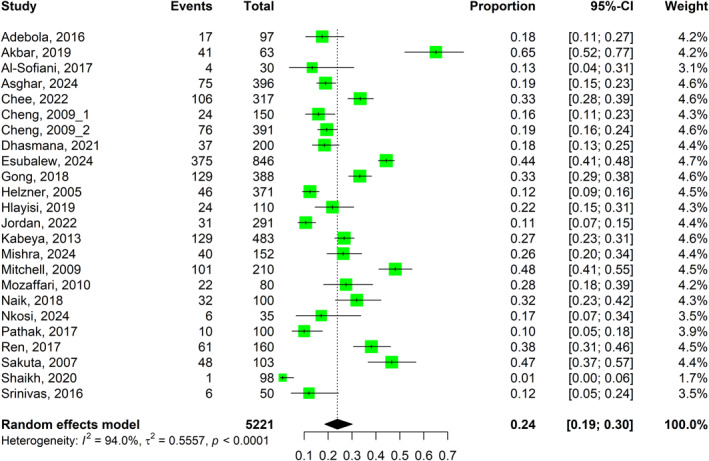
Forest plot of moderate‐to‐severe (≥ 40 dB HL) hearing loss prevalence among individuals with diabetes.
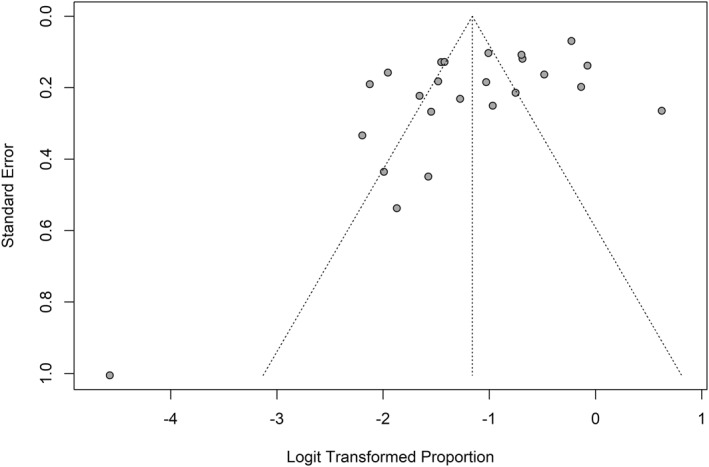
Funnel plot assessing publication bias for prevalence estimates.
Comparative Risk Moderate‐to‐Severe Hearing Loss: Diabetes Versus Non‐Diabetic Controls
Eleven studies (n= 17,051 participants; 1881 with diabetes, 15,670 non‐diabetic controls) provided comparative data enabling quantification of the association between diabetes and moderate‐to‐severe hearing loss [26,27,32,34,39,42,43,44,46,47,49]. Notably, one study [42] reported two independent datasets (Cheng, 2009_1 and Cheng, 2009_2), resulting in 12 distinct comparisons from 11 publications. The pooled odds ratio demonstrated that individuals with diabetes had significantly elevated odds of clinically significant hearing impairment compared with non‐diabetic controls (OR = 2.41, 95% CI: 1.62–3.60,p< 0.001), representing more than a two‐fold increase in risk (Figure4). This association remained statistically significant and robust across multiple analytical approaches.
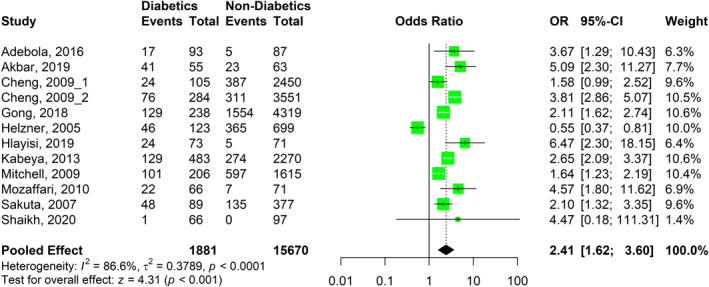
Forest plot of pooled odds ratios for moderate‐to‐severe hearing loss: Diabetes versus non‐diabetic controls.
Individual study estimates ranged from OR = 0.55 [44] to OR = 6.47 [32], with most comparisons (10 of 12) reporting odds ratios between 1.5 and 5.0. Substantial heterogeneity was observed (I2= 86.6%,τ2= 0.38,p< 0.0001). Sensitivity analyses excluding outliers yielded similar results (OR = 2.2), confirming robustness. Egger’s test indicated small‐study effects (p= 0.019), and funnel plot asymmetry suggested potential publication bias (Figure5). However, the association remained consistently positive across nearly all studies (except [44]) and statistically significant despite this limitation (z= 4.31,p< 0.001).
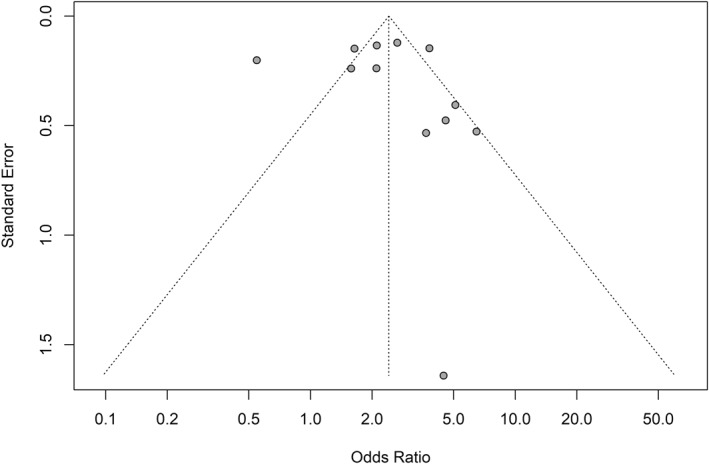
Funnel plot assessing publication bias for odds ratio estimates.
Effect Modification by Age Group
Age‐stratified analyses examined whether the diabetes‐hearing loss association varied across age categories, revealing differential patterns between younger and older adults. Among individuals below 60 years of age, eight studies (n= 10,171 participants) demonstrated a strong and statistically significant association, with a pooled odds ratio of 3.03 (95% CI: 2.17–4.22,p< 0.001; Figure6). This subgroup exhibited moderate heterogeneity (I2= 60%,τ2= 0.12,p= 0.01), suggesting some variation in effect sizes across studies despite consistent directionality. Individual study estimates within this younger cohort ranged from OR = 1.58 [42] to OR = 6.47 [32], with most studies reporting odds ratios between 2.0 and 5.0. In contrast, among adults aged 60 years and above, four studies (n= 7380 participants) yielded a pooled odds ratio of 1.52 (95% CI: 0.72–3.22), which was not statistically significant (Figure6). This older age subgroup displayed substantial heterogeneity (I2= 91.4%,τ2= 0.51,p< 0.001), reflecting considerable inconsistency across study findings. Individual study estimates ranged widely from OR = 0.55 to OR = 3.67 [26,44].
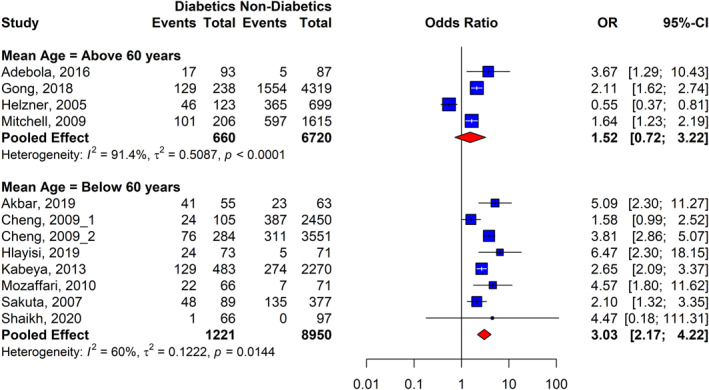
Forest plot of diabetes‐associated hearing loss stratified by age group (< 60 vs. ≥ 60 years).
Effect Modification by Country Income Level
When stratified by World Bank income classification, the association between diabetes and moderate‐to‐severe hearing loss demonstrated variation across economic settings. All three income categories showed statistically significant associations when compared to non‐diabetic controls (Figure7). Low‐ and middle‐income countries (LMICs) exhibited the highest pooled odds ratio (OR = 4.51, 95% CI: 2.43–8.40; 3), based on data from studies conducted in Nigeria, Pakistan, and India [26,27,39]. Upper‐middle‐income countries (UMICs) showed intermediate risk (OR = 3.44, 95% CI: 1.68–7.07). High‐income countries (HICs) demonstrated the lowest, though still statistically significant, association (OR = 1.78, 95% CI: 1.05–3.02), including studies from the United States, Australia, and Japan [34,42,44,46,49].
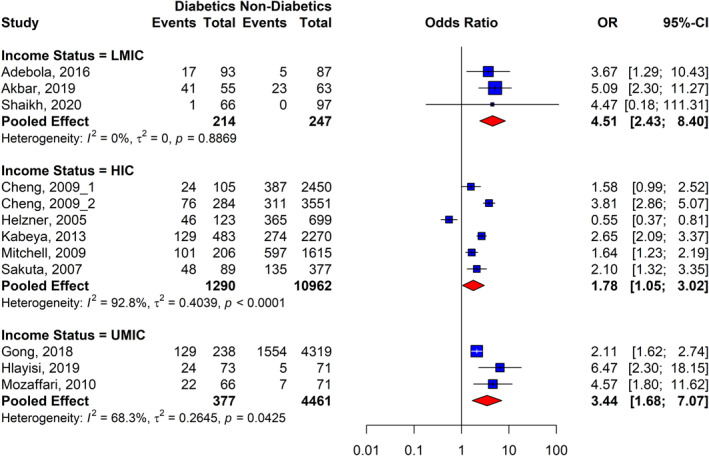
Forest plot of diabetes‐associated hearing loss stratified by national income level (LMICs, UMICs, HICs).
Duration of Diabetes
Five studies reported outcomes stratified by diabetes duration. Individuals with a disease duration of less than 10 years had significantly increased odds of moderate‐to‐severe hearing loss compared with non‐diabetics, with a pooled odds ratio (OR) of 2.68 (95% CI: 1.61–4.47;I2= 83.1%,p< 0.0001; Figure8). The individual studies ORs range from 1.58 to 6.47. One study that examined diabetes duration ≥ 10 years reported an even stronger association (OR = 4.57, 95% CI: 1.80–11.62), although the data were insufficient for pooled analysis [47].
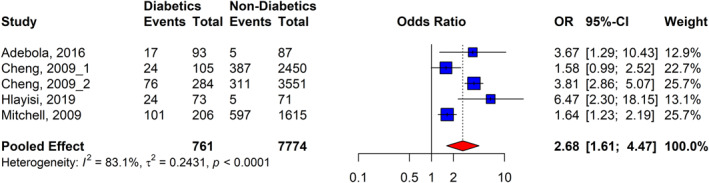
Forest plot of diabetes‐associated hearing loss stratified by diabetes duration (< 10 years).
Discussion
This systematic review and meta‐analysis provide the first comprehensive synthesis specifically examining the pooled prevalence and comparative risk of clinically significant moderate‐to‐severe hearing loss (≥ 40 dB HL) in adults with diabetes. Our findings reveal that nearly one in four adults with diabetes experiences this level of hearing impairment, and that diabetes more than doubles the odds of functionally disabling hearing loss (pooled OR = 2.41, 95% CI: 1.62–3.60), with a disproportionate burden observed among younger adults and populations in LMICs.
The observed 24% pooled prevalence of moderate‐to‐severe hearing loss (≥ 40 dB HL) in our study represents a clinical burden comparable to other well‐established diabetic microvascular complications such as retinopathy and nephropathy [57]. This distinction from prior meta‐analyses, which often encompassed hearing loss of any severity (e.g., a reported 53% measurable hearing loss in type 2 diabetes versus 25% in controls) [13]. Our exclusive focus on the ≥ 40 dB HL threshold is critical because it precisely delineates impairment that critically disrupts daily communication, social engagement, and occupational productivity. Unlike mild loss, this level compromises understanding speech in noisy settings, leading to functional disability, increased social isolation and depression [58], and is associated with accelerated cognitive decline [59]. Such significant impairment necessitates audiological intervention.
Age‐stratified analyses revealed contrasting patterns: adults below 60 years demonstrated a significant association with moderate‐to‐severe hearing loss (OR = 3.03, 95% CI: 2.17–4.22), whereas those aged ≥ 60 years showed no significant association (OR = 1.52, 95% CI: 0.72–3.22). These findings require cautious interpretation due to potential confounding by presbycusis. Inconsistent control for age‐related hearing loss across studies, highly prevalent beyond age 60, may introduce confounding effects, particularly in older cohorts where age‐related decline could obscure diabetes‐specific effects [16]. The non‐significant finding in older adults may therefore reflect age‐related hearing loss overshadowing diabetes effects, inadequate age‐matching between comparison groups, or limited sample size. Conversely, the robust association in younger adults, where physiological hearing decline is minimal, suggests that diabetes may operate as a more prominent independent risk factor in this demographic [60]. These patterns suggest that younger adults with diabetes warrant consideration for targeted audiometric screening. Early detection enables timely intervention before substantial impairment manifests, potentially yielding long‐term benefits given extended life expectancy and greater occupational engagement [17,61].
The observed socioeconomic gradient demonstrates that risk was elevated across all income settings, with the highest odds in low‐ and middle‐income countries (OR = 4.51, 95% CI 2.43–8.40) and upper‐middle‐income countries (OR = 3.44, 95% CI 1.68–7.07), compared to high‐income countries (OR = 1.78, 95% CI 1.05–3.02). This gradient could reflect multiple converging factors. First, suboptimal glycaemic control resulting from limited access to diabetes medications and monitoring equipment may drive increased microvascular complications [62]. Second, a higher comorbidity burden and more advanced microvascular damage at diagnosis may synergistically exacerbate auditory impairment [16]. Third, delayed detection arising from inadequate screening programmes and financial barriers may prevent timely intervention [10]. Additionally, greater unregulated occupational noise exposure in resource‐limited settings may compound diabetes‐related effects [18]. Alternative explanations warrant consideration, including variations in audiometric methodology, differences in ototoxic medication exposure, or unmeasured confounding factors. This pattern highlights global health equity concerns. Individuals with diabetes in LMICs have demonstrated an elevated risk yet often lack access to audiological services and hearing aids [29]. However, these observational findings require confirmation through standardised methodology, as alternative explanations cannot be excluded. If income‐level differences are substantiated, affordable hearing screening could be integrated into LMIC diabetes care through primary care or community health worker models [63].
Despite limited data, our duration analysis provides preliminary evidence regarding the relationship between diabetes duration and moderate‐to‐severe hearing loss. A single study reported elevated odds among those with diabetes duration ≥ 10 years (OR = 4.57), while pooled analysis of multiple studies with duration < 10 years yielded a lower estimate (OR = 2.68). With only one study examining ≥ 10 years, formal statistical comparison between duration categories was not feasible, and the apparent gradient may reflect study‐specific factors rather than a true dose‐response relationship [64]. Our finding aligns with and strengthens observations from other studies that generally reported an increased likelihood of hearing loss with longer duration of diabetes, though often with varying definitions of hearing loss severity [11,12]. Earlier evidence also linked prolonged hyperglycaemia to cochlear microangiopathy [65].These findings suggest a case for incorporating hearing screening at diabetes diagnosis, rather than waiting for advanced disease [66]. Longitudinal studies with standardised duration categorisation are essential to clarify whether diabetes duration independently predicts hearing loss severity after accounting for glycaemic control and other metabolic factors.
Key limitations of our analysis include the following. First, substantial heterogeneity (I2= 86.6% for OR analysis) reflects variation in study populations, diabetes type and adjustment for confounders such as noise exposure and ototoxic medications. The decision to pool these studies, despite substantial statistical heterogeneity (I2= 86.6%), was based on the consistent direction of the observed effect across nearly all included studies, which suggests a robust underlying association between diabetes and hearing loss. In line with Cochrane guidelines, which caution against pooling primarily when there is inconsistency in the direction of effect rather than variation in magnitude, we determined that a meta‐analysis was both appropriate and clinically informative [25]. The observed heterogeneity likely reflects true clinical and epidemiological differences between the diverse populations studied, such as variations in age, diabetes duration, and healthcare settings—rather than methodological flaws. By employing a random‐effects model, we have statistically accounted for this between‐study variance, and the resulting pooled estimate should be interpreted as the mean of a distribution of risks across settings rather than a single precise value for any specific population. This approach is consistent with precedent in high‐impact meta‐analyses, where clinical consistency in the direction of effect justifies pooling despite highI2values [11,13].
A portion of the observed heterogeneity is also attributable to methodological variance in audiometric definitions. While our analysis prioritised the WHO standard of using the better ear average over speech frequencies (0.5–4 kHz) [56], some included studies deviated from this approach [36,41]. For instance, Bamanie (2011) utilised ‘worse ear’ criteria, which can inflate prevalence estimates compared to the ‘better ear’ method. These variations contribute to the statistical heterogeneity but also reflect the real‐world diversity of clinical practice and research methodology. Importantly, previous large‐scale meta‐analyses have conducted subgroup analyses on these very factors, speech frequencies versus the full audiometric range, and unilateral versus bilateral criteria, and found that they did not significantly modify the association between diabetes and hearing loss [11]. Although our dataset was insufficient to formally test each of these variations, the consistency of our overall findings with prior research suggests that the core association is robust to these definitional differences.
Secondly, publication bias, evidenced by funnel plot asymmetry and Egger’s test (p= 0.019), suggests that small studies with null findings may be underrepresented; however, sensitivity analyses confirmed the robustness of our core findings. Thirdly, the predominantly cross‐sectional design of the included studies precludes definitive causal inference, though the biological plausibility of diabetes impacting cochlear microvasculature and neural pathway integrity, coupled with consistency across studies, strongly supports a causal relationship. Finally, data on prediabetes remain limited to a single study, precluding definitive conclusions about the risk of hearing loss in this population. Future research employing standardised audiometric criteria (e.g., using pure‐tone audiometry across multiple frequencies rather than self‐report or screening tools) and longitudinal designs will be crucial to refine risk magnitude and identify the most affected subgroups, ultimately guiding more precise screening and intervention strategies.
Taken together, these findings underscore the need to recognise hearing loss as a clinically significant and prevalent complication of diabetes that warrants greater attention in both clinical practice and public health policy. The elevated risk observed in younger adults challenges the assumption that diabetes‐related hearing loss is merely an acceleration of age‐related decline, while the striking socioeconomic gradient highlights an urgent global health equity concern. Integrating hearing assessments into routine diabetes management—particularly in low‐ and middle‐income countries where the burden is greatest and access to audiological services is most limited—represents a tangible opportunity to reduce disability burden and improve quality of life for millions of individuals living with diabetes worldwide.
Conclusion
In conclusion, this systematic review and meta‐analysis demonstrates that moderate‐to‐severe hearing loss (≥ 40 dB HL) affects nearly one in four adults with diabetes, representing a significant, yet under‐recognised, complication. Crucially, this sensory impairment is not merely an audiometric finding but a functionally disabling condition that impairs communication, increases social isolation, and accelerates cognitive decline. The more than two‐fold increased risk identified in this review supports the integration of routine audiometric screening into standard diabetes care, with particular urgency for younger adults and those in low‐ and middle‐income countries, where the burden appears greatest. Early detection through systematic screening could facilitate timely intervention, offering a crucial opportunity to prevent progression and significantly improve communicative function and overall quality of life for individuals living with diabetes.
Author Contributions
M.N., S.K., A.R., B.N.A., and P.D. contributed to the conceptualisation and study design. M.N., S.K., and A.R. conducted the systematic literature search, classified the retrieved information, and performed the initial synthesis of the findings. M.N. and A.R. undertook the formal analysis, data verification, and visualisation, while B.N.A. and P.D. provided intellectual input and critical oversight of the analytical process. M.N. prepared the original draft of the manuscript. S.K., A.R., B.N.A., and P.D. critically reviewed and edited the manuscript. All authors have read and approved the final version of the manuscript.
Funding
The authors have nothing to report.
Conflicts of Interest
The authors declare no conflicts of interest.
References
- IDF, “The Diabetes Atlas, ” (2025), .
- M. NisarandP. Dawes, “Diabetes and Hearing Loss: A Call to Action for Early Detection and Prevention, ”Australian Journal of General Practice54, no. 10(2025): 747–749, . doi.org/10.31128/ajgp-11-24-7474
- A. M. Abraham, J. J. Jacob, andA. Varghese, “Prevalence of Hearing Loss in Type 2 Diabetes Mellitus and Its Association With Severity of Diabetic Neuropathy and Glycemic Control, ”Journal of the Association of Physicians of India71, no. 6(2023): 11–12, . doi.org/10.5005/japi-11001-0270
- H. Huang, Y. Fan, F. Yan, et al. , “Diabetes and Long Duration Leading to Speech‐Low/Mid‐and High‐Frequency Hearing Loss: Current Evidence From the China National Health Survey 2023, ”Journal of Endocrinological Investigation48, no. 1(2025): 233–243, . doi.org/10.1007/s40618-024-02406-2
- P. A. Strutt, A. J. Barnier, G. Savage, et al. , “Hearing Loss, Cognition, and Risk of Neurocognitive Disorder: Evidence From a Longitudinal Cohort Study of Older Adult Australians, ”Aging, Neuropsychology, and Cognition29, no. 1(2022): 121–138, . doi.org/10.1080/13825585.2020.1857328
- M. Zhang, Z. Bi, X. Fu, et al. , “A Parsimonious Approach for Screening Moderate‐to‐Profound Hearing Loss in a Community‐Dwelling Geriatric Population Based on a Decision Tree Analysis, ”BMC Geriatrics19, no. 1(2019): 214, . doi.org/10.1186/s12877-019-1232-x
- D. SwanepoelandH. Erasmus, “Auditory Steady‐State Responses for Estimating Moderate Hearing Loss, ”European Archives of Oto‐Rhino‐Laryngology264, no. 7(2007): 755–759, . doi.org/10.1007/s00405-007-0327-8
- CDC, “Diabetes and Hearing Loss, ” (2024), .
- A. MishraandV. K. Poorey, “Clinical and Audiometric Assessment of Hearing Loss in Diabetes Mellitus, ” supplement, Indian Journal of Otolaryngology and Head & Neck Surgery71, no. S2(2019): 1490–1494, . doi.org/10.1007/s12070-018-1566-2
- A. M. Abraham, J. J. Jacob, andA. Varghese, “Should We Screen Patients With Type 2 Diabetes Mellitus for Hearing Loss?, ”Aging Medicine and Healthcare14, no. 3(2023): 102–105, . doi.org/10.33879/AMH.143.2022.01008
- C. Horikawa, S. Kodama, S. Tanaka, et al. , “Diabetes and Risk of Hearing Impairment in Adults: A Meta‐Analysis, ”Journal of Clinical Endocrinology & Metabolism98, no. 1(2013): 51–58, . doi.org/10.1210/jc.2012-2119
- O. V. Akinpelu, M. Mujica‐Mota, andS. J. Daniel, “Is Type 2 Diabetes Mellitus Associated With Alterations in Hearing? A Systematic Review and Meta‐Analysis, ”Laryngoscope124, no. 3(2014): 767–776, . doi.org/10.1002/lary.24354
- C. HsKim, K. L. Lauritsen, S. A. Nguyen, et al. , “Characteristics of Hearing Loss in Type 2 Diabetes Mellitus: A Systematic Review and Meta‐Analysis, ”Otolaryngology–Head and Neck Surgery173, no. 6(2025): 1317–1327, . doi.org/10.1002/ohn.1378
- M. Caballero‐BorregoandI. Andujar‐Lara, “Type 2 Diabetes Mellitus and Hearing Loss: A Prisma Systematic Review and Meta‐Analysis, ”Otolaryngology–Head and Neck Surgery173, no. 5(2025): 1041–1053, . doi.org/10.1002/ohn.1346
- L. M. Haile, A. U. Orji, K. M. Reavis, et al. , “Hearing Loss Prevalence, Years Lived With Disability, and Hearing Aid Use in the United States From 1990 to 2019: Findings From the Global Burden of Disease Study, ”Ear and Hearing45, no. 1(2024): 257–267, . doi.org/10.1097/aud.0000000000001420
- S. Zou, Y. Liu, B. Xu, J. Li, andZ. He, “Age‐Related Hearing Loss: The Complex Interaction of Carbohydrate Metabolism in Auditory and Cognitive Dysfunction During Aging, ”Ageing and Neurodegenerative Diseases5, no. 1(2025): N/A, . doi.org/10.20517/and.2024.35
- S. Vignesh, V. Jaya, A. Moses, andA. Muraleedharan, “Identifying Early Onset of Hearing Loss in Young Adults With Diabetes Mellitus Type 2 Using High Frequency Audiometry, ”Indian Journal of Otolaryngology and Head & Neck Surgery67, no. 3(2015): 234–237, . doi.org/10.1007/s12070-014-0779-2
- R. O. Omondi, Socioeconomic Inequalities and Inequities in the Screening and Treatment of Diabetes and Hypertension in Kenya(2021).
- R. Mittal, K. McKenna, G. Keith, J. R. Lemos, J. Mittal, andK. Hirani, “A Systematic Review of the Association of Type I Diabetes With Sensorineural Hearing Loss, ”PLoS One19, no. 2(2024): e0298457, . doi.org/10.1371/journal.pone.0298457
- M. J. Page, J. E. McKenzie, P. M. Bossuyt, et al. , “The PRISMA 2020 Statement: An Updated Guideline for Reporting Systematic Reviews, ”BMJ372(2021): n71, . doi.org/10.1136/bmj.n71
- W. Ga, “The Newcastle‐Ottawa Scale (NOS) for Assessing the Quality of Nonrandomised Studies in Meta‐Analyses, ” in3rd Symposium on Systematic Reviews: Beyond the Basics(2000).
- A. J. Forte, G. Guliyeva, H. McLeod, et al. , “The Impact of Optimism on Cancer‐Related and Postsurgical Cancer Pain: A Systematic Review, ”Journal of Pain and Symptom Management63, no. 2(2022): e203–e211, . doi.org/10.1016/j.jpainsymman.2021.09.008
- C. J. Lortie, “Doing Meta‐Analysis With R‐a Hands‐on Guide, ”Journal of Statistical Software102, no. Book Review 2(2022): 1–4, . doi.org/10.18637/jss.v102.b02
- T. Khan, S. Abimbola, C. Kyobutungi, andM. Pai, How We Classify Countries and People—And Why It Matters(BMJ Publishing Group Ltd, 2022). doi.org/10.1136/bmjgh-2022-009704
- J. J. Deeks, J. P. Higgins, D. G. Altman, andC. S. M. Group, “Analysing Data and Undertaking Meta‐Analyses, ” inCochrane Handbook for Systematic Reviews of Interventions(2019), 241–284.
- S. O. Adebola, M. A. Olamoyegun, O. A. Sogebi, S. O. Iwuala, J. A. Babarinde, andA. O. Oyelakin, “Otologic and Audiologic Characteristics of Type 2 Diabetics in a Tertiary Health Institution in Nigeria, ”Brazilian Journal of Otorhinolaryngology82, no. 5(2016): 567–573, . doi.org/10.1016/j.bjorl.2015.10.016
- A. K. Akbar, T. Kamalakshi, N. Thulaseedharan, andN. P. Muraleedharan, “Audiometric Assessment of Hearing Loss and Its Association With Oxidative Stress in Patients With Type 2 Diabetes Mellitus, ”National Journal of Physiology, Pharmacy and Pharmacology9, no. 6(2019): 498–501, . doi.org/10.5455/njppp.2019.9.0102122032019001
- M. Al‐Sofiani, S. MacLeod, H. Ghanim, N. Stecker, J. Hall, andH. Lippes, “Type 1 Diabetes and Hearing Loss: Audiometric Assessment and Measurement of Circulating Levels of Soluble Receptor for Advanced Glycation End Products, ”Diabetes36, no. 6(2020): e3312, . doi.org/10.1002/dmrr.3312
- S. Asghar, Z. Ali, A. Abdullah, S. Naveed, M. S. Ahmad, andT. S. M. Rafi, “Sensorineural Hearing Loss Among Type 2 Diabetic Patients and Its Association With Peripheral Neuropathy: A Cross‐Sectional Study From a Lower Middle‐Income Country, ”BMJ Open14, no. 5(2024): e081035, . doi.org/10.1136/bmjopen-2023-081035
- G. Dhasmana, S. S. Bist, L. Kumar, S. Modi, V. K. Agarwal, andH. K. Mittal, “Evaluation of Hearing Status in Patients With Type 2 Diabetes Mellitus: A cross‐Sectional Observational Study, ”Ent Updates11, no. 3(2021): 160–164, . doi.org/10.5152/entupdates.2021.21027
- D. Esubalew, M. Melese, M. Belete, et al. , “Prevalence and Associated Factors of Sensorineural Hearing Impairment Among Patients With T2DM in Amhara Region, Northwest Ethiopia, 2022: A Multi‐Centered Cross‐Sectional Study, ”Diabetes, Metabolic Syndrome and Obesity17(2024): 1821–1832, . doi.org/10.2147/dmso.s455164
- V. ‐G. Hlayisi, L. Petersen, andL. Ramma, “High Prevalence of Disabling Hearing Loss in Young to Middle‐Aged Adults With Diabetes, ”International Journal of Diabetes in Developing Countries39, no. 1(2019): 148–153, . doi.org/10.1007/s13410-018-0655-9
- J. Jordan, R. R. Baiduc, andC. Spankovich, “Hearing Screening Age Considerations for Adults: National Health and Nutrition Examination Survey, ”Journal of the American Academy of Audiology33, no. 2(2022): 58–65, . doi.org/10.1055/s-0041-1735520
- Y. Kabeya, K. Kato, M. Tomita, et al. , “Association Between Diabetes and Hearing Impairment in a Large Health Check‐Up Population, ”Diabetology International4, no. 2(2013): 106–111, . doi.org/10.1007/s13340-012-0101-z
- H. J. Lee, S. G. Yoo, S. J. Lee, J. S. Han, I. Y. Choi, andK. H. Park, “Association Between HbA1c and Hearing Loss: A Tertiary Care Center‐Based Study, ”Scientific Reports13, no. 1(2023): 18409, . doi.org/10.1038/s41598-023-44909-7
- Y. Li, B. Liu, J. Li, L. Xin, andQ. Zhou, “Early Detection of Hearing Impairment in Type 2 Diabetic Patients, ”Acta Oto‐Laryngologica140, no. 2(2020): 133–139, . doi.org/10.1080/00016489.2019.1680863
- N. A. Pathak, V. V. Rokade, andK. J. Shinde, “Screening of Auditory Acuity in Patients With Type 2 Diabetes Mellitus, ”Indian Journal of Otology23, no. 2(2017): 67–70, . doi.org/10.4103/indianjotol.indianjotol_98_16
- H. Ren, Z. Wang, Z. Mao, et al. , “Hearing Loss in Type 2 Diabetes in Association With Diabetic Neuropathy, ”Archives of Medical Research48, no. 7(2017): 631–637, . doi.org/10.1016/j.arcmed.2018.02.001
- M. T. Shaikh, K. Shaikh, andA. A. Shaikh, “Effect of Diabetes Mellitus on the Sense of Hearing of Adult Population of Hyderabad, ”Journal of Liaquat University of Medical and Health Sciences19, no. 2(2020): 97–101, . doi.org/10.22442/jlumhs.201920670
- E. Vesperini, F. Di Giacobbe, M. Passatore, G. Vesperini, C. Sorgi, andG. Vespasiani, “Audiological Screening in People With Diabetes. First Results, ”Audiology Research1, no. 1(2011): e8, . doi.org/10.4081/audiores.2011.e8
- A. H. BamanieandK. I. Al‐Noury, “Prevalence of Hearing Loss Among Saudi Type 2 Diabetic Patients, ”Saudi Medical Journal32, no. 3(2011): 271–274, . doi.org/10.15537/1658-3175.5253
- Y. J. Cheng, E. W. Gregg, J. B. Saaddine, G. Imperatore, X. Zhang, andA. L. Albright, “Three Decade Change in the Prevalence of Hearing Impairment and Its Association With Diabetes in the United States, ”Preventive Medicine49, no. 5(2009): 360–364, . doi.org/10.1016/j.ypmed.2009.07.021
- R. Gong, X. Hu, C. Gong, et al. , “Hearing Loss Prevalence and Risk Factors Among Older Adults in China, ”International Journal of Audiology57, no. 5(2018): 354–359, . doi.org/10.1080/14992027.2017.1423404
- E. P. Helzner, J. A. Cauley, S. R. Pratt, et al. , “Race and Sex Differences in Age‐Related Hearing Loss: The Health, Aging and Body Composition Study, ”Journal of the American Geriatrics Society53, no. 12(2005): 2119–2127, . doi.org/10.1111/j.1532-5415.2005.00525.x
- U. P. Mishra, G. Behera, A. K. Sahoo, S. Mishra, R. Patnaik, andA. K. Sahoo, “The Impact of Diabetes Mellitus on Sensorineural Hearing Loss: A Cross‐Sectional Study in Eastern India, ”Cureus16, no. 1(2024), . doi.org/10.7759/cureus.52431
- P. Mitchell, B. Gopinath, C. McMahon, et al. , “Relationship of Type 2 Diabetes to the Prevalence, Incidence and Progression of Age‐Related Hearing Loss, ”Diabetic Medicine26, no. 5(2009): 483–488, . doi.org/10.1111/j.1464-5491.2009.02710.x
- M. Mozaffari, A. Tajik, N. Ariaei, F. Ali‐Ehyaii, andH. Behnam, “Diabetes Mellitus and Sensorineural Hearing Loss Among Non‐Elderly People/Diabete Sucre et Perte Auditive Neurosensorielle Chez Le Sujet Non Age, ”Eastern Mediterranean Health Journal16, no. 9(2010): 947–952, . doi.org/10.26719/2010.16.9.947
- S. T. Nkosi, V. Z. Peter, andJ. Paken, “Audiological Profile of Patients With Type 2 Diabetes Mellitus, ”South African Journal of Communication Disorders71, no. 1(2024): 1–13, . doi.org/10.4102/sajcd.v71i1.1035
- H. Sakuta, T. Suzuki, H. Yasuda, andT. Ito, “Type 2 Diabetes and Hearing Loss in Personnel of the Self‐Defense Forces, ”Diabetes Research and Clinical Practice75, no. 2(2007): 229–234, . doi.org/10.1016/j.diabres.2006.06.029
- J. Chee, D. Kuah, W. S. Loh, J. H. Y. Loo, andX. Goh, “Diabetes Is a Risk Factor for Hearing Loss in Older Adults: Results of a Community Screening Programme, ”Clinical Otolaryngology47, no. 1(2022): 146–152, . doi.org/10.1111/coa.13877
- Y. Uchida, S. Sugiura, F. Ando, T. Nakashima, andH. Shimokata, “Diabetes Reduces Auditory Sensitivity in Middle‐Aged Listeners More Than in Elderly Listeners: A Population‐Based Study of Age‐Related Hearing Loss, ”Medical Science Monitor16, no. 7(2010): PH63–PH68, . doi.org/10.12659/MSM.881533
- C. V. Srinivas, V. Shyamala, andB. R. Shiva Kumar, “Clinical Study to Evaluate the Association Between Sensorineural Hearing Loss and Diabetes Mellitus in Poorly Controlled Patients Whose HbA1c > 8, ”Indian Journal of Otolaryngology and Head & Neck Surgery68, no. 2(2016): 191–195, . doi.org/10.1007/s12070-016-0973-5
- C. S. NaikandR. Tilloo, “Vestibular Dysfunction and Glycemic Control in Diabetes Mellitus: Is There a Correlation?, ”Indian Journal of Otology24, no. 3(2018): 199–203, . doi.org/10.4103/indianjotol.indianjotol_70_18
- F. E. Ozkurt, M. Akdag, M. M. Tuna, B. Yilmaz, E. Sengul, andM. S. Dal, “Hearing Impairment in middle‐Aged Patients With Diabetes, ”Biotechnology & Biotechnological Equipment30, no. 4(2016): 737–741, . doi.org/10.1080/13102818.2016.1170631
- M. Hoff, H. Göthberg, T. Tengstrand, U. Rosenhall, I. Skoog, andA. Sadeghi, “Accuracy of Automated Pure‐Tone Audiometry in Population‐Based Samples of Older Adults, ”International Journal of Audiology63, no. 8(2024): 622–630, . doi.org/10.1080/14992027.2023.2220909
- WHO, “Deafness and Hearing Loss, ” (2025), .
- H. E. Sewell, L. G. Planas, M. R. BrownJr. , et al. , “Diabetes and Hearing Impairment: Knowledge, Attitudes, and Practices Among Providers and Patients, ”Science of Diabetes Self‐Management and Care50, no. 3(2024): 201–210, . doi.org/10.1177/26350106241250291
- N. Henderson, S. Hodgson, B. Mulhern, K. Page, andC. Sampson, “A Qualitative Systematic Review of the Impact of Hearing on Quality of Life, ”Quality of Life Research34, no. 4(2025): 879–892, . doi.org/10.1007/s11136-024-03851-5
- Q. Zhao, F. Chen, X. Song, et al. , “Hearing Loss and Cognitive Impairment Among Older Adults: Findings From the China Health and Retirement Longitudinal Study, ”BMC Public Health25, no. 1(2025): 1588, . doi.org/10.1186/s12889-025-22860-8
- R. R. BaiducandE. P. Helzner, “Epidemiology of Diabetes and Hearing Loss, ” inSeminars in Hearing(Thieme Medical Publishers, 2019), 281–291. doi.org/10.1055/s-0039-1697643
- K. J. Cruickshanks, D. M. Nondahl, T. S. Tweed, et al. , “Education, Occupation, Noise Exposure History and the 10‐yr Cumulative Incidence of Hearing Impairment in Older Adults, ”Hearing Research264, no. 1–2(2010): 3–9, . doi.org/10.1016/j.heares.2009.10.008
- A. Quiambao, M. ‐R. Malekpour, A. Golestani, et al. , “World Health Organization’s Guidance for Tracking Non‐Communicable Diseases Towards Sustainable Development Goals 3. 4: An Initiative for Facility‐Based Monitoring, ”eClinicalMedicine85(2025): 103304, . doi.org/10.1016/j.eclinm.2025.103304
- J. C. Miranda, S. A. Raza, B. Kolawole, et al. , “Enhancing Diabetes Care in LMICs: Insights From a Multinational Consensus, ”Pakistan Journal of Medical Sciences39, no. 6(2023): 1899, . doi.org/10.12669/pjms.39.7.8881
- A. G. Samelli, I. S. Santos, R. R. Moreira, et al. , “Diabetes Mellitus and Sensorineural Hearing Loss: Is There an Association? Baseline of the Brazilian Longitudinal Study of Adult Health (ELSA‐Brasil), ”Clinics72, no. 1(2017): 5–10, . doi.org/10.6061/clinics/2017(01)02
- J. S. Felicio, L. de Souza d’Albuquerque Silva, C. LeL. P. Martins, et al. , “Cochlear Dysfunction and Microvascular Complications in Patients With Type 1 Diabetes Mellitus, ”Diabetology & Metabolic Syndrome10, no. 1(2018): 81, . doi.org/10.1186/s13098-018-0380-z
- A. Gedawy, H. Al‐Salami, andC. R. Dass, “Diabetes‐Induced Cellular Changes in the Inner Ear, ”Diabetes Epidemiology and Management13(2024): 100183, . doi.org/10.1016/j.deman.2023.100183
Republished from the open web under CC-BY. Authors: Nisar M, Karatela S, Rajagopal A, Ahmed BN, Dawes P. Read the original.