Physical Activity and Metabolic Alterations in Children and Adolescents Across Different Weight Groups: A Systematic Review.
Inadequate physical activity (PA) and increased sedentary time are key drivers of cardiometabolic disorders related to being overweight, and metabolomics offers a promising novel approach to study their associations. The aim of this systematic review was to assess the evidence on metabolites associated with PA and/or sedentary time among children and adolescents in different weight groups, integrating both intervention and observational studies to provide a comprehensive and broad synthesis of existing evidence. Following the Preferred Reporting Items for Systematic Reviews and Meta-Analysis (PRISMA) guidelines, three databases (PubMed, Web of Science, and Scopus) were systematically searched for studies published from inception to December 2023 conducted in children and adolescents aged ≤ 18 years including metabolomics analyses focusing on PA, sedentary time, or cardiorespiratory fitness. Fifteen studies were included, and half of the studies were conducted in overweight individuals. Notable PA-induced or PA-associated alterations were seen in lipid, branched-chain amino acid and ammonia metabolism, and the citric acid and glucose-alanine cycles. The directions of the alterations seemed consistent across children and adolescents with normal body weight and overweight, but not in trained peers. Several metabolites and metabolite groups were identified as markers of higher PA and better cardiorespiratory fitness, reflecting favorable metabolic states in children and adolescents. However, there is still a great need for more in-depth metabolomics studies using state-of-the-art techniques in the fields of pediatric exercise science and public health. Training status, exercise modalities, and pubertal development are important covariates to consider in future studies.
Introduction
The prevalence of overweight and obesity has multiplied over the last few decades, with more than 300 million children and adolescents now affected, making it a serious public health problem (NCD Risk Factor Collaboration (NCD‐RisC)2017; World Health Organization2021). Overweight and obesity are common risk factors for insulin resistance and type 2 diabetes from childhood onwards (Sahoo et al.2015). If the development of excess adiposity is not prevented at an early age, an increased risk of cardiometabolic diseases follows into adulthood (Juonala et al.2011).
Insufficient physical activity (PA) and increased sedentary time are two common drivers of cardiometabolic disorders associated with being overweight. It is generally accepted that increasing PA through play or sports activities is beneficial for the overall health of children and adolescents (Dimitri et al.2020). Furthermore, improved cardiorespiratory fitness (CRF) has been noticed to lower cardiometabolic risk in children, especially in those living with overweight (Nyström et al.2017; Haapala, Tompuri, et al.2022). Sedentary time, conversely, is linked to the development of excessive weight gain, and likely, also to the development of adipose tissue dysfunction (Frodermann et al.2019; Lee et al.2019). Current PA guidelines recommend an average of 60 min of moderate‐to‐vigorous PA (MVPA) per day for 5–17‐year‐olds (WHO guidelines on physical activity,2020), however, only a minority reaches these recommendations (Roman‐Viñas et al.2016). Traditional cardiometabolic risk factors, such as central obesity, insulin resistance, hyperglycemia, dyslipidemia, and hypertension, can be poor biomarkers for the adverse effects of overweight mainly due to a lack of consensus on thresholds for children and adolescents. Therefore, novel biomarkers and omics studies are needed to fill these knowledge gaps (Herder et al.2014). The physiological effects of PA on energy expenditure are well‐characterized, generally supporting a healthier body composition (Westerterp2018). Yet, the mechanisms involved are not yet fully understood in individuals living with overweight, which can be further elucidated by global metabolomic fingerprinting (Butte et al.2015; Bertram et al.2009).
Metabolomics, the comprehensive analysis of low molecular weight compounds in a sample matrix, seeks to understand complex molecular interactions in biological systems (Fiehn2002) and the effects of external stimuli, such as PA, often in a hypothesis‐free manner (Bertram et al.2009). This facilitates the early detection of diseases and their risk factors and allows monitoring the effects of various therapies and interventions for health outcomes, such as overweight (Dunn et al.2011; Jacob et al.2019). Therefore, metabolomics offers an advantageous approach for capturing dynamic metabolic responses at an early age. Blood and urine are the most commonly used biofluids for metabolomics analyses (Bertram et al.2009; Khoramipour et al.2022), although the use of saliva as an easy‐accessible, non‐invasive option is increasing (Bosch2014). Both options offer a child friendly alternative to venous blood draws and can be collected without extensive training. The most used analytical methods are liquid chromatography coupled to mass spectrometry (LC‐MS), gas chromatography coupled to mass spectrometry (GC‐MS), and nuclear magnetic resonance spectroscopy (NMR). Well‐designed studies combining exercise and metabolomics can provide a comprehensive picture into the relationship between physiology, lifestyles, and environment (Khoramipour et al.2022). A recent review identified several consistent metabolic alterations related to childhood obesity, indicating that studying the metabolome at an early age may assist the early prediction of the development of overweight‐related disorders (De Spiegeleer et al.2021). Yet, the mechanisms beyond PA in childhood overweight and obesity remain unclear.
To the best of our knowledge, there are no previous systematic reviews on the effects of PA or sedentary time on the metabolome in children and adolescents, especially with a focus on body weight. Since childhood overweight increases the risk of adverse cardiometabolic consequences in adulthood (Juonala et al.2011), there is a need for deeper knowledge on PA‐related metabolic alterations in early age. In addition, it is of great interest whether PA can protect children and adolescents living with overweight from developing comorbidities of overweight. The aim of this study was to systematically review the literature on metabolites associated with PA and/or sedentary time in children and adolescents of different weight groups.
Materials and Methods
Data Sources and Search Strategy
This systematic review was conducted according to the Preferred Reporting Items for Systematic Reviews and Meta‐Analysis (PRISMA) 2020 statement (Page et al.2021). The protocol for the review was registered in the International Prospective Register of Systematic Reviews (PROSPERO, id 366821). Literature on the subject published from inception to December 31st, 2023, was searched in three different databases: PubMed, Web of Science and Scopus. The search was made for original articles on children (aged < 10 years) and adolescents (aged 10–18 years) (World Health Organization2023), where the topic included PA or corollary terms, metabolomic analyses, and weight or body composition. Search terms and strategies were appropriately modified for each database (Supporting InformationS1: Table S1). Duplicate articles were removed manually by browsing the article metadata.
Study Selection and Quality Assessment
Screening and selection of articles were based on pre‐defined inclusion and exclusion criteria (Table1) and were performed in duplicate by two authors (MHL and JEH). In case of discrepancies, the disagreements were resolved by team discussion. In addition, reference tracking of screened studies was used as a secondary source for articles. First, unique titles and abstracts were screened for eligibility (inter‐reviewer agreement = 98%) and then the resulting full texts were screened (inter‐reviewer agreement = 91%). Quality and risk of bias were assessed using the critical appraisal tools by the JBI (Aromataris2022), specifically the checklists for analytical cross‐sectional studies, quasi‐experimental studies, and randomized controlled trials. Articles were scored based on the number of “yes” answers in the checklist divided by the number of items, not counting the “not applicable” items (Supporting InformationS1: Table S2–S4).
Table: Inclusion and exclusion criteria for the studies screened for the systematic review.
Inclusion and Exclusion Criteria
Both cross‐sectional and longitudinal observational studies were considered eligible if conducted among children or adolescents aged 18 years or less and focused on either PA or sedentary time or CRF (Table1). Intervention studies were eligible if conducted among individuals aged 18 years or less and exclusively focused on PA or sedentary time. Interventions with diet or other modes of therapy were excluded. The analytical focus was on metabolomics methods with either the highest compound coverage or the highest specificity (e.g., LC‐MS and NMR). Conventional methods with low specificities, such as colorimetry and immunoassays, and other omics approaches, such as genomics, transcriptomics, and proteomics, were excluded.
Data Collection and Synthesis
Metabolites that were statistically significantly altered in intervention studies or showed statistically significant associations with PA or CRF were included into a database along with their quantitative information (fold changes or standardized regression coefficients and theirp‐values) and were annotated with the Kyoto Encyclopedia of Genes and Genomes (KEGG) and Human Metabolite Database (HMDB) identifiers, where applicable. Correspondence with metabolic functions and pathways from the Small Molecule Pathway Database (SMPDB) (Frolkis et al.2009) was carried out using the enrichment analysis tool in the MetaboAnalyst 5.0 platform for the identified metabolites. Metabolic networks and pathway mappings were then visualized using the Metscape add‐on (version 3.1) from Cytoscape (version 3.9).
Results
Literature Search
The systematic search resulted in 14 articles considered eligible for the literature review (Zheng et al.2014; Bell et al.2018; Jones et al.2019; Duft et al.2022; Haapala, Leppänen, et al.2022; Jones et al.2021; Short et al.2019; Zhou et al.2021; Gumus et al.2021; Rasooli et al.2021; Duft et al.2020; Meucci et al.2017; Stergioulas and Filippou2006; Wang et al.2023). In addition, one article was further retrieved from secondary sources (Baghersalimi et al.2019). The study selection followed the PRISMA statement presented in Figure1. Of the 15 articles, 12 scored 70% or higher and were considered of adequate quality indicating a low risk of bias. All articles deemed eligible were included in the literature review.
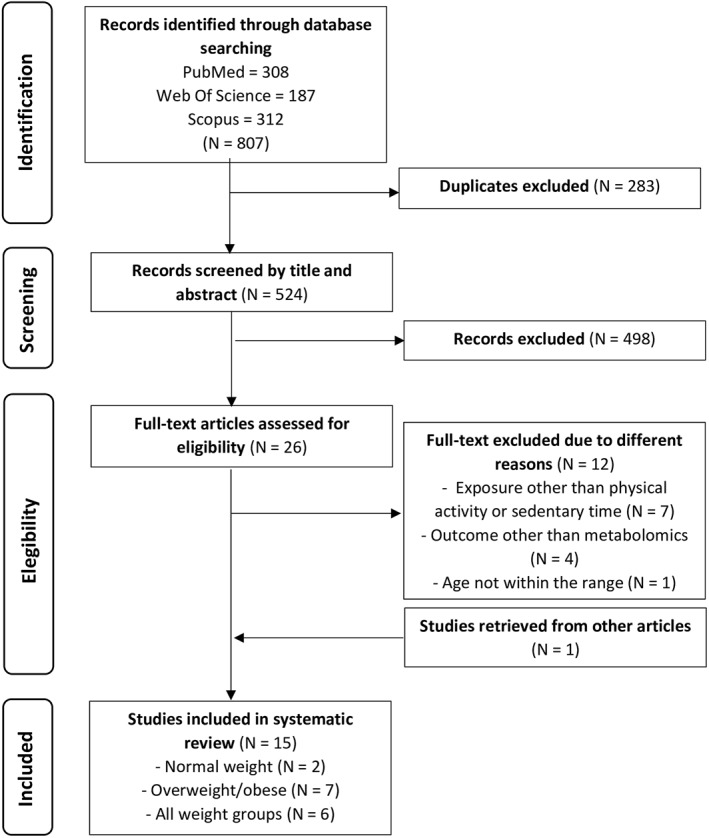
Flow chart of the systematic review.
Characteristics of the Studies
The characteristics of the studies included in the systematic review are summarized in Figure2and Table2. Of the 15 studies, 5 were randomized controlled trials with PA as treatment (Rasooli et al.2021; Duft et al.2020; Meucci et al.2017; Stergioulas and Filippou2006; Baghersalimi et al.2019) and 4 were uncontrolled intervention studies (Short et al.2019; Zhou et al.2021; Gumus et al.2021; Wang et al.2023). The number of participants in these 9 intervention studies ranged from 11 to 68. Of the 15 studies, 6 were cross‐sectional studies (Zheng et al.2014; Bell et al.2018; Jones et al.2019; Duft et al.2022; Haapala, Leppänen, et al.2022; Jones et al.2021): 3 focusing on PA (Zheng et al.2014; Bell et al.2018; Jones et al.2019), and 3 on CRF (Duft et al.2022; Haapala, Leppänen, et al.2022; Jones et al.2021). The number of participants in the cross‐sectional studies ranged from 57 to 1826. In all 15 studies, the age of the participants ranged from 6 to 18 years, with most of them having entered puberty. Seven studies were conducted among children or adolescents living with overweight or obesity (Zheng et al.2014; Duft et al.2022; Short et al.2019; Rasooli et al.2021; Duft et al.2020; Meucci et al.2017; Baghersalimi et al.2019), two studies among those with normal weight (Stergioulas and Filippou2006; Wang et al.2023), 4 studies included all weight groups (Bell et al.2018; Jones et al.2019; Haapala, Leppänen, et al.2022; Jones et al.2021), and 2 studies were executed in athletes (Zhou et al.2021; Gumus et al.2021). Urine and blood (serum and plasma) were the 2 sample matrices represented, with 10 studies using blood (Bell et al.2018; Jones et al.2019; Duft et al.2022; Haapala, Leppänen, et al.2022; Jones et al.2021; Short et al.2019; Gumus et al.2021; Duft et al.2020; Wang et al.2023; Baghersalimi et al.2019), 1 study using urine (Meucci et al.2017), and 4 studies using both (Zheng et al.2014; Zhou et al.2021; Rasooli et al.2021; Stergioulas and Filippou2006). NMR was used as the measurement method in 7 studies (Zheng et al.2014; Bell et al.2018; Jones et al.2019; Duft et al.2022; Haapala, Leppänen, et al.2022; Jones et al.2021; Duft et al.2020), LC‐MS in 4 studies (Short et al.2019; Gumus et al.2021; Rasooli et al.2021; Wang et al.2023), and GC‐MS in 3 studies (Zhou et al.2021; Meucci et al.2017; Stergioulas and Filippou2006). In addition, 1 study used LC with fluorescence detection (Baghersalimi et al.2019). Of the studies, 5 applied an untargeted metabolomics approach, with 3 of these performed using NMR (Zheng et al.2014; Duft et al.2020,2022) and 2 using GC‐MS (Zhou et al.2021; Meucci et al.2017).
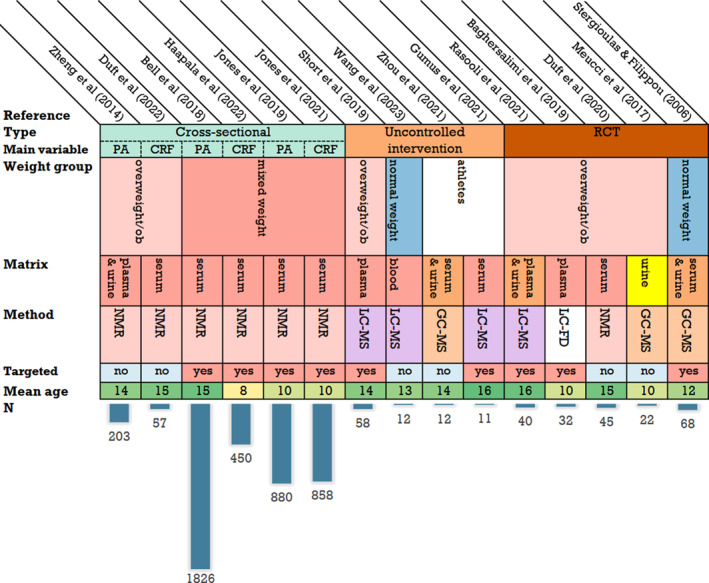
Summary of the studies included in this systematic review. CRF, Cardiorespiratory fitness; FD, Fluorescence detection; GC, Gas chromatography; LC, Liquid chromatography; MS, Mass spectrometry; NMR, Nuclear magnetic resonance; PA, Physical activity; RCT, Randomized controlled trial.
Table: Characteristics of the studies included in the systematic literature review.
Effects of Randomized Controlled Physical Activity Interventions on Metabolites
Nine studies investigated the effects of different PA interventions on blood or urine metabolites with a total of 300 participants (Table2). The structures of the interventions are detailed further in Supporting InformationS1: Table S5. Rasooli et al. (2021) investigated the effects of an 8‐week circuit resistance training on plasma metabolites and urinary glycine‐conjugated adducts using LC‐MS in 40 adolescent boys living with obesity, divided into a training group and a control group. Plasma glucose, valine, mannose, lysine, and total branched‐chain amino acids (BCAAs) decreased, while plasma asparagine, glycine, and serine increased in the training group compared to the control group. In addition, urinary 2‐methylbutyrylglycine and butyrylglycine increased in the training group compared to the control group, which the authors attributed to increased amino acid degradation. Baghersalimi et al. (2019) investigated the effects of an 8‐week walking program on plasma amino acids using LC with fluorescence detection in 32 girls aged 9–11 years living with obesity, divided into a continuous‐walking group, an interval‐walking group, and a control group. While most amino acids were unaltered in response to the walking interventions, lysine increased in the control group but not in the walking groups. In addition, global arginine bioavailability, which the authors defined as the sum of arginine, citrulline, and ornithine, decreased in the control and interval‐walking group but not in the continuous‐waking group. Duft et al. (2020) investigated the effects of a 12‐week combined resistance and aerobic training on serum metabolites using an untargeted NMR analysis in 37 adolescents living with overweight or obesity. 2‐oxoisocaproate, 3‐hydroxyisobutyrate, glucose, and pyruvate decreased, while glutamine increased in the training group compared to the control group. Stergioulas and Filippou (2006) investigated the effects of an 8‐week endurance training followed by a 4‐week detraining period on urinary lipids and arachidonic acid metabolites using GC‐MS in 68 adolescent boys living with normal weight. A major urinary metabolite of prostacyclin decreased in the intervention group but not in the control group. Meucci et al. (2017) studied the effects of a 4‐ or 8‐week supervised play‐based PA intervention on the urinary metabolomic signature using untargeted GC‐MS in 22 children and adolescents aged 8–12 years living with overweight. I 8‐week intervention changed several urine metabolites related to glycolysis, amino acid metabolism, and purine degradation compared to the control group.
Effects of Uncontrolled Physical Activity Interventions on Metabolites
Wang et al. (2023) studied the effects of a 6‐week sprint interval training with no control group on circulatory lipid profiles in 12 untrained adolescent boys living with normal weight. Serum ceramides and several long‐chain diglycerides increased and free long‐chain fatty acids decreased during the intervention. Short et al. (2019) studied the effects of a 16‐week training program consisting of 20 min of any type of MVPA per week at a fitness center with no intervention group on plasma amino acids and derivatives in 58 adolescents living with overweight. and found no changes in amino acids during the intervention. Zhou et al. (2021) studied the metabolic effects of 2‐week strength‐endurance training among 12 female adolescent athletes with no control group using an untargeted GC‐MS analysis. Several serum amino acids, glycerol, and fatty acids increased, while serum and urine metabolites of the citric acid cycle decreased in response to exercise. Gumus et al. (2021) investigated the effects of a single bout of maximal aerobic exercise on targeted plasma metabolites using LC‐MS in 11 adolescent athletes. Plasma glycerol, ketones,β‐hydroxybutyrate, acylcarnitines, pyruvate, lactate, alanine, glutamate, and BCAA catabolism products increased and plasma valine decreased in response to the acute exercise.
Associations Between Measures of Physical Activity and Metabolites
Three cross‐sectional studies investigated the associations between PA and blood metabolites with a total of 2909 participants (Table2). Zheng et al. (2014) found no associations of daily steps taken with plasma or urine metabolites analyzed by untargeted NMR in 203 adolescents living with overweight. Bell et al. (2018) studied the associations of device‐measured total PA with serum lipids and other metabolites, including amino acids and fatty acids, using targeted NMR in 1826 adolescents with mixed weight, in which 4.2% were living with obesity. Higher device‐measured total PA was associated with a more favorable lipid profile, entailing higher HDL cholesterol and particle size, lower very‐low‐density lipoprotein (VLDL) cholesterol and particle count, and lower triglycerides. Total PA was also associated with lower alanine and pyruvate and higher aromatic amino acids and citrate. A higher MVPA was additionally associated with a lower 3‐hydroxybutyrate, and higher sedentary time was associated with lower tyrosine and citrate as well as with higher alanine, histidine, and creatinine. Jones et al. (2019) studied the associations of device‐measured MVPA with serum lipids using NMR in 880 adolescents across all weight groups. Higher device‐measured MVPA was associated with a more favorable lipid profile entailing lower VLDL and chylomicron particles, lower cholesterol and triglycerides in these lipoproteins, and lower total triglycerides independent of waist circumference. Furthermore, higher sedentary time was associated with larger VLDL particles and chylomicron cholesterol content and smaller average LDL particle size. However, these associations were largely explained by waist circumference.
Associations Between Cardiorespiratory Fitness and Metabolites
Three studies investigated the associations between CRF and blood metabolites with a total of 1365 participants (Table2). Duft et al. (2022) studied 33 adolescents living with overweight and found that CRF, assessed by VO2peak divided by body mass, was negatively associated with serum glutamate, tyrosine, and valerate analyzed with untargeted NMR. Haapala, Leppänen, et al. (2022) studied 450 children from a general population, in which 13% were living with overweight, and found that CRF, assessed by a maximal workload divided by lean mass, was positively associated with serum glutamine and phenylalanine, analyzed by the same targeted NMR as (Bell et al.2018). In addition, CRF was positively associated with medium‐sized HDL particles and HDL cholesterol. Jones et al. (2021) investigated the associations of CRF, assessed by an intermittent shuttle run test, with serum lipoprotein subclasses using NMR in 858 adolescents from the same cohort as in the other study (Jones et al.2019). They observed that CRF was negatively associated with VLDL and chylomicron particles, cholesterol in these lipoproteins, and total triglycerides independent of waist circumference (Jones et al.2021).
Enrichment and Pathway Analysis
Following the enrichment analysis, it was observed that the circulating metabolites mainly comprised of amino acids and their metabolites, and particularly glycogenic amino acids (Figure3). The affected pathways in the PA intervention studies (p< 0.05 after false discovery rate correction) were the urea cycle and ammonia recycling, followed by the glucose‐alanine cycle, the metabolism of amino acids glycine, serine, alanine, glutamate, and aspartate, glutathione metabolism, and aerobic glycolysis, also known as the Warburg effect. When looking at the metabolites associated with CRF, the phenylalanine‐tyrosine metabolic pathway was enriched. The glucose‐alanine cycle and alanine metabolism were the most enriched pathways associated with PA, although the results were not statistically significant after the false discovery rate correction. Metabolic networks and pathway mappings are visualized in Figure S1.
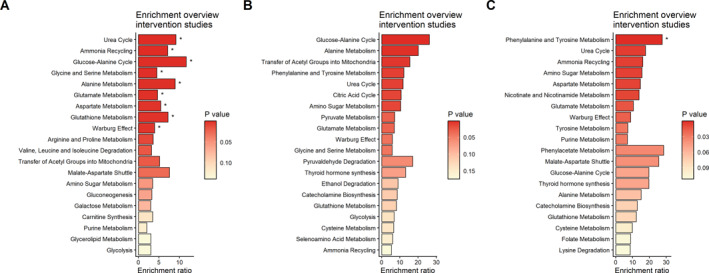
Pathway analysis results upon inclusion of: (A) metabolites with significant changes in the intervention studies, (B) metabolites with significant associations with physical activity, and (C) metabolites with significant associations with cardiorespiratory fitness. Metabolites were compared to SMPDB pathways using MetaboAnalyst 5, Enrichment Analysis. * Indicates a statistically significant enrichment of the pathway (p< 0.05 after false discovery rate correction).
Discussion
The aim of this work was to systematically review the literature on the effects of PA interventions on the metabolome and the associations of PA, sedentary time, and CRF with the metabolome of children and adolescents as well as to address the role of weight status in this context. We found 15 studies on this topic, half of which were conducted in individuals living with overweight. Notably, most of these studies used metabolomics methods targeting lipid subgroups or amino acids. The absence of metabolic fingerprinting studies using LC‐MS indicates a niche for these studies in the fields of pediatrics, exercise science, and public health. Nevertheless, using manual curation and pathway analysis, we identified metabolites and metabolic pathways that could serve as potential biomarkers of the beneficial effects of PA on cardiometabolic health, among these lipid metabolism, BCAA catabolism, ammonia metabolism, and the glucose‐alanine cycle (Figure4). The interconnectivity between amino acid metabolism, ammonia degradation, and the central energy metabolism of skeletal muscle was elucidated by metabolic networks (Figure S1). The directions of changes in metabolites during PA interventions or metabolites associated with PA were largely consistent across children and adolescents with normal body weight and those living with overweight.
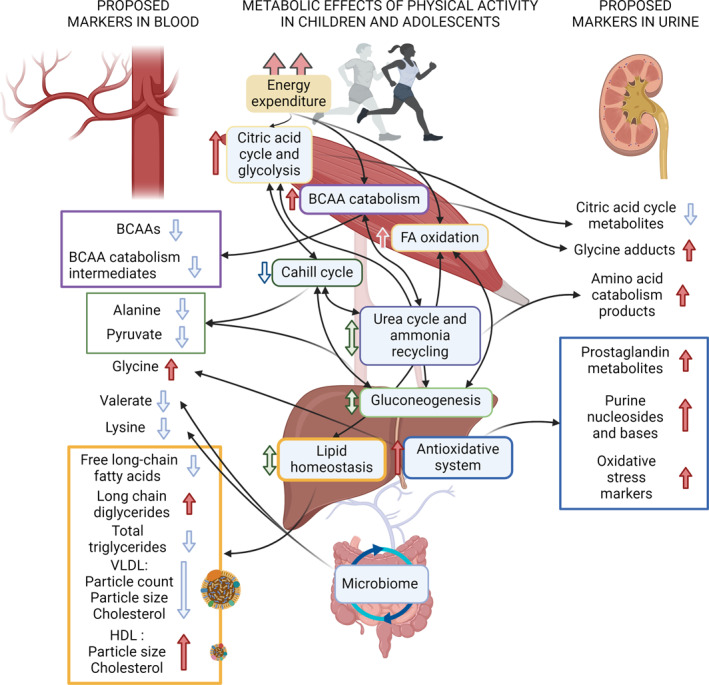
Summary of the main findings of this systematic review. BCAA, branched‐chain amino acids; FA, fatty acid; HDL, high density lipoprotein; VLDL, very‐low‐density lipoprotein. Created withBiorender.com.
High‐intensity PA caused acute depletion of serum long‐chain acyl‐carnitines and an increase in fatty acid oxidation products (Gumus et al.2021), and likewise, an increase in free long‐chain fatty acids (Zhou et al.2021), corroborating previous research (Hargreaves and Spriet2020) (Figure4). Higher PA and CRF were also consistently associated with a more favorable blood lipid profile entailing lower triglycerides (Bell et al.2018; Jones et al.2019; Stergioulas and Filippou2006), larger and more lipid‐rich HDL particles, and higher Apo‐A1 (Bell et al.2018; Jones et al.2019; Duft et al.2022; Haapala, Leppänen, et al.2022). Besides HDL, the VLDL metabolism appeared to be PA‐dependent in studies (Bell et al.2018; Jones et al.2019; Duft et al.2022), seemingly opposing changes seen in type 2 diabetes in pediatric populations (Tricò et al.2018). Our results largely corroborate previously found associations of higher PA and better CRF with improved lipid subclass profiles among adults (Kujala et al.2019,2022,2013) and adolescents (Lehtovirta et al.2022). Higher PA associates with more favorable blood lipid profiles and can thereby induce beneficial effects on cardiometabolic risk at an early age. High‐quality experimental studies should elucidate these causal links further.
PA decreased serum concentrations of total BCAAs, valine (Gumus et al.2021; Rasooli et al.2021) and 2‐oxoisocaproate and 3‐hydroxyisobutyrate (Duft et al.2020), respective catabolic intermediates of leucine and valine (Yudkoff et al.2005; Jang et al.2016). In urine, glycine‐conjugated adducts (Rasooli et al.2021) and 2‐hydroxy‐3‐methylbutyric acid (Meucci et al.2017), derived from BCAA catabolism (Liebich and Först1984), tended to increase. BCAAs are important substrates for skeletal muscle tissue (Zhou et al.2021), providing substrates for central energy production, and their catabolism may also regulate a shift from glycolysis to beta‐oxidation as an energy source (Kainulainen et al.2013). However, consistently elevated circulating levels of BCAAs have been observed in obesity and type 2 diabetes (Lynch and Adams2014). The serum level of the catabolic intermediate of valine, 3‐hydroxyisobutyrate, is considered a novel predictor of type 2 diabetes (Sacks et al.2018). PA can potentially alleviate the overweight‐induced changes in BCAA metabolism in early life, which warrants further studies.
The urea cycle and ammonia recycling pathways were affected by PA interventions (Figure3) and centrally associated with the metabolism of amino acids (Figure S1). Excess ammonia, which is not excreted as urea, may alternatively be recycled in series of transamination and deamination reactions between amidic and dicarboxylic amino acids (Walls et al.2015; Batool et al.2016). Arginine, which is catabolized to urea and ornithine, has been found to have ergogenic and cardioprotective effects through the supply of nitric oxide, which improves vascular endothelial function (Hargreaves and Spriet2020; Gornik and Creager2004). Higher PA and CRF also tended to associate with higher circulating glutamine and asparagine as well as with lower glutamate and aspartate (Haapala, Leppänen, et al.2022; Zhou et al.2021; Rasooli et al.2021; Duft et al.2020). Decreased circulating glutamine levels have previously been associated with childhood obesity (De Spiegeleer et al.2021), and both glutamine and asparagine have been suggested as substrates against fatigue (Marquezi et al.2003; Coqueiro et al.2019). PA may possibly induce beneficial changes in ammonia metabolism in children and adolescents, but this awaits further confirmation.
PA notably affected the metabolic pathways involving alanine, glucose, and glutamate (Figure3). A single bout of vigorous PA increased serum alanine and glutamate (Zhou et al.2021; Gumus et al.2021), while in the cross‐sectional studies, higher PA and CRF were associated with lower serum alanine, glutamate, and pyruvate (Bell et al.2018; Duft et al.2022). This may be due to adaptive mechanisms and increased uptake of these metabolites into the liver and skeletal muscle (Sarabhai and Roden2019). Higher concentrations of this trio have been associated with insulin resistance in childhood (De Spiegeleer et al.2021). These metabolites participate in the glucose‐alanine cycle, which acts as a way to degrade muscle proteins to provide substrates for gluconeogenesis (PubChem Pathway Summary for PathwayBlob SMP00872212022). PA interventions also lowered fasting plasma glucose (Duft et al.2022; Rasooli et al.2021), although this observation itself is not novel (Sampath Kumar et al.2019). PA increases energy demand and may consequently upregulate central energy production pathways (Gibala et al.1998). While a single bout of exercise in adolescents increased blood pyruvate circulation (Gumus et al.2021), long‐term studies showed an inverse relationship between PA and pyruvate (Bell et al.2018; Duft et al.2020) and direct relationship with PA and citrate (Bell et al.2018). These results generally contradict the changes observed in obesity and metabolic dysfunctions (Butte et al.2015; De Spiegeleer et al.2021). Taken together, the findings suggest additional mechanisms by which PA could influence muscle and liver metabolism at an early age (Pedersen and Febbraio2012) (Figure4).
Metabolic pathways involving glycine and glutathione were found to be altered in interventions (Figure3). Both circulating oxidized glutathione and glutathione breakdown products (Mullins et al.2020), increased in response to high‐intensity exercise (Zhou et al.2021). Urinary release of biomarkers of oxidation also tended to increase in response to exercise (Zhou et al.2021; Meucci et al.2017). This may be due to PA having conditioning effects on glutathione‐dependent antioxidant defenses (Sen1999), which could potentially counteract the oxidative states seen in childhood obesity and diabetes (Pastore et al.2012). In addition, the PA‐induced increase in serum glycine (Zhou et al.2021; Rasooli et al.2021) could support the synthesis and degradation of glutathione. Indeed, lower circulating levels of glycine have been observed in children with obesity and impending insulin resistance (De Spiegeleer et al.2021; Rasooli et al.2021), making the increase of this biomarker by PA another interesting finding.
The cross‐sectional associations of PA and CRF with the circulating aromatic amino acids (Figure3), have been examined in several studies among children living with obesity (De Spiegeleer et al.2021). The results of these studies have been somewhat contradictory for tyrosine, which was negatively associated with CRF (Duft et al.2022) and positively associated with total PA (Bell et al.2018). In other cross‐sectional studies among children and adolescents, CRF (Haapala, Leppänen, et al.2022) and PA (Bell et al.2018) were directly related to phenylalanine. However, no changes in aromatic amino acids were seen in any of the intervention studies. Aromatic amino acids, have been reported to be higher in children with obesity compared to peers with normal body weight (Butte et al.2015). In addition, higher circulating aromatic amino acid levels may predict increases in BMI and fat mass in adolescents (Rodríguez‐Carmona et al.2022). As exercise has been shown to mitigate oxidative stress caused by high levels of phenylalanine in rats (Mazzola et al.2011), it is possible that more active individuals are tolerant of higher phenylalanine levels and its associated oxidative stress. Further research should confirm if PA has predictable effects on aromatic amino acids in pediatric populations, and whether body composition or biological maturation may confound these results.
Only two studies were found to investigate alterations in metabolites associated with sedentary time. Higher sedentary time associated with lower tyrosine and citrate as well as with higher alanine, histidine, and creatinine in mixed‐weight adolescents (Bell et al.2018), generally showing opposite associations as for PA. Yet, sedentary time was not associated with any lipid measures independent of adiposity (Jones et al.2019). Together with lower PA, higher sedentary time has been associated with increased cardiometabolic risk since childhood, although the modulatory effects of physical inactivity on cardiometabolic health have not been fully elucidated (Lavie et al.2019). Therefore, more studies on the metabolic effects of sedentary time in children and adolescents are warranted.
This review covered children and adolescents with varying body weight, while half of the studies were conducted in participants living with overweight. Thus, in the cross‐sectional studies, only associations that were controlled for adiposity measures, such as fat mass or waist circumference, were of interest for this review. Using this approach, the associations of PA with several circulating metabolites, such as triglycerides and VLDL‐markers, were found remarkably consistent across studies. Unfortunately, a subgroup analysis for normal‐ and overweight populations was not feasible due to the small number of studies. The two studies conducted in adolescent athletes were somewhat outliers in this review. However, they give insight into how different intensities of PA interventions and different baseline characteristics of the participants can affect metabolomics results in adolescents.
Urine, a commonly used sample matrix in metabolomics, was used in four PA‐intervention studies on adolescents. While the analysis methods and participants varied across these studies, the shifts seen in urinary metabolites seemingly corroborated the PA‐associated increase in BCAA catabolism, upregulation of the citric acid cycle and increase in oxidative stress (Figure4). Further studies on urine metabolites with larger numbers of participants and greater compound coverage are needed to confirm these findings. Besides urine, saliva could also offer a great alternative for researchers and clinicians to easily, non‐invasively, and repeatedly assess changes in biomarkers and even predict the development of cardiometabolic diseases since childhood (Shah2018; Wijnant et al.2020). Surprisingly, none of the studies included in the current review used salivary metabolomics, highlighting the need for this in future studies.
The main strength of this systematic review was the use of a comprehensive search strategy, including subjective and device‐based measures of PA and sedentary time, and the additional strength of using measures of CRF. The inclusion of several study designs and articles published since inception ensured broad coverage. A limitation of the review is the relatively small number of studies based on different methodologies that were available. In addition, since the intervention studies had relatively small sample sizes (< 95 participants) and not all included a control group, the results should be confirmed in high‐quality trials with larger sample sizes. There were only few studies applying untargeted metabolomics, with a notable absence of untargeted LC‐MS analyses, which might limit drawing conclusions about metabolic alterations associated with PA and CRF. In addition, the different ways of assessing PA might partly explain the heterogeneity in the results of studies. Furthermore, several studies included children and adolescents at different stages of pubertal development and not all of them took puberty into account in the statistical analyses although it may affect the levels of PA and sedentary time, exercise responses, and metabolic profiles. Finally, only two studies were conducted in children, referring to the participants under 10 years in accordance with the WHO (World Health Organization2023), limiting the generalization of the findings below that age. To gain knowledge on pediatric populations in various developmental phases, further studies are warranted.
Depending on the type and intensity, PA induced a multitude of acute and long‐term metabolic changes related to muscle energy balance, amino acid turnover, and antioxidant systems. Moreover, across children and adolescents of different weight groups, increased PA seemed to be associated with changes in circulating BCAAs, lipids, and citric cycle metabolites, which generally seemed to oppose the changes seen in obesity and insulin resistance at an early age. Further studies could corroborate whether the observed effects and relationships are causal in nature. In addition, baseline PA level, exercise modalities, body composition (e.g., body fat and lean mass), and biological maturation should be considered in future studies. Overall, the field of metabolomics in exercise medicine gravely lacks research on pediatric populations. Novel, accessible sample matrices, such as saliva, would make it easier to collect samples and increase sample sizes for metabolomics studies. Finally, global metabolomic fingerprinting methods with high sensitivity and coverage, such as high‐resolution MS, represent a special niche in the fields of pediatrics, exercise science, and public health.
Funding
This research was funded by the Research Council of Finland (MHL: grant nr 350820) and supported by the Swedish Cultural Foundation in Finland (HV) and Folkhälsan Research Foundation (HV).
Conflicts of Interest
The authors declare no conflicts of interest.
References
- Aromataris, E. 2022. “MZe. JBI Manual for Evidence Synthesis [Online]2020 9 November 2022. ”.
- Baghersalimi, M. , R. Fathi, andS. Kazemi. 2019. “The Effect of Eight‐Week Walking Program on Plasma Levels of Amino Acids in Early/Mid Pubertal Obese Girls. ”Medical Journal of the Islamic Republic of Iran33: 128: Epub 20191130. . doi.org/10.34171/mjiri.33.128
- Batool, T. , E. A. Makky, M. Jalal, andM. M. Yusoff. 2016. “A Comprehensive Review on L‐Asparaginase and Its Applications. ”Applied Biochemistry and Biotechnology178, no. 5: 900–923: Epub 20151107. . doi.org/10.1007/s12010-015-1917-3
- Bell, J. A. , M. Hamer, R. C. Richmond, N. J. Timpson, D. Carslake, andG. Davey Smith. 2018. “Associations of Device‐Measured Physical Activity Across Adolescence With Metabolic Traits: Prospective Cohort Study. ”PLoS Medicine15, no. 9: e1002649. . doi.org/10.1371/journal.pmed.1002649
- Bertram, H. C. , N. Eggers, andN. Eller. 2009. “Potential of Human Saliva for Nuclear Magnetic Resonance‐Based Metabolomics and for Health‐Related Biomarker Identification. ”Analytical Chemistry81, no. 21: 9188–9193. . doi.org/10.1021/ac9020598
- Bosch, J. A. 2014. The Use of Saliva Markers in Psychobiology: Mechanisms and Methods, 99–108. S. KARGER AG. doi.org/10.1159/000358864
- Butte, N. F. , Y. Liu, I. F. Zakeri, et al. 2015. “Global Metabolomic Profiling Targeting Childhood Obesity in the Hispanic Population. ”American Journal of Clinical Nutrition102, no. 2: 256–267. . doi.org/10.3945/ajcn.115.111872
- Coqueiro, A. Y. , M. M. Rogero, andJ. Tirapegui. 2019. “Glutamine as an Anti‐Fatigue Amino Acid in Sports Nutrition. ”Nutrients11, no. 4: 863: Epub 20190417. . doi.org/10.3390/nu11040863
- De Spiegeleer, M. , E. De Paepe, L. Van Meulebroek, I. Gies, J. De Schepper, andL. Vanhaecke. 2021. “Paediatric Obesity: A Systematic Review and Pathway Mapping of Metabolic Alterations Underlying Early Disease Processes. ”Molecular Medicine27, no. 1: 145: Epub 20211106. . doi.org/10.1186/s10020-021-00394-0
- Dimitri, P. , K. Joshi, andN. Jones. 2020. “Moving More: Physical Activity and Its Positive Effects on Long Term Conditions in Children and Young People. ”Archives of Disease in Childhood105, no. 11: 1035–1040: Epub 20200320. . doi.org/10.1136/archdischild-2019-318017
- Duft, R. G. , A. Castro, I. L. P. Bonfante, et al. 2020. “Altered Metabolomic Profiling of Overweight and Obese Adolescents After Combined Training Is Associated With Reduced Insulin Resistance. ”Scientific Reports10, no. 1: 16880: Epub 20201009. . doi.org/10.1038/s41598-020-73943-y
- Duft, R. G. , A. Castro, I. L. P. Bonfante, et al. 2022. “Serum Metabolites Associated With Increased Insulin Resistance and Low Cardiorespiratory Fitness in Overweight Adolescents. ”Nutrition, Metabolism, and Cardiovascular Diseases32, no. 1: 269–278: Epub 20211009. . doi.org/10.1016/j.numecd.2021.09.024
- Dunn, W. B. , D. I. Broadhurst, H. J. Atherton, R. Goodacre, andJ. L. Griffin. 2011. “Systems Level Studies of Mammalian Metabolomes: The Roles of Mass Spectrometry and Nuclear Magnetic Resonance Spectroscopy. ”Chemical Society Reviews40, no. 1: 387–426: Epub 20100817. . doi.org/10.1039/b906712b
- Fiehn, O. 2002. “Metabolomics—The Link Between Genotypes and Phenotypes. ”Plant Molecular Biology48, no. 1–2: 155–171. . doi.org/10.1023/a:1013713905833
- Frodermann, V. , D. Rohde, G. Courties, et al. 2019. “Exercise Reduces Inflammatory Cell Production and Cardiovascular Inflammation via Instruction of Hematopoietic Progenitor Cells. ”Nature Medicine25, no. 11: 1761–1771. . doi.org/10.1038/s41591-019-0633-x
- Frolkis, A. , C. Knox, E. Lim, et al. 2009. “SMPDB: The Small Molecule Pathway Database. ” Supplement, Nucleic Acids Research38, no. suppl_1: D480–D487. . doi.org/10.1093/nar/gkp1002
- Gibala, M. J. , D. A. MacLean, T. E. Graham, andB. Saltin. 1998. “Tricarboxylic Acid Cycle Intermediate Pool Size and Estimated Cycle Flux in Human Muscle During Exercise. ”American Journal of Physiology275, no. 2: E235–E242. . doi.org/10.1152/ajpendo.1998.275.2.e235
- Gornik, H. L. , andM. A. Creager. 2004. “Arginine and Endothelial and Vascular Health. ” Supplement, Journal of Nutrition134, no. 10 Suppl: 2880S–2887S: discussion 95S. . doi.org/10.1093/jn/134.10.2880s
- Gumus, B. P. , M. E. Ramaker, K. A. Mason, et al. 2021. “Branched‐Chain Amino Acid Catabolism and Cardiopulmonary Function Following Acute Maximal Exercise Testing in Adolescents. ”Frontiers in Cardiovascular Medicine8: 721354: Epub 20210818. . doi.org/10.3389/fcvm.2021.721354
- Haapala, E. A. , M. H. Leppänen, M. Lehti, et al. 2022. “Cross‐Sectional Associations Between Cardiorespiratory Fitness and NMR‐Derived Metabolic Biomarkers in Children—The PANIC Study. ”Frontiers in Endocrinology13: 954418: Epub 20220923. . doi.org/10.3389/fendo.2022.954418
- Haapala, E. A. , T. Tompuri, N. Lintu, et al. 2022. “Is Low Cardiorespiratory Fitness a Feature of Metabolic Syndrome in Children and Adults?”Journal of Science and Medicine in Sport25, no. 11: 923–929: Epub 20220804. . doi.org/10.1016/j.jsams.2022.08.002
- Hargreaves, M. , andL. L. Spriet. 2020. “Skeletal Muscle Energy Metabolism During Exercise. ”Nature Metabolism2, no. 9: 817–828: Epub 20200803. . doi.org/10.1038/s42255-020-0251-4
- Herder, C. , B. Kowall, A. G. Tabak, andW. Rathmann. 2014. “The Potential of Novel Biomarkers to Improve Risk Prediction of Type 2 Diabetes. ”Diabetologia57, no. 1: 16–29. . doi.org/10.1007/s00125-013-3061-3
- Jacob, M. , A. L. Lopata, M. Dasouki, andA. M. Abdel Rahman. 2019. “Metabolomics Toward Personalized Medicine. ”Mass Spectrometry Reviews38, no. 3: 221–238: Epub 20171026. . doi.org/10.1002/mas.21548
- Jang, C. , S. F. Oh, S. Wada, et al. 2016. “A Branched‐Chain Amino Acid Metabolite Drives Vascular Fatty Acid Transport and Causes Insulin Resistance. ”Nature Medicine22, no. 4: 421–426: Epub 20160307. . doi.org/10.1038/nm.4057
- Jones, P. R. , T. Rajalahti, G. K. Resaland, et al. 2021. “Cross‐Sectional and Prospective Associations Between Aerobic Fitness and Lipoprotein Particle Profile in a Cohort of Norwegian Schoolchildren. ”Atherosclerosis321: 21–29: Epub 20210208. . doi.org/10.1016/j.atherosclerosis.2021.02.002
- Jones, P. R. , T. Rajalahti, G. K. Resaland, et al. 2019. “Associations of Physical Activity and Sedentary Time With Lipoprotein Subclasses in Norwegian Schoolchildren: The Active Smarter Kids (ASK) Study. ”Atherosclerosis288: 186–193: Epub 20190605. . doi.org/10.1016/j.atherosclerosis.2019.05.023
- Juonala, M. , C. G. Magnussen, G. S. Berenson, et al. 2011. “Childhood Adiposity, Adult Adiposity, and Cardiovascular Risk Factors. ”New England Journal of Medicine365, no. 20: 1876–1885. . doi.org/10.1056/nejmoa1010112
- Kainulainen, H. , J. J. Hulmi, andU. M. Kujala. 2013. “Potential Role of Branched‐Chain Amino Acid Catabolism in Regulating Fat Oxidation. ”Exercise and Sport Sciences Reviews41, no. 4: 194–200. . doi.org/10.1097/jes.0b013e3182a4e6b6
- Khoramipour, K. , ØSandbakk, A. H. Keshteli, A. A. Gaeini, D. S. Wishart, andK. Chamari. 2022. “Metabolomics in Exercise and Sports: A Systematic Review. ”Sports Medicine52, no. 3: 547–583. . doi.org/10.1007/s40279-021-01582-y
- Kujala, U. M. , T. Leskinen, M. Rottensteiner, et al. 2022. “Physical Activity and Health: Findings From Finnish Monozygotic Twin Pairs Discordant for Physical Activity. ”Scandinavian Journal of Medicine & Science in Sports32, no. 9: 1316–1323: Epub 20220707. . doi.org/10.1111/sms.14205
- Kujala, U. M. , V. ‐P. Makinen, S. Sipila, et al. 2013. “Long‐Term Leisure‐Time Physical Activity and Serum Metabolome. ”Circulation127, no. 3: 340–348. . doi.org/10.1161/circulationaha.112.105551
- Kujala, U. M. , J. P. Vaara, H. Kainulainen, T. Vasankari, E. Vaara, andH. Kyröläinen. 2019. “Associations of Aerobic Fitness and Maximal Muscular Strength With Metabolites in Young Men. ”JAMA Network Open2, no. 8: e198265: Epub 20190802. . doi.org/10.1001/jamanetworkopen.2019.8265
- Lavie, C. J. , C. Ozemek, S. Carbone, P. T. Katzmarzyk, andS. N. Blair. 2019. “Sedentary Behavior, Exercise, and Cardiovascular Health. ”Circulation Research124, no. 5: 799–815. . doi.org/10.1161/circresaha.118.312669
- Lee, S. , F. Norheim, T. M. Langleite, H. L. Gulseth, K. I. Birkeland, andC. A. Drevon. 2019. “Effects of Long‐Term Exercise on Plasma Adipokine Levels and Inflammation‐Related Gene Expression in Subcutaneous Adipose Tissue in Sedentary Dysglycaemic, Overweight Men and Sedentary Normoglycaemic Men of Healthy Weight. ”Diabetologia62, no. 6: 1048–1064. . doi.org/10.1007/s00125-019-4866-5
- Lehtovirta, M. , F. Wu, S. P. Rovio, et al. 2022. “Association of Physical Activity With Metabolic Profile From Adolescence to Adulthood. ”Scandinavian Journal of Medicine & Science in Sports33: 307–318. Epub 20221104. . doi.org/10.1111/sms.14261
- Liebich, H. M. , andC. Först. 1984. “Hydroxycarboxylic and Oxocarboxylic Acids in Urine: Products From Branched‐Chain Amino Acid Degradation and From Ketogenesis. ”Journal of Chromatography309, no. 2: 225–242. . doi.org/10.1016/0378-4347(84)80031-6
- Lynch, C. J. , andS. H. Adams. 2014. “Branched‐Chain Amino Acids in Metabolic Signalling and Insulin Resistance. ”Nature Reviews Endocrinology10, no. 12: 723–736: Epub 20141007. . doi.org/10.1038/nrendo.2014.171
- Marquezi, M. L. , H. A. Roschel, A. dos Santa Costa, L. A. Sawada, andA. H. LanchaJr. 2003. “Effect of Aspartate and Asparagine Supplementation on Fatigue Determinants in Intense Exercise. ”International Journal of Sport Nutrition and Exercise Metabolism13, no. 1: 65–75. . doi.org/10.1123/ijsnem.13.1.65
- Mazzola, P. N. , M. Terra, A. P. Rosa, et al. 2011. “Regular Exercise Prevents Oxidative Stress in the Brain of Hyperphenylalaninemic Rats. ”Metabolic Brain Disease26, no. 4: 291–297: Epub 20110927. . doi.org/10.1007/s11011-011-9264-8
- Meucci, M. , C. Baldari, L. Guidetti, J. R. Alley, C. Cook, andS. R. Collier. 2017. “Metabolomic Shifts Following Play‐Based Activity in Overweight Preadolescents. ”Current Pediatric Reviews13, no. 2: 144–151. . doi.org/10.2174/1573396313666170113145553
- Mullins, M. E. , M. S. Jones, R. D. Nerenz, E. S. Schwarz, andD. J. Dietzen. 2020. “5‐Oxoproline Concentrations in Acute Acetaminophen Overdose. ”Clinical Toxicology58, no. 1: 62–64: Epub 20190503. . doi.org/10.1080/15563650.2019.1609684
- NCD Risk Factor Collaboration (NCD‐RisC). 2017. “Worldwide Trends in Body‐Mass Index, Underweight, Overweight, and Obesity From 1975 to 2016: A Pooled Analysis of 2416 Population‐Based Measurement Studies in 128·9 Million Children, Adolescents, and Adults. ”Lancet390, no. 10113: 2627–2642. . doi.org/10.1016/s0140-6736(17)32129-3
- Nyström, C. D. , P. Henriksson, V. Martínez‐Vizcaíno, et al. 2017. “Does Cardiorespiratory Fitness Attenuate the Adverse Effects of Severe/Morbid Obesity on Cardiometabolic Risk and Insulin Resistance in Children? A Pooled Analysis. ”Diabetes Care40, no. 11: 1580–1587. . doi.org/10.2337/dc17-1334
- Page, M. J. , J. E. McKenzie, P. M. Bossuyt, et al. 2021. “The PRISMA 2020 Statement: An Updated Guideline for Reporting Systematic Reviews. ”BMJ372: n71: Epub 20210329. . doi.org/10.1136/bmj.n71
- Pastore, A. , P. Ciampalini, G. Tozzi, et al. 2012. “All Glutathione Forms Are Depleted in Blood of Obese and Type 1 Diabetic Children. ”Pediatric Diabetes13, no. 3: 272–277: Epub 20110913. . doi.org/10.1111/j.1399-5448.2011.00806.x
- Pedersen, B. K. , andM. A. Febbraio. 2012. “Muscles, Exercise and Obesity: Skeletal Muscle as a Secretory Organ. ”Nature Reviews Endocrinology8, no. 8: 457–465: Epub 20120403. . doi.org/10.1038/nrendo.2012.49
- PubChem Pathway Summary for PathwayBlob SMP0087221. 2022. Glucose‐Alanine Cycle. Pathbank. National Center for Biotechnology Information.
- Roman‐Viñas, B. , J. ‐P. Chaput, P. T. Katzmarzyk, et al. 2016. “Proportion of Children Meeting Recommendations for 24‐hour Movement Guidelines and Associations With Adiposity in a 12‐Country Study. ”International Journal of Behavioral Nutrition and Physical Activity13, no. 1: 123. . doi.org/10.1186/s12966-016-0449-8
- Rasooli, S. A. , R. Fathi, F. A. Golzar, andM. Baghersalimi. 2021. “The Effect of Circuit Resistance Training on Plasma Levels of Amino Acids, Alpha‐Hydroxybutyrate, Mannose, and Urinary Levels of Glycine Conjugated Adducts in Obese Adolescent Boys. ”Applied Physiology, Nutrition and Metabolism46, no. 6: 561–570: Epub 20201105. . doi.org/10.1139/apnm-2020-0171
- Rodríguez‐Carmona, Y. , J. L. Meijer, Y. Zhou, et al. 2022. “Metabolomics Reveals Sex‐Specific Pathways Associated With Changes in Adiposity and Muscle Mass in a Cohort of Mexican Adolescents. ”Pediatric Obesity17, no. 6: e12887: Epub 20220112. . doi.org/10.1111/ijpo.12887
- Sacks, D. , B. Baxter, B. C. V. Campbell, et al. 2018. “Multisociety Consensus Quality Improvement Revised Consensus Statement for Endovascular Therapy of Acute Ischemic Stroke. ”International Journal of Stroke13, no. 6: 612–632: Epub 20180522. . doi.org/10.3174/ajnr.a5638
- Sahoo, K. , B. Sahoo, A. K. Choudhury, N. Y. Sofi, R. Kumar, andA. S. Bhadoria. 2015. “Childhood Obesity: Causes and Consequences. ”Journal of Family Medicine and Primary Care4, no. 2: 187–192. . doi.org/10.4103/2249-4863.154628
- Sampath Kumar, A. , A. G. Maiya, B. A. Shastry, et al. 2019. “Exercise and Insulin Resistance in Type 2 Diabetes Mellitus: A Systematic Review and meta‐analysis. ”Annals of Physical and Rehabilitation Medicine62, no. 2: 98–103: Epub 20181213. . doi.org/10.1016/j.rehab.2018.11.001
- Sarabhai, T. , andM. Roden. 2019. “Hungry for Your Alanine: When Liver Depends on Muscle Proteolysis. ”Journal of Clinical Investigation129, no. 11: 4563–4566. . doi.org/10.1172/jci131931
- Sen, C. K. 1999. “Glutathione Homeostasis in Response to Exercise Training and Nutritional Supplements. ”Molecular and Cellular Biochemistry196, no. 1–2: 31–42. . doi.org/10.1023/A:1006910011048
- Shah, S. 2018. “Salivaomics: The Current Scenario. ”Journal of Oral and Maxillofacial Pathology22, no. 3: 375–381. . doi.org/10.4103/jomfp.jomfp_171_18
- Short, K. R. , J. Q. Chadwick, A. M. Teague, et al. 2019. “Effect of Obesity and Exercise Training on Plasma Amino Acids and Amino Metabolites in American Indian Adolescents. ”Journal of Clinical Endocrinology and Metabolism104, no. 8: 3249–3261. . doi.org/10.1210/jc.2018-02698
- Stergioulas, A. T. , andD. K. Filippou. 2006. “Effects of Physical Conditioning on Lipids and Arachidonic Acid Metabolites in Untrained Boys: A Longitudinal Study. ”Applied Physiology, Nutrition and Metabolism31, no. 4: 432–441. . doi.org/10.1139/h06-020
- Tricò, D. , A. Natali, A. Mari, E. Ferrannini, N. Santoro, andS. Caprio. 2018. “Triglyceride‐Rich Very Low‐Density Lipoproteins (VLDL) Are Independently Associated With Insulin Secretion in a Multiethnic Cohort of Adolescents. ”Diabetes, Obesity and Metabolism20, no. 12: 2905–2910: Epub 20180802. . doi.org/10.1111/dom.13467
- Walls, A. B. , H. S. Waagepetersen, L. K. Bak, A. Schousboe, andU. Sonnewald. 2015. “The Glutamine‐Glutamate/GABA Cycle: Function, Regional Differences in Glutamate and GABA Production and Effects of Interference With GABA Metabolism. ”Neurochemical Research40, no. 2: 402–409: Epub 20141108. . doi.org/10.1007/s11064-014-1473-1
- Wang, A. , H. Zhang, J. Liu, et al. 2023. “Targeted Lipidomics and Inflammation Response to Six Weeks of Sprint Interval Training in Male Adolescents. ”International Journal of Environmental Research and Public Health20, no. 4: 3329: Epub 20230214. . doi.org/10.3390/ijerph20043329
- Westerterp, K. R. 2018. “Exercise, Energy Balance and Body Composition. ”European Journal of Clinical Nutrition72, no. 9: 1246–1250: Epub 20180905. . doi.org/10.1038/s41430-018-0180-4
- WHO Guidelines on Physical Activity and Sedentary Behaviour. World Health Organization. 2020.
- Wijnant, K. , L. Van Meulebroek, B. Pomian, et al. 2020. “Validated Ultra‐High‐Performance Liquid Chromatography Hybrid High‐Resolution Mass Spectrometry and Laser‐Assisted Rapid Evaporative Ionization Mass Spectrometry for Salivary Metabolomics. ”Analytical Chemistry92, no. 7: 5116–5124. . doi.org/10.1021/acs.analchem.9b05598
- World Health Organization. 2021. “Obesity and Overweight [Online]. ”.
- World Health Organization. 2023. “Adolescent Health [Online]. ”.
- Yudkoff, M. , Y. Daikhin, I. Nissim, O. Horyn, B. Luhovyy, andA. Lazarow. 2005. “Brain Amino Acid Requirements and Toxicity: The Example of Leucine. ” Supplement, Journal of Nutrition135, no. 6 Suppl: 1531s–1538s. . doi.org/10.1093/jn/135.6.1531s
- Zheng, H. , C. C. Yde, K. Arnberg, et al. 2014. “NMR‐based Metabolomic Profiling of Overweight Adolescents: An Elucidation of the Effects of Inter‐/Intraindividual Differences, Gender, and Pubertal Development. ”Biomed Research International2014: 537157: Epub 20140327. . doi.org/10.1155/2014/537157
- Zhou, W. , G. Zeng, C. Lyu, F. Kou, S. Zhang, andH. Wei. 2021. “The Effect of Strength‐Endurance Training on Serum and Urine Metabolic Profiles of Female Adolescent Volleyball Athletes. ”Physics International108, no. 2: 285–302: Epub 20210625. . doi.org/10.1556/2060.2021.00150
Republished from the open web under CC-BY. Authors: Leppänen MH, Hintikka JE, Wijnant K, Haapala EA, Lakka TA, Vanhaecke L, Viljakainen H. Read the original.