Pregnancy and kidney transplantation: optimized clinical and obstetric management to reduce maternal and perinatal complications.
Objective Review the literature to provide guidance on the appropriate clinical and obstetric management of pregnant women with kidney transplants to reduce maternal and perinatal complications. Methods The PubMed and SciELO databases, which evaluated pregnancy and kidney transplantation, were searched, focusing on clinical and obstetric management. Other variables of interest were preconception counseling, fertility, the safety of immunosuppressants, maternal complications, perinatal complications, graft worsening during pregnancy, and postpartum guidance. Results A total of 354 articles were identified, of which 76 were included in the analysis. Studies suggest that attempts to conceive should begin at least one year after kidney transplantation in the absence of graft rejection, with stable renal function (creatinine Conclusion Pregnancy in kidney transplant recipients is challenging due to maternal and perinatal risks. However, the present review demonstrates that clinical and obstetric management by an experienced multidisciplinary team contributes to better maternal and perinatal outcomes in pregnancies among kidney transplant recipients.
Introduction
Chronic kidney disease (CKD) estimates suggest that the early-stage disease affects 3 out of 100 pregnancies, whereas advanced stages affect 1 out of 750 pregnancies. Some of these patients experience loss of kidney function and require renal replacement therapy, such as hemodialysis and kidney transplantation1,2.
Patients with CKD may present blockade of the hypothalamic-pituitary-ovarian axis, with reduced serum estrogen levels and prolactin clearance, leading to anovulation, amenorrhea, and infertility. However, with advances in dialysis techniques and an increase in the rate of kidney transplants, conception rates have become more frequent3. The fertility rates in women undergoing kidney transplants and those on hemodialysis are approximately 1/10 and 1/100, respectively4.
Care for pregnant women receiving kidney transplantation represents a challenge, not only because of the physiological changes in the renal system during pregnancy, but also because of the risk of graft rejection, in addition to the greater risk of concomitant comorbidities, such as cardiovascular disorders and diabetes5,6.
Meta-analyses reiterate the impact of kidney disease during pregnancy, with a range of complications; therefore, it is important to understand the best time for conception, as well as the most appropriate clinical and obstetric management, to optimize maternal and fetal prognosis after kidney transplantation5,7.
Although it is considered a high-risk obstetric situation, pregnancy in kidney transplant patients is not contraindicated. However, it requires adequate guidance so that conception occurs at a time of clinical stability of the underlying disease and other comorbidities, with the use of immunosuppressants in safe doses aimed at reducing the risk of compromising renal function and consequent graft loss. Furthermore, multidisciplinary monitoring with obstetricians, nephrologists, nutritionists, and neonatologists is essential for the surveillance and adequate management of pregnant women who have undergone kidney transplants8.
Despite the increased fertility rate in kidney transplant recipients, there is still limited evidence, especially regarding appropriate clinical and obstetric management for better obstetric and neonatal outcomes8,9,10. Therefore, the aim of this review is to explain the current recommendations related to pregnancy in women with kidney transplantation, highlighting new consensuses and clarifying uncertainties about clinical and obstetric management, as well as treatment details, to reduce possible complications.
Method
To prepare this integrative review, studies that addressed pregnancy and kidney transplantation were included, with a focus on clinical and obstetric management. We included studies available in PubMed and the SciELO databases, published up to December 2024. The following descriptors were used: pregnancy, kidney transplantation, and chronic kidney disease. The abstracts of 354 articles were evaluated, of which 76 were selected, including meta-analyses and systematic reviews. We sought to select articles that focused on the following aspects: preconception counseling in post-transplant pregnancy; clinical and obstetric management and maternal and perinatal complications; worsening of graft function during pregnancy; and postpartum care and breastfeeding.
Fertility and Conception Following Kidney Transplantation
In addition to the recovery of kidney function, one of the greatest benefits of kidney transplantation for women with CKD is the recovery of reproductive and sexual function and fertility, which occurs approximately six months after transplantation11,12. Pregnancy in kidney transplant recipients is relatively rare, approximately five cases per 100,000 births11. Kidney transplantation may increase the chance of live birth in pregnant women who receive a transplant tenfold compared to those on dialysis12,13.
The American Society of Transplantation, the Italian Society of Nephrology, the European Best Practice Guidelines, and KDIGO (Kidney Disease: Improving Global Outcomes) suggest that women should be advised to wait at least one year after the transplant9,10,14, and, preferably, up to two years, before conception to avoid graft dysfunction, rejection or failure, infections, and the teratogenic effects of immunosuppressants10,14,15.
The American Society of Kidney Transplantation14,15establishes the following recommendations for a pregnancy with a lower risk of complications:
Experts recommend that women with CKD wait for a kidney transplant before trying to get pregnant. However, it should be emphasized that, even after transplantation, pregnancy remains at high risk of complications (preeclampsia, opportunistic infections, prematurity, fetal growth restriction [FGR], and perinatal mortality), requiring close follow-up during prenatal care and supervision by an experienced multidisciplinary team16.
Safety of Immunosuppressants and Other Medications
Immunosuppressants are used in pregnant women with autoimmune diseases (lupus, primary glomerulonephritis, and others) to control the disease and maintain remission, as well as in kidney transplant recipients to avoid graft rejection17. Immunosuppressants cross the placental barrier, and, therefore, it is essential to assess the risk of teratogenicity and fetal toxicity10.
Mycophenolate mofetil and cyclophosphamide are teratogenic and must be replaced, ideally three months before pregnancy18,19. They can increase the risk of malformations such as congenital facial, cardiac, and visceral anomalies and diaphragmatic hernia, in addition to increasing the risk of spontaneous abortion17,20,21,22.
Corticosteroids, azathioprine, and calcineurin inhibitors (cyclosporine and tacrolimus) have a good safety profile in pregnancy18,21. Azathioprine can cause severe bone marrow suppression in some pregnant women who have received a kidney transplant, requiring close monitoring20,23. The pharmacokinetics of calcineurin inhibitors change during pregnancy, requiring a dose increase of 20 to 25% to achieve adequate concentrations24,25. Sirolimus and everolimus are contraindicated during pregnancy due to their antiproliferative effect, which may affect fetal development24.
Of the corticosteroids, prednisone is the safest, as only a small fraction crosses the placental barrier. On the other hand, women who take doses greater than 1–2 mg/kg/day throughout pregnancy and close to delivery may present suppression of the hypothalamic-pituitary-adrenal axis, and the administration of intravenous corticosteroids at the time of delivery is recommended to avoid complications. Chronic use of corticosteroids increases the risk of adrenal insufficiency, hypertension, and gestational diabetes. Additionally, there is still a risk of thymic hypoplasia in childhood. For all these reasons, such use must be undertaken with caution17,25.
Immunobiological agents such as rituximab, eculizumab, and belimumab differ in structure and half-life; although placental transfer is limited during organogenesis, it increases exponentially throughout pregnancy26. Information on the safety of these agents in pregnancy is scarce, and there are few specific recommendations and studies during the preconception period, pregnancy, and lactation.
Hydroxychloroquine is an immunomodulator used in lupus to prevent disease flares, with known safety data during pregnancy and lactation; it crosses the placental barrier but is not associated with fetal toxicity. There is also evidence of improved placentation and prevention of FGR, as well as atrioventricular block and congenital lupus19,27.
Medication choices should be individualized, considering the risks of opportunistic infections, structural malformations, spontaneous abortion, and preterm birth versus the risk of maternal disease recurrence due to interruption of these therapeutic agents20,26.Table 1presents the immunosuppressants and medications used in patients with CKD and kidney transplants, and their safety during pregnancy and lactation.
Table: Immunosuppressants and other drugs used in patients with ckd and kidney transplantation during the pregnancy–puerperal period
Armenti et al.28reported a rate of 3 to 5% of congenital malformations in kidney transplant recipients. However, no association with congenital malformations was observed with the use of cyclosporine and tacrolimus11,28.
Obstetric Management and Prenatal Care in Kidney Transplant Patients
In prenatal care, follow-up should involve more frequent consultations: every 3–4 weeks up to 28 weeks, every two weeks from 28 to 34 weeks, and then weekly. Assessments of fetal growth and development should be rigorous, with serial ultrasonography. From 20 weeks onwards, Doppler velocimetry should be performed, and after 34 weeks, biophysical profile and cardiotocography should be included to monitor fetal well-being29.
Rigorous screening for anemia should be carried out, with monthly hemoglobin and hematocrit measurements, instituting treatment with iron salts and erythropoietin when necessary. Furthermore, folic acid supplementation at a dose of 5 mg/day is recommended to prevent neural tube defects in the first trimester. Subsequently, folic acid should be maintained throughout pregnancy and combined with cyanocobalamin, 1 to 2 mg/day, to prevent megaloblastic anemia8.
It is recommended to use acetylsalicylic acid (ASA) at low doses (81–150 mg) in pregnant women with kidney transplantation. Treatment should be initiated at 12 weeks and discontinued at 36 weeks of gestation to reduce the risk of early preeclampsia and improve placentation in patients with positive factors for autoimmunity19,30,31. In countries with low intake of calcium-rich foods, calcium supplementation of 1–1.5 g/day is indicated to reduce the risk of preeclampsia19.
In pregnant women with lupus and reactive antiphospholipid antibodies, in addition to ASA, it is necessary to associate low molecular weight heparin at a prophylactic dose to prevent adverse obstetric and fetal outcomes32,33.
It is estimated that there is a 14.6% to 42% increase in the risk of urinary tract infection in these women, as well as an increased risk of progression to severe forms of pyelonephritis. Therefore, a monthly urine culture should be performed. Accordingly, prophylactic antibiotics are recommended after the first episode of urinary tract infection to prevent recurrence7. Evaluation of renal function should be early and serial (monthly), with serum measurements of urea and creatinine, as well as 24-hour proteinuria or the protein-to-creatinine ratio34. In addition, CMV DNA PCR should be performed monthly, as studies show that around 40% of CMV infections in immunosuppressed pregnant women result in fetal transmission, with 10% to 15% presenting severe involvement35. If seroconversion or reactivation of CMV infection occurs during pregnancy, treatment with ganciclovir or valacyclovir is recommended36.
Live attenuated vaccines are contraindicated in solid organ transplant patients. However, vaccination of pregnant women with kidney transplants is similar to that of other pregnant women, with vaccines against influenza, hepatitis B, diphtheria, tetanus, and acellular pertussis (DTaP) being recommended37.
Vaginal birth is not contraindicated due to the location of the kidney in the pelvic cavity. However, studies reveal high rates of cesarean section in kidney transplant patients, mainly due to complications such as preeclampsia and FGR5,13. The route of delivery is indicated by obstetric criteria, and it is suggested that labor induction be carried out at 38 weeks provided that there are no obstetric complications5,38.
When a cesarean section is indicated, an abdominal ultrasound should be performed to assess the correct location of the graft, with adequate surgical planning, avoiding trauma to the graft and inadvertent ligation of the ureter, which can occur in up to 2% of cases39.
Thus, despite the risks involved, most studies indicate that it is possible to have successful pregnancies after kidney transplantation. The main behaviors that result in better maternal and perinatal outcomes include:
Figure 1presents a schematic structure of the clinical and obstetric management in pregnant women with kidney transplants.
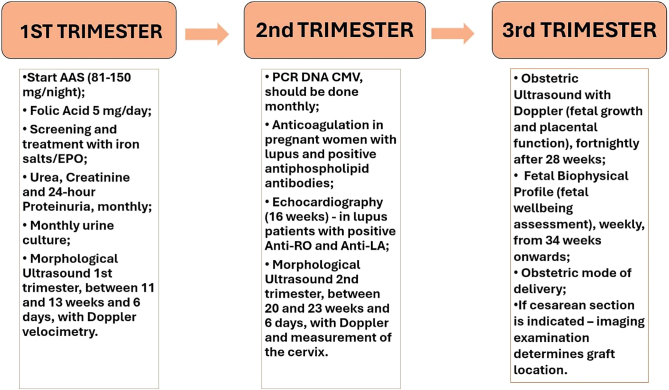
Clinical and obstetric management in pregnant women with kidney transplants.
Maternal Complications in Kidney Transplantation
One of the main predictors of maternal and fetal prognosis and outcomes is the lack of stable pre-pregnancy renal function, with elevated serum creatinine (>1.5 mg/dL)13,40,41.
In kidney transplant recipients, the live birth rate is close to 75–80%, higher than in dialysis. However, despite the restoration of renal function, these pregnancies still have a higher incidence of complications12,42,43.
The most common complications are hypertension (24.2–54.2%), preeclampsia (21.5–31%), prematurity (43.1–65.4%), small-for-gestational-age newborns (54%), and acute graft rejection during pregnancy (1–9.4%) and int the postpartum period (1.3%)10,12,42,43,44.
Furthermore, higher rates of cesarean sections are reported (53–72%)43,44. These rates vary greatly in international cohorts on transplants and pregnancy, such as the American cohort by Shah et al.44(35.4%) and the Chinese cohort by Ma et al.45(94.1%).
In pregnant women with kidney transplants, the diagnosis of preeclampsia is complex and challenging, as the majority of these patients are already hypertensive, and it is common for proteinuria to develop during pregnancy due to the underlying disease, even in the absence of preeclampsia46,47,48. Stepan et al. (2020) demonstrated that angiotensin II promotes the production of soluble fms-like tyrosine kinase-1 (sFlt-1) in proximal tubular cells. Evidence suggests that the use of these biomarkers, associated with uteroplacental Doppler flow, may be an auxiliary tool for the differential diagnosis of preeclampsia in pregnant women with CKD. However, owing to costs and limited availability in clinical practice, further studies are necessary48.
Chewcharat et al.16, analyzing data from their cohort of 295 pregnant women with kidney transplantation and 405 with CKD stages 3–5, indicated a slightly lower prevalence of preeclampsia (34.6%) in pregnant women with kidney transplants compared to those in final stages of CKD (48.4%), but higher than that of pregnant women without kidney disease (4.4%). They also concluded that there was a threefold higher risk of prematurity and a twofold higher risk of FGR in kidney transplant recipients16. Similarly, a meta-analysis by Shah et al.44demonstrated a preeclampsia rate six times higher in kidney transplant recipients than in the general U.S. population (21.5% vs. 3.8%)16,44. Regarding data on pregnancies in Brazilian kidney transplant recipients, the study by Radaelli et al.49demonstrated a higher rate of preeclampsia (42%).
For women who underwent kidney transplantation in childhood, an association with congenital kidney malformations is possible and, therefore, urogenital tract abnormalities should be excluded. In that regard, changes in the uterine and cervical cavities must be tracked, as they can increase the risk of spontaneous premature birth50, since kidney transplant recipients already have a 30.6% higher risk of delivery occurring at < 37 weeks than the general population11.
Due to the use of immunosuppressants and corticosteroids, kidney transplant recipients are at greater risk of urinary tract infections (UTIs), chorioamnionitis, and endometritis than other pregnant women11,51. Studies have shown a higher risk (14.6–42%) of UTIs51,52. A recent meta-analysis by Souza et al.52revealed that the prevalence of UTI among Latin American pregnant women was 7.54%; this rate was slightly higher when considering asymptomatic bacteriuria, estimated at 18.45%52. Urinary tract infection and acute pyelonephritis are the main infectious complications in these women. Therefore, treatment must be assertive, as it reduces low birth weight and the risk of prematurity. It is mandatory to evaluate renal function during antibiotic therapy and after one week of treatment53.
Akcay et al.42compared transplanted women who became pregnant more than two years after transplantation with transplanted women who did not become pregnant. Of the 29 pregnancies, 72.4% resulted in live births, and 38% of patients were diagnosed with preeclampsia. In contrast, 33% had proteinuria > 300 mg/dL but did not develop preeclampsia. Almost all births (90%) were cesarean sections, with 38% premature births and 19% of newborns small for gestational age. There was a fivefold increase in the probability (95% CI: 1,247–20,781; p < 0.02) of worsening renal function one year after pregnancy, compared with the control group, with at least a 25% drop in the glomerular filtration rate, suggesting that pregnancy compromises long-term renal function of the graft42.
Meta-analyses suggest that pregnancy occurring within the first year after transplantation is associated with worse maternal outcomes54,55. Conversely, Australian and New Zealand studies have not demonstrated an increase in mortality during the pregnancy–puerperal cycle46.Figure 2presents the main maternal complications observed in pregnant women with kidney transplants.
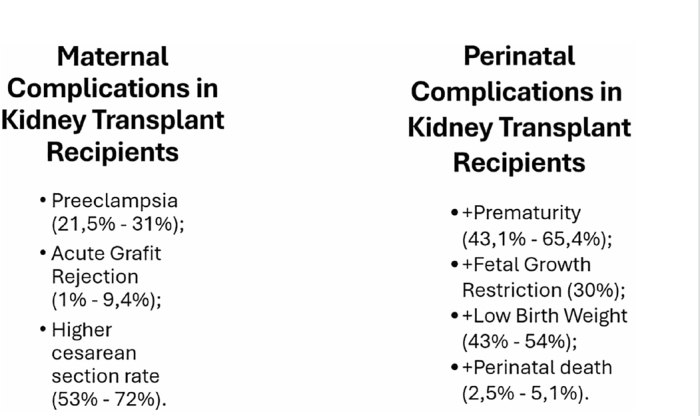
Maternal and perinatal complications in kidney transplant patients.
Perinatal Complications in Kidney Transplant Recipients
Compared to the general population, pregnancies in women with kidney transplants present higher rates of preterm, small for gestational age, and low birth weight newborns, leading to more frequent admissions to the neonatal intensive care unit (NICU). Thus, such outcomes result in higher rates of perinatal morbidity and mortality in these women7,41,56,57,58. Furthermore, intrauterine exposure to immunosuppressants contributes to an increase in infections in the first year of life5.
The United States National Transplant Registry demonstrated live birth rates in kidney transplant recipients ranging from 71% to 76%56. International cohorts, such as those of Shah et al.44(72.9%), Mustafa et al.59(78.5%), and the Brazilian cohort of Radaelli et al.49(56.7%), showed similar results.
In studies carried out in the United States with kidney transplant recipients, births before 37 weeks range from 43.1% to 65.4%7,44. Shah et al.44demonstrated that prematurity rates in this group are highest in South America (55%) and lowest in North America (35.4%)7,44.
The birth weight of children of kidney transplant mothers is, on average, lower than that of the general U.S. population: 2,470 g vs. 3,389 g7,44. On the other hand, Arab et al.11demonstrated a high rate of FGR (30%). Maternal anemia is common in kidney transplant patients and may be one of the explanations for this association with FGR. Furthermore, even with kidney transplantation, the progression of vasculopathy in patients with diabetes and systemic vasculitis is not reduced, which may contribute to FGR and low birth weight11. Studies show that the rates of low-birth-weight newborns (weight < 2,500 g) are between 43% and 54% in these patients42. Shah et al.44also concluded that there is a threefold higher risk of prematurity and a twofold higher risk of fetal growth restriction in transplant recipients44.
The stage of CKD and hypertension are important determinants of results41. Kidney transplant patients with an estimated glomerular filtration rate greater than 90 mL/min/1.73 m2have worse outcomes compared to patients with stage 1 CKD; these differences level off when only CKD patients affected by glomerulonephritis or systemic diseases (“progressive CKD”) are compared with kidney transplant recipients (KTRs). In the multivariate analysis, the risk of preterm and early preterm delivery was linked with CKD stage (2–5 vs. 1: relative risk [RR] 3.42 and 3.78, respectively) and hypertension (RR 3.68 and 3.16, respectively), while no difference was associated with whether the patient was a KTR or had CKD41.
It is estimated that the risk of miscarriage is lower than that of the general population (14–15.4% vs. 17.1%)11. Perinatal deaths range from 2.5% to 5.1%, a rate higher than that of the general population in the United States (0.6%)7,44. The perinatal mortality rate is fourfold higher in kidney transplant recipients than in the general population, which may be attributed to FGR and prematurity18. This rate is higher in patients who become pregnant within the first two years after transplantation compared with those who become pregnant afterwards60.Figure 2presents the main perinatal complications observed in pregnant women with kidney transplants.
Bachmann et al.61followed children of women with kidney transplants from birth to two years of age and demonstrated that anthropometric measurements showed similar trajectories, regardless of whether births were premature or full term, and without changes in neuropsychomotor development61. Nulman et al.62also did not find delays in neuropsychomotor development and behavior in children followed up to eight years of age who were exposed to intrauterine cyclosporine, compared to healthy female controls62.
Worsening Graft Function During Pregnancy
Pregnancy in women with stable renal function does not increase the risk of graft rejection63. On the other hand, kidney transplant recipients without stable renal function have a risk of acute rejection of 1.3–9.4%47,63and graft loss of 5.6–9.2%44,63after pregnancy, especially if the pregnancy occurs less than one year after transplantation10. Recent literature demonstrates that higher rates of loss of graft function occur in women with creatinine > 1.5 mg/dL. Therefore, counseling kidney transplant recipients regarding the longevity of the graft is essential when considering pregnancy13,40.
The use of immunosuppressants at an adequate dose is directly linked to maintaining stable graft function, with a lower chance of rejection. Cyclosporine and tacrolimus are two of the most used agents and should be monitored serially during pregnancy, as their serum levels may decrease due to hemodilution and increased hepatic metabolism, requiring readjustments to reach therapeutic concentrations. Serum dosing should be performed monthly in the first and second trimesters and weekly in the third trimester of pregnancy64.
Akcay et al.42demonstrated that long-term worsening of renal graft function is related to the persistence of high levels of proteinuria in the first three months postpartum, as well as high serum creatinine levels in the first six months postpartum. Furthermore, the time between transplantation and conception appears to influence the risk of deterioration in renal function42.
Records from the United States National Transplant Center indicate that women with loss of kidney function during or after pregnancy have preconception creatinine values higher than those with stable kidney function (1.5 ± 0.6 vs. 1.3 ± 0.4 mg/dL). On the other hand, African American women have a higher risk of losing kidney function if they become pregnant less than two years after transplantation (13%), compared to White women (5%)65.
Preconception hypertension appears to be one of the main predictors of renal function decline and long-term risk of rejection. It is estimated that 25% to 40% of women with solid organ transplants are already hypertensive before pregnancy39. Some factors related to this fact would be the vascular toxicity of calcineurins, corticosteroid-induced hypertension, and the vasopressor effect resulting from renal ischemia64,66.
Creatinine levels are significantly higher in hypertensive women prior to pregnancy67,68. Moderate to severe graft dysfunction is defined by creatinine > 1.4 mg/dL and 1.9 mg/dL, respectively14,65,69. Proteinuria > 1 g/24 h, before or during pregnancy, is also related to greater impairment of graft function70.
During pregnancy, the main cause of elevated serum creatinine is the presence of preeclampsia. However, it may also be related to urinary tract infection and obstruction or tacrolimus toxicity. However, any increase in creatinine must be immediately investigated and appropriately addressed to avoid progressive worsening of renal function, and the risk of graft loss15.
Women with kidney transplants and elevated levels of donor-specific anti-HLA (human leukocyte antigen) antibodies constitute a group at higher risk for renal dysfunction and graft loss. It is not known whether pregnancy acts as a trigger for this process or whether it is related to the time elapsed since transplantation60.
Kidney assessment can be improved by evaluating renal blood flow with Doppler velocimetry of the graft vessels, measuring flow velocity and the resistance index (RI). In kidneys with preserved function, RI decreases throughout pregnancy, mainly between 13 and 16 weeks, with a tendency to increase at the end of pregnancy. RI values > 0.8 present an unfavorable prognosis and may indicate the establishment of graft nephropathy, renal obstruction, pyelonephritis, or preeclampsia, requiring further investigation and an assertive approach to avoid graft damage8.
The rate of transplant rejection during pregnancy is low, around 4.2% in the American population, according to a recent meta-analysis5. During pregnancy, there is a mechanism of physiological immune tolerance, with the involvement of HLA-G molecules, which inhibit T lymphocytes, natural killer (NK) cells, and antigen-presenting cells24. If rejection is suspected, renal biopsy should be considered after fetal viability (> 25 weeks), and if gestational age is advanced (> 34 weeks), empirical treatment with methylprednisolone and consideration of pregnancy termination are suggested46.
Postpartum Care and Breastfeeding
Studies show a twofold risk of postpartum hemorrhage (PPH) and the need for blood transfusions in postpartum women with kidney transplants. There are theories that suggest that immunosuppressants have a detrimental effect on the remodeling of uterine arterioles, reducing contractility and myotamponade, thereby increasing the risk of PPH71,72. Furthermore, the use of antibiotics after cesarean section is suggested due to the greater risk of infection associated with the use of immunosuppressants11.
There is evidence of excretion of immunosuppressive drugs in breast milk; however, the benefits of breastfeeding appear to outweigh the risks of exposure73. Tacrolimus, cyclosporine, azathioprine, and prednisone are considered safe during pregnancy and breastfeeding71,72,73.
Pre-Conception Counseling
Contraception should be recommended for all women with CKD of reproductive age who are sexually active and do not wish to become pregnant. Combined estrogen-containing contraceptives are contraindicated due to increased cardiovascular and thromboembolic risk. Medroxyprogesterone acetate should be avoided due to possible reduction in bone mass. Progestogen-only pills, etonogestrel subdermal implants, and intrauterine devices are recommended1,74.
There is no evidence to support that intrauterine devices are less effective in kidney transplant recipients due to immunosuppression, nor that they are associated with an increased risk of pelvic inflammatory disease75.
A preconception consultation with a multidisciplinary team is essential to adjust immunosuppressants and vitamin supplementation and provide adequate guidance on prognosis. In addition, it is necessary to start prenatal care in a tertiary service with a team experienced in the management of high-risk pregnancies.
The replacement of teratogenic immunosuppressants (mycophenolate mofetil and cyclophosphamide) with safer classes (azathioprine, cyclosporine, and tacrolimus) and the suspension of embryotoxic medications during pregnancy should be carried out at least 90 days before conception76.
Therefore, guidance on the risks of worsening graft function, reduced graft longevity, and permanent loss of graft function are essential pillars of preconception counseling57.
Conclusion
Post-kidney transplant pregnancies have increased in recent decades, and conception attempts should be planned at least one year after transplantation, in the absence of signs of graft rejection, to allow adjustment of immunosuppression and reduce the risk of graft loss. The couple should be informed that, although maternal and perinatal complications are lower in kidney transplant recipients than in pregnant women on hemodialysis, these pregnancies have a higher risk of preeclampsia, prematurity, low birth weight, cesarean section, and perinatal death. However, even though it is considered a high-risk pregnancy, if conception is planned at a time of maternal clinical stability, with safe immunosuppressants and obstetric management carried out by an experienced multidisciplinary team, the chance of a successful pregnancy becomes an achievable goal.
References
- OliverioALAdmonLKMarianiLHWinkelmanTNADaltonVKHealth outcomes and health care utilization among obstetric deliveries with concurrent CKD in the United States. Am J Kidney Dis202075114850 doi.org/10.1053/j.ajkd.2019.07.007
- PiccoliGBZakharovaEAttiniRIbarra HernandezMOrozco GuillienAAlrukhaimiMPregnancy in chronic kidney disease: need for higher awareness. a pragmatic review focused on what could be improved in the different CKD stages and phases. J Clin Med2018711415 doi.org/10.3390/jcm7110415
- EroğluDLembetAOzdemirFNErginTKazanciFKuşcuEPregnancy during hemodialysis: perinatal outcome in our cases. Transplant Proc2004361535 doi.org/10.1016/j.transproceed.2003.11.002
- OliverioALHladunewichMAEnd-stage kidney disease and dialysis in pregnancy. Adv Chronic Kidney Dis202027647785 doi.org/10.1053/j.ackd.2020.06.001
- DeshpandeNAJamesNTKucirkaLMBoyarskyBJGaronzik-WangJMMontgomeryRAPregnancy outcomes in kidney transplant recipients: a systematic review and meta-analysis. Am J Transplant201111112388404 doi.org/10.1111/j.1600-6143.2011.03656.x
- JosephsonMAMcKayDBPregnancy and kidney transplantationSemin Nephrol201131110010 doi.org/10.1016/j.semnephrol.2010.10.009
- WilliamsDDavisonJChronic kidney disease in pregnancyBMJ200833676372115 doi.org/10.1136/bmj.39406.652986.BE
- BakhritdinovFSMatkarimovZTAzimovaMTSaatovaUMKomilovaDNElmurodovaNBFeatures of Pregnancy Management in Kidney Transplant Recipients. Exp Clin Transplant202220Suppl 4927 doi.org/10.6002/ect.DonorSymp.2022.O29
- CabidduGSpottiDGernoneGSantoroDMoroniGGregoriniGA best-practice position statement on pregnancy after kidney transplantation: focusing on the unsolved questions. The Kidney and Pregnancy Study Group of the Italian Society of Nephrology. J Nephrol201831566581 doi.org/10.1007/s40620-018-0499-x
- Gonzalez SuarezMLParkerASCheungpasitpornWPregnancy in kidney transplant recipientsAdv Chronic Kidney Dis202027648698 doi.org/10.1053/j.ackd.2020.06.004
- ArabKOddyLPatenaudeVAbenhaimHAObstetrical and neonatal outcomes in renal transplant recipients. J Matern Fetal Neonatal Med20152821627 doi.org/10.3109/14767058.2014.909804
- PiccoliGBDaidolaGAttiniRParisiSFassioFNarettoCKidney biopsy in pregnancy: evidence for counselling? A systematic narrative review. BJOG2013120441227 doi.org/10.1111/1471-0528.12111
- VijayanMPavlakisMPregnancy and the kidney transplant recipient. Curr Opin Nephrol Hypertens2017266494500 doi.org/10.1097/MNH.0000000000000363
- McKayDBJosephsonMAArmentiVTAugustPCosciaLADavisCLReproduction and transplantation: report on the AST Consensus Conference on Reproductive Issues and Transplantation. Am J Transplant20055715929 doi.org/10.1111/j.1600-6143.2005.00969.x
- BramhamKNelson-PiercyCGaoHPierceMBushNSparkPPregnancy in renal transplant recipients: a UK national cohort study. Clin J Am Soc Nephrol2013822908 doi.org/10.2215/CJN.06170612
- ChewcharatAKattahAGThongprayoonCCheungpasitpornWBoonphengBGonzalez SuarezMLComparison of hospitalization outcomes for delivery and resource utilization between pregnant women with kidney transplants and chronic kidney disease in the United States. Nephrology (Carlton)2021261187989 doi.org/10.1111/nep.13938
- SmythARadovicMGarovicVDWomen, kidney disease, and pregnancy. Adv Chronic Kidney Dis201320540210 doi.org/10.1053/j.ackd.2013.06.004
- AhmedSBVitekWSHolleyJLFertility, contraception, and novel reproductive technologies in chronic kidney disease. Semin Nephrol201737432736 doi.org/10.1016/j.semnephrol.2017.05.004
- SarwarADrugs in renal disease and pregnancy. Best Pract Res Clin Obstet Gynaecol20195710619 doi.org/10.1016/j.bpobgyn.2019.03.006
- GerosaMMeroniPLCimazRSafety considerations when prescribing immunosuppression medication to pregnant women. Expert Opin Drug Saf2014131215919 doi.org/10.1517/14740338.2014.951326
- Perez-AytesAMarin-ReinaPBosoVLedoACareyJCVentoMMycophenolate mofetil embryopathy: a newly recognized teratogenic syndrome. Eur J Med Genet20176011621 doi.org/10.1016/j.ejmg.2016.09.014
- RengasamyPCongenital malformations attributed to prenatal exposure to cyclophosphamide. Anticancer Agents Med Chem2017179121127 doi.org/10.2174/1871520616666161206150421
- HolleyJLBernardiniJQuadriKHGreenbergALaiferSAPregnancy outcomes in a prospective matched control study of pregnancy and renal disease. Clin Nephrol19964527782
- BlumeCPischkeSvon Versen-HöynckFGünterHHGrossMMPregnancies in liver and kidney transplant recipients: a review of the current literature and recommendation. Best Pract Res Clin Obstet Gynaecol2014288112336 doi.org/10.1016/j.bpobgyn.2014.07.021
- HuiDHladunewichMAChronic kidney disease and pregnancy. Obstet Gynecol20191336118294 doi.org/10.1097/AOG.0000000000003256
- ØstensenMThe use of biologics in pregnant patients with rheumatic disease. Expert Rev Clin Pharmacol20171066619 doi.org/10.1080/17512433.2017.1305268
- LightstoneLHladunewichMALupus Nephritis and Pregnancy: concerns and management. Semin Nephrol201737434753 doi.org/10.1016/j.semnephrol.2017.05.006
- ArmentiVTRadomskiJSMoritzMJGaughanWJHeckerWPLavelanetAReport from the National Transplantation Pregnancy Registry (NTPR): outcomes of pregnancy after transplantation. Clin Transpl200410314
- ZugaibMBittarREFranciscoRPVAssistance Protocols - Obstetric Clinic FMUSP. 6th edSão PauloAtheneu Publisher2022
- MarshJEMacleanDPattisonJMDrugs in pregnancy. Renal disease. Best Pract Res Clin Obstet Gynaecol2001156891901 doi.org/10.1053/beog.2001.0236
- PiccoliGBCabidduGAttiniRVigottiFNMaxiaSLeporiNRisk of adverse pregnancy outcomes in women with CKD. J Am Soc Nephrol2015268201122 doi.org/10.1681/ASN.2014050459
- Fischer-BetzRSpeckerCPregnancy in systemic lupus erythematosus and antiphospholipid syndrome. Best Pract Res Clin Rheumatol2017313397414 doi.org/10.1016/j.berh.2017.09.011
- VidaeffACYeomansERRaminSMPregnancy in women with renal disease. Part II: specific underlying renal conditions. Am J Perinatol2008257399405 doi.org/10.1055/s-0028-1083838
- HoldPMWongCFDhandaRKWalkinshawSABakranASuccessful renal transplantation during pregnancy. Am J Transplant20055923157 doi.org/10.1111/j.1600-6143.2005.00993.x
- WuCZChenXQWangZYPanXDBaiYHYangYRSimultaneous monitoring of CMV and BKV by quantitative PCR in renal transplant recipients. J Virol Methods2014210404 doi.org/10.1016/j.jviromet.2014.09.018
- PuliyandaDPSilvermanNSLehmanDVoABunnapradistSRadhaRKSuccessful use of oral ganciclovir for the treatment of intrauterine cytomegalovirus infection in a renal allograft recipient. Transpl Infect Dis200572714 doi.org/10.1111/j.1399-3062.2005.00089.x
- NatoriYShiotsukaMSlomovicJHoschlerKFerreiraVAshtonPA double-blind, randomized trial of high-dose vs standard-dose influenza vaccine in adult solid-organ transplant recipients. Clin Infect Dis201866111698704 doi.org/10.1093/cid/cix1082
- HouSPregnancy in renal transplant recipients. Adv Chronic Kidney Dis20132032539 doi.org/10.1053/j.ackd.2013.01.011
- WilesKChappellLClarkKElmanLHallMLightstoneLClinical practice guideline on pregnancy and renal disease. BMC Nephrol2019201401 doi.org/10.1186/s12882-019-1560-2
- StoumposSMcNeillSHGorrieMMarkPBBrennandJEGeddesCCObstetric and long-term kidney outcomes in renal transplant recipients: a 40-yr single-center study. Clin Transplant201630667381 doi.org/10.1111/ctr.12732
- PiccoliGBCabidduGAttiniRGerbinoMTodeschiniPPerrinoMLOutcomes of pregnancies after kidney transplantation: lessons learned from CKD. A comparison of transplanted, nontransplanted chronic kidney disease patients and low-risk pregnancies a multicenter nationwide analysis. Transplantation201710110253644 doi.org/10.1097/TP.0000000000001645
- AkcayOFYeterHHKarcaaltincabaDBayramMGuzGErtenYObstetric and long-term graft outcomes in pregnant kidney transplant recipients: a single-center experience. Clin Transplant2021358e14349 doi.org/10.1111/ctr.14349
- RolfoAAttiniRTavassoliENeveFVNigraMCicilanoMIs it possible to differentiate chronic kidney disease and preeclampsia by means of new and old biomarkers? A prospective study. Dis Markers20152015127083 doi.org/10.1155/2015/127083
- ShahSVenkatesanRLGuptaASanghaviMKWelgeJJohansenRPregnancy outcomes in women with kidney transplant: metaanalysis and systematic review. BMC Nephrol201920124 doi.org/10.1186/s12882-019-1213-5
- MaJLuoFYanLMaternal and neonatal outcomes for kidney transplant recipients. Early Hum Dev2024190105968 doi.org/10.1016/j.earlhumdev.2024.105968
- BramhamKPregnancy in renal transplant recipients and donors. Semin Nephrol20173743707 doi.org/10.1016/j.semnephrol.2017.05.009
- RoseCGillJZalunardoNJohnstonOMehrotraAGillJSTiming of pregnancy after kidney transplantation and risk of allograft failure. Am J Transplant201616823607 doi.org/10.1111/ajt.13773
- StepanHHundMAndraczekTCombining biomarkers to predict pregnancy complications and redefine preeclampsia: The Angiogenic-Placental Syndrome. Hypertension202075491826 doi.org/10.1161/HYPERTENSIONAHA.119.13763
- RadaelliEMeinerzGJacobinaLPBrunoRMManhães JA, AndradeJAGestação após transplante renal: 40 anos de experiência em centro único. Braz. J. Nephrol202446219 doi.org/10.1590/2175-8239-JBN-2023-0061pt
- CelikGTözHErtilavMAşgarNOzkahyaMBaşciABiochemical parameters, renal function, and outcome of pregnancy in kidney transplant recipient. Transplant Proc2011437257983 doi.org/10.1016/j.transproceed.2011.06.041
- GouveiaIFSilvaJRSantosCCarvalhoCMaternal and fetal outcomes of pregnancy in chronic kidney disease: diagnostic challenges, surveillance and treatment throughout the spectrum of kidney disease. Braz. J. Nephrol202143188102 doi.org/10.1590/2175-8239-jbn-2020-0055
- SouzaHDDiórioGRMPeresSVFranciscoRPVGallettaMAKBacterial profile and prevalence of urinary tract infections in pregnant women in Latin America: a systematic review and meta-analysis. BMC Pregnancy Childbirth2023231774 doi.org/10.1186/s12884-023-06060-z
- SmaillFMVazquezJCAntibiotics for asymptomatic bacteriuria in pregnancy. Cochrane Database Syst Rev2019201911CD000490 doi.org/10.1002/14651858.CD000490.pub4
- AlfiAYAl-essawyMAAAl-lakanyMSomroAKhanFAhmedSSuccessful pregnancies post renal transplantation. Saudi J Kidney Dis Transpl200819574650
- van BurenMCSchellekensAGroenhofTKJvan ReekumFvan de WeteringJPaauwNDLong-term graft survival and graft function following pregnancy in kidney transplant recipients: a systematic review and meta-analysis. Transplantation20201048167585 doi.org/10.1097/TP.0000000000003026
- GuidaJPDSAndradeBGDPissinattiLGFRodriguesBFHartmanCACostaMLPrevalence of preeclampsia in Brazil: an integrative review. Rev Bras Ginecol Obstet202244768691 doi.org/10.1055/s-0042-1742680
- NevisIFReitsmaADominicAMcDonaldSThabaneLAklEAPregnancy outcomes in women with chronic kidney disease: a systematic review. Clin J Am Soc Nephrol2011611258798 doi.org/10.2215/CJN.10841210
- HanJMcCormickCAKrelleAChampion De CrespignyPUnterscheiderJPregnancy outcomes post-kidney transplantation across 23 years. Aust N Z J Obstet Gynaecol202464326976 doi.org/10.1111/ajo.13786
- MustafaMSNooraniAAbdul RasoolATashrifwalaFAAJayaramSRajaSPregnancy outcomes in renal transplant recipients: a systematic review and meta-analysis. Womens Health (Lond Engl)20242017455057241277520 doi.org/10.1177/17455057241277520
- SanghaviMRutherfordJDCardiovascular physiology of pregnancy. Circulation20141301210038 doi.org/10.1161/CIRCULATIONAHA.114.009029
- BachmannFBuddeKGerlandMWiechersCHeyneNNadalinSPregnancy following kidney transplantation - impact on mother and graft function and focus on childrens’ longitudinal development. BMC Pregnancy Childbirth2019191376 doi.org/10.1186/s12884-019-2496-z
- NulmanISgroMBarreraMChitayatDCairneyJKorenGLong-term neurodevelopment of children exposed in utero to ciclosporin after maternal renal transplant. Paediatr Drugs201012211322 doi.org/10.2165/11316280-000000000-00000
- MajakGBReisæterAVWeedon-FekjærHHenriksenTMichelsenTMThe effect of pregnancy on the long-term risk of graft loss, cardiovascular disease, and death in kidney transplanted women in norway: a retrospective Cohort Study. Transplantation20181029e3916 doi.org/10.1097/TP.0000000000002167
- MolBWJRobertsCTThangaratinamSMageeLAde GrootCJMHofmeyrGJPre-eclampsiaLancet2016387100229991011 doi.org/10.1016/S0140-6736(15)00070-7
- CosciaLAArmentiDConstantinescuSMoritzMJPregnancy after kidney transplantation. RamirezCGBMcCauleyJContemporary kidney transplantation. Organ and tissue transplantation. ChamSpringer International Publishing201837996 doi.org/10.1007/978-3-319-19617-6_29
- JimBGarovicVDAcute Kidney Injury in PregnancySemin Nephrol201737437885 doi.org/10.1016/j.semnephrol.2017.05.010
- KatoMHattoriRKinukawaTKamihiraOYamadaSGotohMCorrelation between treated hypertension in prepregnancy and transplanted kidney function deterioration during pregnancy even if within pregnancy permission criteria. Transplant Proc20124436357 doi.org/10.1016/j.transproceed.2011.11.038
- SibandaNBriggsJDDavisonJMJohnsonRJRudgeCJPregnancy after organ transplantation: a report from the UK Transplant pregnancy registry. Transplantation2007831013017 doi.org/10.1097/01.tp.0000263357.44975.d0
- DavisonJMDialysis, transplantation, and pregnancy. Am J Kidney Dis199117212732 doi.org/10.1016/S0272-6386(12)81116-4
- Fernández-FresnedoGPlazaJJSánchez-PlumedJSanz-GuajardoAPalomar-FontanetRAriasMProteinuria: a new marker of long-term graft and patient survival in kidney transplantation. Nephrol Dial Transplant200419Suppl 3iii4751 doi.org/10.1093/ndt/gfh1015
- CarameloCAlvarez-ArroyoMVYagüeSSuzukiYCastillaMAVelascoLCyclosporin A toxicity, and more: vascular endothelial growth factor (VEGF) steps forward. Nephrol Dial Transplant20041922858 doi.org/10.1093/ndt/gfg516
- AjaimyMLubetzkyMJonesTKamalLColovaiAde BoccardoGPregnancy in sensitized kidney transplant recipients: a single-center experience. Clin Transplant20163077915 doi.org/10.1111/ctr.12751
- FlechnerSMKatzARRogersAJVan BurenCKahanBDThe presence of cyclosporine in body tissues and fluids during pregnancy. Am J Kidney Dis198551603 doi.org/10.1016/S0272-6386(85)80138-4
- EideIARashidiFLønningKOldereidNBReisæterAVÅsbergAContraceptive choices and counseling in norwegian female renal transplant recipients. Transplant Proc20195124704 doi.org/10.1016/j.transproceed.2019.01.068
- RamhendarTByrnePUse of the levonorgestrel-releasing intrauterine system in renal transplant recipients: a retrospective case review. Contraception20128632889 doi.org/10.1016/j.contraception.2011.12.008
- ChandraAMidtvedtKÅsbergAEideIAImmunosuppression and reproductive health after kidney transplantation. Transplantation201910311e32533 doi.org/10.1097/TP.0000000000002903
Republished from the open web under CC-BY. Authors: Santos ACM, Freitas RCM, Kahhale S, Francisco RPV, Galletta MAK. Read the original.