The Effects of Glucagon-Like Peptide-1 Receptor Agonists and Sodium-Glucose Co-Transporter-2 Inhibitors on Lean Body Mass in Humans: A Systematic Review and Meta-Analysis of Randomised Controlled Trials.
Aims The use of pharmacotherapies with weight loss properties for the management of obesity and chronic disease are now routinely prescribed. We investigated the evidence from randomised-controlled trials for the effects on lean body mass of glucagon-like peptide-1 receptor agonists (GLP-1RA) and sodium-glucose co-transporter-2 inhibitors (SGLT2i) in humans. Materials and methods PubMed, MEDLINE, the Cochrane Library and CINAHL were searched from inception to October 2022. The primary outcome was change in body composition focused on measures of lean body mass (LBM). Results Thirty-six studies in population groups with obesity (n = 8), type 2 diabetes mellitus (n = 20), type 1 diabetes mellitus (n = 5) and polycystic ovary syndrome (n = 3) receiving a GLP-1RA or SGLT2i therapy versus placebo or active comparator satisfied our inclusion criteria, including 21 for GLP-1RA and 15 for SGLT2i. Meta-analysis showed an overall loss of LBM in the direction of the intervention groups prescribed GLP-1RA (MD: -1.51 kg [95% CI: -2.00 to -1.01]) and SGLT2i (MD: -1.04 kg [95% CI: -1.45 to -0.64]) with sub-group analysis showing largely consistent results when stratified by type of body composition outcome, type of body composition measurement technique and disease status. Results were not modified by sex. Further meta-analysis found that lean mass accounted for 28% (95% CI: 22%-34%) of overall weight loss induced by GLP-1RA and SGLT2i. Conclusions GLP-1RA and SGLT2i are associated with a loss of LBM that appears congruent with overall weight loss. Monitoring of body composition and provision of combined therapy to preserve lean mass during weight loss should be considered.
Introduction
Type 2 diabetes mellitus (T2DM) and obesity are major global health challenges [1]. Glucagon‐like peptide‐1 receptor agonists (GLP‐1RAs) and sodium‐glucose co‐transporter‐2 inhibitors (SGLT2is) combine glucose lowering with weight lowering effects and are recommended in recent guidelines for the management of type 2 diabetes mellitus alongside lifestyle interventions [2]. In addition, they are also increasingly recommended for use in wider populations, with GLP‐1RAs developed and licenced specifically for weight management, while SGLT2is are recommended for heart failure and chronic kidney disease (CKD) [3].
GLP‐1 is a gut hormone that slows gastric emptying and gut motility in response to nutrient load, thus leading to increased satiety and reductions in body weight [4,5]. Liraglutide was the first GLP‐1RA to be approved for use by the U.S. Food and Drug Administration (FDA) and European Medicines Agency (EMA) specifically for the management of obesity. A study investigating the effect of liraglutide 3.0 mg once‐daily on body weight in a population living with obesity, showed that 63.2% of individuals assigned to the liraglutide arm lost at least 5% of their body weight, with 33.1% losing more than 10% at 56 weeks [6]. More recent evidence with once‐weekly GLP‐1RA semaglutide at 2.4 mg in adults with overweight or obesity, highlighted greater reductions in body weight, with 69.1% of participants achieving ≥ 10% weight loss and 50.5% of individuals achieving ≥ 15% weight loss at 68 weeks [7]. Additionally, the latest therapies combining GLP‐1RAs with other incretin hormones provide further advances in effectiveness, as a recent trial showed that 57% of those with obesity prescribed 15 mg tirzepatide were found to achieve 20% weight loss by week 72 [8].
SGLT2is act by inhibiting sodium glucose transporter 2 channels in the kidney tubules, thus increasing glycosuria, leading to a caloric loss [9]. It is known that inhibition of SGLT2 can lead to an excretion of around 60–100 g of glucose per day and studies have shown mean weight reductions in the region of 1.5–2 kg [10,11]. A recent meta‐analysis showed that SGLT2is elicited significant reductions in overall body weight of −1.42 kg [12].
Whilst weight loss has many established benefits in the prevention of chronic metabolic disease, the potential impact on body composition and overall physical health status needs considering. When weight loss occurs through diet induced energy restriction, at least 25% of overall body weight loss consists of lean body mass (LBM) [13]. LBM is primarily composed of skeletal muscle aiding in movement, while acting as metabolically active tissue supporting glucose regulation and metabolic homeostasis [14]. The loss of LBM may therefore act to partially attenuate some of the wider whole body clinical benefits of weight loss and conversely, LBM preservation with weight loss is an important consideration for optimising health benefits while improving functional reserve [15]. Furthermore, individuals with T2DM have up to a five times increased risk of frailty [16]. Losses in LBM as a result of weight loss in individuals already presenting with or at high risk of frailty can lead to a reduction in functional capacity, while increasing the risks of falls and subsequent hospitalisation [17].
A previous narrative review suggested that LBM loss associated with weight loss induced by GLP‐1RAs and SGLT2is was similar to that observed with diet induced weight loss. Results showed that between 20% and 50% of overall weight loss was through loss of fat‐free mass (FFM) [18], however quantitative synthesis of the collective evidence is lacking. Establishing the overall pattern of LBM loss with GLP‐1RAs and SGLT2is will aid in identifying a potential target for future combined interventions in clinical care, focused specifically on LBM preservation. The aim of this systematic review and meta‐analysis is to quantify the effects of GLP‐1RAs and SGLT2is on LBM as stand‐alone therapies.
Materials and Methods
This systematic review and meta‐analysis was conducted in accordance with the Preferred Reporting Items for Systematic Reviews and Meta‐Analyses (PRISMA) statement [19]. The protocol is registered in the International Prospective Register of Systematic Reviews (PROSPERO; registration ID: CRD42022350621).
Study Eligibility and Outcomes of Interest
The study inclusion criteria consisted of randomised‐controlled trials, which investigated the effect of a GLP‐1RA or SGLT2i for the primary or secondary outcome of body composition in adults (men and women) aged ≥ 18 years. Pharmacotherapies of interest were GLP‐1RAs, SGLT2is and dual gastric inhibitory polypeptide (GIP)/GLP‐1RAs as follows: liraglutide, semaglutide, exenatide, dulaglutide, efpeglenatide, langlenatide, albiglutide, canagliflozin, dapagliflozin, empagliflozin, ipragliflozin, luseogliflozin, tofogliflozin, ertugliflozin, sotagliflozin and tirzepatide. The comparator arm consisted of placebo or T2DM medications including metformin, glimepiride, insulin, glibenclamide, tenegliptin and pioglitazone. The selection criteria for trials were the treatment intervention group had to have consisted of GLP‐1RA, SGLT2i or dual GIP/GLP‐1RA therapies and the control group had to consist of other glucose‐lowering pharmacotherapies, lifestyle intervention or placebo and measures of body composition had to include either fat‐free mass (FFM; defined as all non‐fat components of the body), lean body mass (LBM; defined as FFM minus total bone mass) or skeletal muscle mass (SMM; defined as FFM minus total bone mass, connective tissue, skin and organs). To aid readability, LBM will be used to refer to all three definitions unless specified.
The outcome of interest was body composition measured by dual‐energy x‐ray absorptiometry (DEXA), bio‐electrical impedance analysis (BIA), magnetic resonance imaging (MRI), air‐displacement plethysmography (BodPod), (ADP), hydrostatic (underwater) weighing and skinfold tests. Non‐randomised studies, observational cohort studies, studies published in a language other than English, non‐peer reviewed publications, abstracts, conference posters, government reports and unpublished studies were excluded.
Search Strategy
PubMed, MEDLINE, The Cochrane Library and CINAHL databases were used to search for literature published from inception to October 2022. Key subject terminologies and phrases used in the search were as follows: ‘body weight’, ‘body composition’, ‘lean muscle mass’, ‘fat free mass’, ‘GLP‐1RAs’, ‘SGLT2i’, ‘dual GIP/GLP‐1RA’. The full MEDLINE search strategy is presented in the Supporting InformationS1: Methods S1. Grey literature was searched using Google Scholar.
Study Selection
Following the searches, all search results were exported to a reference management software [20]. Two reviewers (R.J. and A.A.) independently screened for potentially relevant articles based on the titles and abstracts. Full texts were screened by the same reviewers and any conflicts during the study selection process were resolved by consensus with a third reviewer (E.J.).
Data Extraction and Quality Assessment
Data extraction was conducted from eligible articles independently by two reviewers (R.J. and E.J.). Study data were extracted using a pre‐formed data extraction spreadsheet. Variables of interest included first author, publication year, sample sizes, pharmacotherapy class and doses, control group agents and participant demographics. Data extracted for the outcomes of interest consisted of body composition parameters: total body weight, total body fat percentage, LBM, FM and SMM. Outcome data were extracted as mean change and standard deviation for both the intervention arm and control/placebo. Outcome data presented in varying formats (e.g., where within group change was presented as standard error or 95% confidence interval), were calculated or estimated to standard deviation by adopting established equations from the Cochrane handbook [21]. For multi‐arm trials included in the meta‐analysis, data for the treatment arm at the maximum dose were extracted.
Quality assessment was conducted independently by two authors (R.J. and E.J.), by implementing the Risk of Bias 2 (RoB 2) assessment tool (2019 version) which was used for randomised parallel group trials and the Cochrane Risk of bias 2 (RoB 2) was used for randomised cross‐over studies [22]. The Quality assessment was conducted based on five domains: randomisation process, deviations from the intended interventions, missing outcome data, measurement of the outcome and selection of the reported result. Any discrepancies between reviewers were resolved in consensus.
Statistical Analysis
All the studies included in this systematic review and meta‐analysis were recorded in tables. A random effects meta‐analysis was conducted for the primary outcome, accounting for intra and inter‐study variability. Both the standardised mean difference (SMD) and weighted mean difference (WMD) along with the 95% confidence intervals (CI) were generated for the outcome of interest. Data for LBM was prioritised for inclusion as the most commonly reported outcome measure of interest, however, where LBM was not reported, FFM data were analysed and where FFM was not reported, SMM data were analysed. Results were reported separately by therapy class (GLP‐1RA and SGLT2i). To highlight sources of heterogeneity, sub‐group analysis was performed based on methods of defining body composition (LBM, FFM or SMM), methods of measuring body composition (DEXA, BIA, MRI, ADP), disease status based on primary inclusion criteria (categorised as general obesity, T2DM, T1DM or PCOS) and comparison type (placebo‐controlled or active comparator). In addition, we undertook a further meta‐analysis in the intervention group only, analysing the proportion of weight loss attributable to LBM (or available measure)—derived by dividing the change in lean mass by the change in overall weight. For descriptive purposes, this was converted to a percentage by multiplying by 100. The HigginsI2statistical test was used to interpret heterogeneity [23]. Studies withI2statistic of 25%–50% were deemed as having low heterogeneity, 50%–75% were characterised as a moderate heterogeneity and anI2statistic greater than 75% were deemed as a high heterogeneity. Publication bias was assessed using funnel plots. Apvalue of < 0.05 (5%) was used to denote statistical significance. Meta‐analysis was conducted using Review Manager (RevMan) version 5.4.1 and STATA/BE 18.0 for windows.
Results
Literature Search and Study Characteristics
Following our searches, a total of 599 articles were identified. After the removal of duplicates, 467 articles underwent screening by their title and abstract. 130 studies were screened by full text, from which 36 studies satisfied our inclusion criteria (see Figure1). The studies involved a total of 5316 participants with a mean age ranging from 26.0 to 66.3 years. Men and women were recruited in 31 studies, with white ethnicity being most prevalent where reported. The length of included trials ranged from 8 to 102 weeks. Thirty‐four studies were randomised parallel group trials (RCTs) [7,24,25,26,27,28,29,30,31,32,33,34,35,36,37,38,39,40,41,42,43,44,45,46,47,48,49,50,51,52,53,54,55,56]. Two were randomised cross‐over studies [57,58]. Twenty studies were focused on those with T2DM [25,27,28,29,30,31,32,33,34,40,41,45,46,47,48,53,54,55,56,57], eight were focused on wider populations with obesity [7,24,39,42,43,44,51,52], five were focused on type 1 diabetes mellitus [35,36,37,50,58] and three were focused on polycystic ovarian syndrome [26,38,49]. In terms of pharmacotherapy, 21 studies investigated GLP‐1RAs [7,24,25,26,27,28,29,30,35,37,38,39,41,42,43,46,47,50,52,57,58] and 15 investigated SGLT2is [31,32,33,34,36,40,44,45,48,49,51,53,54,55,56]. No studies were included investigating dual GIP/GLP‐1RA agonists due to a lack of body composition data. For GLP‐1RAs, 15 studied the effect of liraglutide [24,25,26,27,28,35,37,38,39,41,42,43,46,47,58], four exenatide [29,30,50,52] and two semaglutide [7,57]. For SGLT2is, three studies investigated canagliflozin [31,32,44], eight dapagliflozin [33,40,45,48,51,53,55,56], two ipragliflozin [34,54], one sotagliflozin [36] and one empagliflozin [49]. For the control arms, 24 studies had a placebo arm [7,24,26,27,31,33,35,36,37,38,39,41,42,43,44,45,46,47,48,50,51,52,57,58] and 12 studies had an active comparator arm or lifestyle intervention arm [25,28,29,30,32,34,40,49,53,54,55,56], with the active comparator being another medication used for type 1 or type 2 diabetes such as; metformin, glimepiride, insulin glargine, glibenclamide, pioglitazone and tenegliptin. The characteristics of included GLP‐1RA studies are detailed in Table1and included SGLT2i studies in Table2. The results for the risk of bias assessment for all included studies are given in the Supporting InformationS1(see Supporting InformationS1: Figures S1 and S2). The risk of bias assessment for the 34 randomised parallel group trials had an overall moderate bias, and the two randomised cross‐over studies had an overall moderate bias (see Supporting InformationS1: Table S1 and S2; Figures S1 and S2). All studies were deemed moderate quality by the GRADE system [59], and asymmetrical funnel plots suggested evidence of publication bias, with smaller studies reporting lower LBM loss (see Supporting InformationS1: Figures S3 and S4).
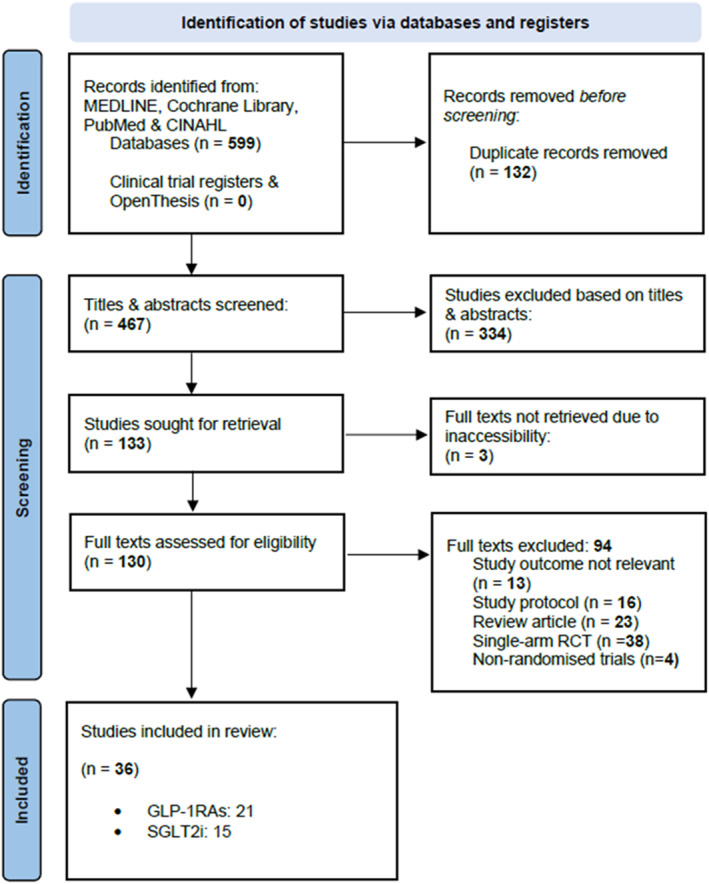
PRISMA flow‐chart of studies included.
Table: Studies reporting changes in lean body mass, fat‐free mass and skeletal muscle mass with GLP‐1RA therapy.
Table: Studies reporting changes in lean body mass, fat‐free mass and skeletal muscle mass with SGLT2i therapy.
Body Composition Method
Twenty‐six studies adopted DEXA in measuring body composition [7,24,25,26,27,28,29,30,31,32,33,34,35,36,37,38,40,42,43,44,45,46,50,51,52,54]. Eight studies adopted BIA [41,47,48,49,53,55,56,58]. One study adopted MRI [39] and one study adopted ADP [57] (see Table1).
Meta‐Analysis for GLP‐1RAs
Meta‐analysis of GLP‐1RAs (n= 21 studies) found an overall reduction in LBM in the direction of the intervention groups: (MD: −1.51 kg [95% CI: −2.00 to −1.01]I2= 47%) (see Figure2). Results for the standardised mean difference were (SMD: −0.41 [95% CI: −0.60 to −0.23]I2= 60%; see Supporting InformationS1: Figure S5).
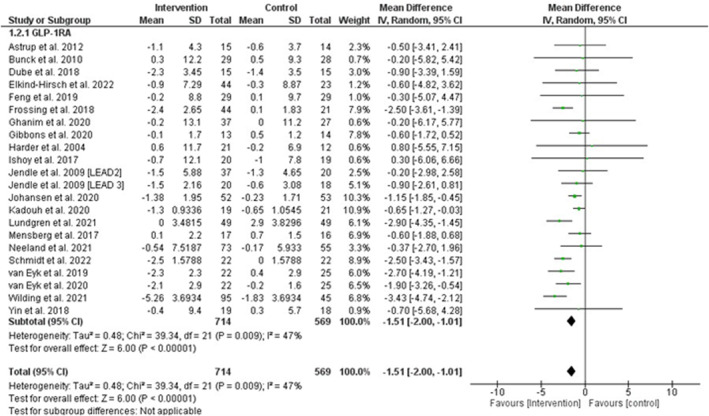
Weighted mean difference forest plot showing the effects of GLP‐1RAs on lean body mass. CI, confidence interval; IV, inverse variance.
Meta‐Analysis for SGLT2is
Meta‐analysis of SGLT2is (n= 15 studies) found an overall reduction of LBM in the direction of the intervention groups: (MD: −1.04 kg [95% CI: −1.45 to −0.64]I2= 19%; see Figure3). Results for the standardised mean difference were (SMD: −0.27 [95% CI: −0.46 to −0.07]I2= 61%; see Supporting InformationS1: Figure S6).
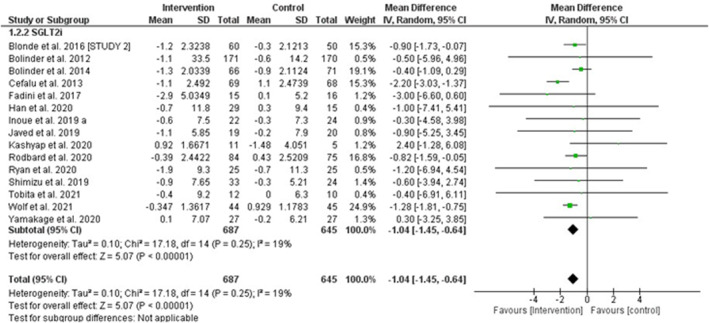
Weighted mean difference forest plot showing the effects of SGLT2is on lean body mass. CI, confidence interval; IV, inverse variance.
Meta‐Analysis Stratified by Body Composition Outcomes
Sub‐group analysis for GLP‐1RAs by body composition outcomes were LBM (n= 18 studies MD: −1.57 kg [95% CI: −2.14 to −0.99]I2= 53%); FFM (n= 2 studies MD: −1.13 kg [95% CI: −1.81 to −0.46]I2= 0%); SMM (n= 1 study MD: 0.30 kg [95% CI: −6.06 to 6.66]I2= N/A) (see Supporting InformationS1: Figure S7). Results for SGLT2is were LBM (n= 8 studies MD: −1.02 kg [95% CI: −1.56 to −0.47]I2= 55%); FFM (n= 3 studies MD: −1.97 kg [95% CI: −4.46 to 0.53]I2= 0%); SMM (n= 4 studies MD: −0.29 kg [95% CI: −2.44 to 1.85]I2= 0%; see Supporting InformationS1: Figure S8).
Meta‐Analysis Stratified by Body Composition Measurement Method
Sub‐group analysis for GLP‐1RAs by body composition method were DEXA (n= 16 studies MD: −1.54 kg [95% CI: −2.15 to −0.93]I2= 52%); BIA (n= 3 studies MD: −2.07 kg [95% CI: −3.01 to −1.14]I2= 0%); MRI (n= 1 study MD: −0.37 kg [95% CI: −2.70 to 1.96]I2= N/A); ADP (n= 1 study MD: −0.60 kg [95% CI: −1.72 to 0.52]I2= N/A; see Supporting InformationS1: Figure S9). Results for SGLT2is were DEXA (n= 10 studies MD: −1.03 kg [95% CI: −1.53 to −0.53]I2= 42%); BIA (n= 5 studies MD: −0.99 kg [95% CI: −2.75 to 0.77]I2= 0%; see Supporting InformationS1: Figure S10).
Meta‐Analysis Stratified by Disease Status
Sub‐group analysis for GLP‐1RAs by disease status were T2DM (n= 9 studies MD: −1.14 kg [95% CI: −1.72 to −0.57]I2= 0%); obesity (n= 6 studies MD: −1.62 kg [95% CI: −3.01 to −0.24]I2= 75%); PCOS (n= 2 studies MD: −2.38 kg [95% CI: −3.45 to −1.31]I2= 0%); T1DM (n= 4 studies MD: −1.62 kg [95% CI: −2.59 to −0.66]I2= 47%; see Supporting InformationS1: Figure S11). Results for SGLT2is were T2DM (n= 11 studies MD: −1.14 kg [95% CI: −1.62 to −0.66]I2= 24%); obesity (n= 2 studies MD: 1.30 kg [95% CI: −1.95 to 4.55]I2= 7%); PCOS (n= 1 study MD: −0.90 kg [95% CI: −5.25 to 3.45]I2= N/A); T1DM (n= 1 study MD: −0.82 kg [95% CI: −1.59 to −0.05]I2= N/A; see Supporting InformationS1: Figure S12).
Meta‐Analysis Stratified by the Percentage Proportion of LBM
Further analysis was conducted to investigate the proportion of overall weight loss that was attributable to LBM. Thirty‐three studies were included in this analysis; three studies were not included due to insufficient data. Sub‐group analysis stratified by therapy class found that 31% (95% CI: 24%–39%,I2= 45.8%) of overall weight loss from GLP‐1RAs resulted from LBM loss and 21% (95% CI: 9%–33%,I2= 41.8%) for SGLT2is (see Figure4). Overall, across both classes of therapy 28% (95% CI: 22%–34%,I2= 47.4%) of weight loss was from LBM.
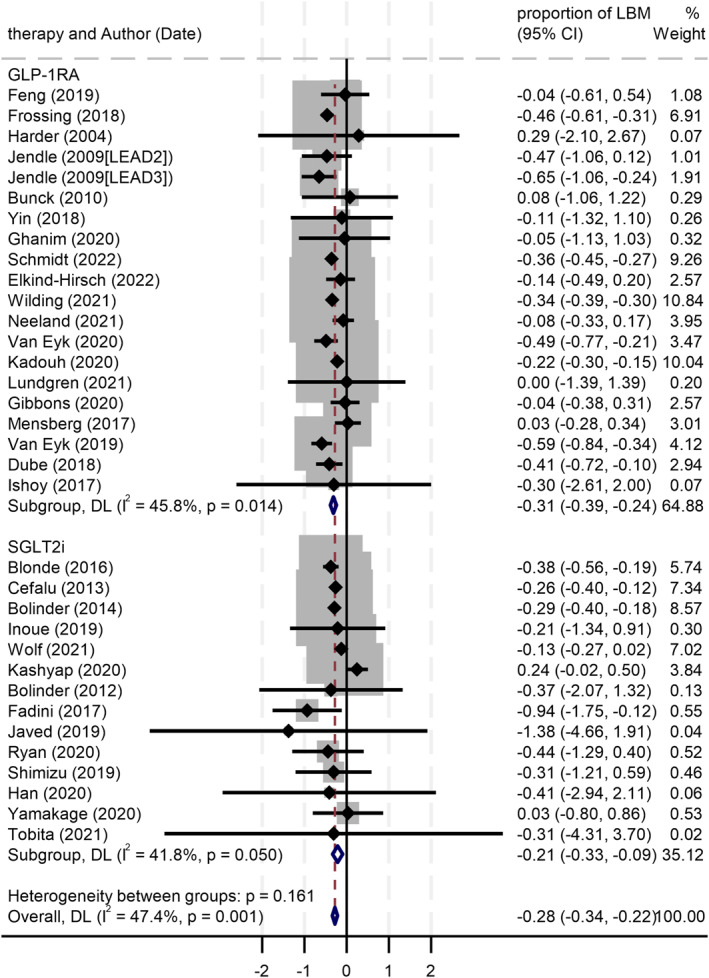
Forest plot showing the proportion of lean body mass contributing to overall weight change. Negative numbers represent the proportion of lean body mass in the context of overall weight loss.
Meta‐Analysis Stratified by Comparison With Placebo or Active Control
Sub‐group analysis for GLP‐1RAs by comparator type were conducted for placebo‐controlled trials (n= 17 studies MD −1.61 kg, 95% CI −2.16 to −1.05;p< 0.00001;I2= 58%) and active comparator trials (n= 5 studies MD −0.65 kg, 95% CI −1.95 to 0.65;p= 0.33;I2= 0%; see Supporting InformationS1: Figure S13). Sub‐group analysis for SGLT2is by comparator type were conducted for placebo‐controlled trials (n= 7 studies MD: −0.67 kg, 95% CI −1.10 to −0.24;p= 0.002;I2= 0%) and for active comparator trials (n= 8 studies MD: −1.47 kg, 95% CI −1.91 to −1.04;p< 0.00001;I2= 0%; see Supporting InformationS1: Figure S14).
Meta‐Regression Analyses
Meta‐regression analyses were conducted to estimate the percentage sex distribution effect on LBM. The results showed that a higher percentage of women in the cohort led to an increased reduction in lean body mass (per kg); (co‐efficient: −0.013 [95% CI: −0.033 to 0.006]) per percentage difference, however the results were not significant (p= 0.183) (see Supporting InformationS1: Figures S15 and S16 and Table S3). Additionally, meta‐regression analyses to estimate the effect of change in body weight (p= 0.921; Supporting InformationS1: Figure S17 and Table S4), change in waist circumference (p= 0.648; Supporting InformationS1: Figure S18 and Table S5) and mean age (p= 0.178; Supporting InformationS1: Figure S19 and Table S6) on the percentage proportion of weight loss attributed of LBM were not significant.
Discussion
Our systematic review meta‐analysis found that there was a 1.51 kg loss in LBM with GLP‐1RA therapy and a 1.04 kg loss in LBM with SGLT2i therapy. Across both therapy classes, this equated to 28% of overall weight loss. Results were largely unaffected by the method of measurement for body composition, although there was some evidence trial design influenced the results with greater LBM loss observed in placebo controlled compared to active comparator trials for GLP‐1RA therapy, whereas the converse was observed for SGLT2i therapy.
While it is widely reported that weight loss in obesity, T2DM and associated metabolic disease are beneficial, these benefits may be limited by the loss of LBM [60]. GLP‐1RAs induce weight (and concomitantly LBM) loss by reducing caloric intake, driving negative protein‐energy balance [4,5]. Conversely, glucosuria‐induced caloric loss following SGLT2i therapy contributes to LMB loss as muscle protein degradation is increased to release amino acids for gluconeogenesis [9]. Quantifying the loss of LBM is important, as it plays a key role in contributing to a broad range of physiological and metabolic processes, including energy balance [61]. LBM is also associated with glucose control by through affecting glucose storage capacity and lowering insulin sensitivity [62]. Although, where indicated, treatment with SGLT2is and GLP‐1RAs tends to result in a net improvement in glucose control, the potential loss of LBM may act to attenuate these effects, particularly in older adults or other high‐risk populations [8,63]. Our findings extend another recent meta‐analysis that was published whilst the present study was ongoing, which reported a loss of 1.01 kg in skeletal muscle mass with SGLT2i therapy [64]. However, this previous analysis was restricted to SGLT2i therapy in populations with T2DM only, compared to the wider inclusion criteria reported in our meta‐analysis. Furthermore, our meta‐analysis includes GLP‐1RA therapies and reports LBM loss as percentage of overall weight loss. The latter analysis is important as it allows a comparison to the wider literature. For example, it suggested that both GLP‐1RA and SGLT2i therapies induce a proportional loss of LBM consistent with dietary interventions [65]. The loss of LBM with GLP‐1RAs and SGLT2is is therefore likely to be related to the induced weight loss and not further affected in a positive or negative direction by the specific mechanisms of the investigated pharmacotherapies. Emerging evidence for tirzepatide further supports this conclusion, with the proportion of lean mass loss being a third of that observed for fat mass (pooled sub‐study data not included in this meta‐analysis due to lack of body composition outcome data) [66].
Losses in LBM can result in reduced strength while accelerating the ageing process [67]. Previous research has shown that weight‐stable individuals lose an average of ≥ 1.5 kg of LBM per decade, therefore the LBM losses associated with GLP‐1RAs are consistent with a decade of biological ageing [68]. Although LBM loss through general weight loss may have different metabolic effects compared to LBM loss through ageing, it is likely that acting to attenuate the loss of LBM when undergoing weight loss will provide enhanced health benefits.
Studies have shown that combining multimodal exercise training with diet‐induced weight loss interventions are beneficial in preserving LBM, while enhancing cardiorespiratory fitness, improving physical function and metabolic health [69,70,71,72]. Furthermore, a number of studies have investigated the combination of GLP‐1RAs and SGLT2is with exercise training on body composition and cardiorespiratory fitness [46,73,74]. Two studies [46,73] investigating a combination with GLP‐1RAs implemented a minimum of two supervised 60‐min sessions per week, with one study including a specific session dedicated to resistance exercising training [46]. Both trials highlighted potential LBM preservation with weight loss along with improvements in cardiorespiratory fitness, with one study showing that combining exercise training with liraglutide led to an 8% reduced body weight primarily consisting of FM derived from visceral fat, while maintaining total LBM [73]. Conversely, a previous randomised controlled trial showed that SGLT2i therapy in combination with regular endurance exercise training did not attenuate or augment body mass, FM and LBM, whereas exercise training alone decreased FM while not changing LBM [74]. Given the limited evidence from previous research, there is an increased clinical need in understanding the synergistic effects between exercise interventions and pharmacotherapy on body composition and metabolic health.
Strengths and Limitations
Our meta‐analysis is the first to quantify the loss of LBM from weight loss induced by GLP‐1RAs. Further strengths include low heterogeneity amongst studies and the sub‐group sensitivity analysis undertaken based on therapy class, LBM, FFM and SMM and body composition measurement methods. Limitations include some trials having a small sample size with large cardiovascular and renal outcome trials for SGLT2is not included due to lack of body composition outcome data [75,76,77]. In addition, the latest dual agonist weight loss therapies were also not included due to a lack of complete body composition data within the main trial population [66]. Furthermore, although heterogeneity was generally low, differences in the study population, trial length, control arm consisting of placebo or active comparator and GLP‐1RA and SGLT2i dose variations may have increased heterogeneity in this meta‐analysis. Evidence of publication bias also makes it challenging to draw definitive conclusions. Additionally, as the longest follow‐up in the analysis was 102 weeks, the longer‐term effects of GLP‐1RAs and SGLT2is on LBM are not fully known. Most studies did not report data for ethnic groups, therefore there is a need to investigate how prescribed GLP‐1RA and SGLT2i therapies affect LBM loss in different ethnic populations. This is of particular importance in South Asian ethnic minority groups, who are known to have lower levels of LBM, cardiorespiratory fitness and a greater risk of frailty compared to a white population, therefore LBM preservation is a resulting priority [78].
Conclusion
This systematic review and meta‐analysis demonstrates that GLP‐1RAs lead to a loss of 1.5 kg in LBM whereas SGLT2is lead to a loss of 1 kg in LBM. Future research with newer generations of GLP‐1RA therapies that promote greater weight loss is warranted, in addition to strategies that preserve and increase LBM in patient groups prescribed weight loss therapies. A particular emphasis must be placed on investigating the benefits of combining structured exercise training with pharmacotherapy in clinical practice.
Author Contributions
T.Y., J.A.S. and R.J. conceived the research question. T.Y., J.A.S. and R.J. developed the study methodology. R.J., T.Y., E.J. and J.A.S. contributed to the drafting of the manuscript. R.J., A.A. and E.J. conducted the study screening and risk of bias assessment. R.J. and E.J. conducted the data extraction. R.J., E.J. and J.A.S. conducted the data analysis. All authors assisted in the revising of the manuscript.
Conflicts of Interest
R.J., E.J., T.P. and A.A. report no conflict of interest. J.A.S. has received a grant in support of an investigator‐initiated trial from AstraZeneca. D.R.W. has received honoraria as a speaker for AstraZeneca, Sanofi‐Aventis and Lilly, and has received research funding support from Novo Nordisk. M.J.D. has acted as consultant, advisory board member and speaker for Novo Nordisk, Sanofi‐Aventis, Lilly, Merck Sharp & Dohme, Boehringer Ingelheim, AstraZeneca and Janssen, an advisory board member for Lexicon, Servier and Gilead Sciences Ltd and as a speaker for Napp Pharmaceuticals, Mitsubishi Tanabe Pharma Corporation and Takeda Pharmaceuticals International Inc. She has received grants in support of investigator and investigator‐initiated trials from Novo Nordisk, Sanofi‐Aventis, Lilly, Boehringer Ingelheim, AstraZeneca and Janssen. T.Y. is supported by the NIHR Leicester BRC and has received funding from Astra Zeneca for an investigator‐initiated project.
Acknowledgements
This study was supported by the National Institute for Health Research, (NIHR), Leicester Biomedical Research Centre, (BRC) and the NIHR Leicester Clinical Research Facility, (CRF) and the NIHR Applied Research Collaboration East Midlands. The views expressed are those of the authors and not necessarily those of the National Health Service, the NIHR or the Department of Health.
Data Availability Statement
No new data were generated or analyzed in this study. All data used in this meta‐analysis are derived from previously published studies and are cited within the article.
Associated Data
Data Availability Statement
No new data were generated or analyzed in this study. All data used in this meta‐analysis are derived from previously published studies and are cited within the article.
References
- Ong K. L., Stafford L. K., McLaughlin S. A., et al., “Global, Regional, and National Burden of Diabetes From 1990 to 2021, With Projections of Prevalence to 2050: A Systematic Analysis for the Global Burden of Disease Study 2021,” Lancet 402, no. 10397 (2023): 203–234, 10.1016/s0140-6736(23)01301-6. doi.org/10.1016/s0140-6736(23)01301-6
- Davies M. J., Aroda V. R., Collins B. S., et al., “Management of Hyperglycemia in Type 2 Diabetes, 2022. A Consensus Report by the American Diabetes Association (ADA) and the European Association for the Study of Diabetes (EASD),” Diabetes Care 45, no. 11 (2022): 2753–2786, 10.2337/dci22-0034. doi.org/10.2337/dci22-0034
- Brown E., Heerspink H. J., Cuthbertson D. J., and Wilding J. P., “SGLT2 Inhibitors and GLP‐1 Receptor Agonists: Established and Emerging Indications,” Lancet 398, no. 10296 (2021): 262–276, 10.1016/s0140-6736(21)00536-5. doi.org/10.1016/s0140-6736(21)00536-5
- Shah M. and Vella A., “Effects of GLP‐1 on Appetite and Weight,” Reviews in Endocrine & Metabolic Disorders 15, no. 3 (2014): 181–187, 10.1007/s11154-014-9289-5. doi.org/10.1007/s11154-014-9289-5
- Ard J., Fitch A., Fruh S., and Herman L., “Weight Loss and Maintenance Related to the Mechanism of Action of Glucagon‐Like Peptide 1 Receptor Agonists,” Advances in Therapy 38, no. 6 (2021): 2821–2839, 10.1007/s12325-021-01710-0. doi.org/10.1007/s12325-021-01710-0
- Pi‐Sunyer X., Astrup A., Fujioka K., et al., “A Randomized, Controlled Trial of 3.0 mg of Liraglutide in Weight Management,” New England Journal of Medicine 373, no. 1 (2015): 11–22, 10.1056/nejmoa1411892. doi.org/10.1056/nejmoa1411892
- Wilding J. P. H., Batterham R. L., Calanna S., et al., “Once‐Weekly Semaglutide in Adults With Overweight or Obesity,” New England Journal of Medicine 384, no. 11 (2021): 989–1002, 10.1056/nejmoa2032183. doi.org/10.1056/nejmoa2032183
- Rossi G., Bucciarelli L., Mananguite C. L., Giovarelli M., and Fiorina P., “Muscle Loss and GLP‐1R Agonists Use,” Acta Diabetologica 63, no. 2 (2025): 333–342, 10.1007/s00592-025-02611-2. doi.org/10.1007/s00592-025-02611-2
- Janež A. and Fioretto P., “SGLT2 Inhibitors and the Clinical Implications of Associated Weight Loss in Type 2 Diabetes: A Narrative Review,” Diabetes Therapy 12, no. 8 (2021): 2249–2261, 10.1007/s13300-021-01104-z. doi.org/10.1007/s13300-021-01104-z
- Pereira M. J. and Eriksson J. W., “Emerging Role of SGLT‐2 Inhibitors for the Treatment of Obesity,” Drugs 79, no. 3 (2019): 219–230, 10.1007/s40265-019-1057-0. doi.org/10.1007/s40265-019-1057-0
- Cho Y. K., Kim Y.‐J., and Jung C. H., “Effect of Sodium‐Glucose Cotransporter 2 Inhibitors on Weight Reduction in Overweight and Obese Populations Without Diabetes: A Systematic Review and a Meta‐Analysis,” Journal of Obesity & Metabolic Syndrome 30, no. 4 (2021): 336–344, 10.7570/jomes21061. doi.org/10.7570/jomes21061
- Zheng H., Liu M., Li S., et al., “Sodium‐Glucose Co‐Transporter‐2 Inhibitors in Non‐Diabetic Adults With Overweight or Obesity: A Systematic Review and Meta‐Analysis,” Frontiers in Endocrinology 12 (2021): 706914, 10.3389/fendo.2021.706914. doi.org/10.3389/fendo.2021.706914
- Willoughby D., Hewlings S., and Kalman D., “Body Composition Changes in Weight Loss: Strategies and Supplementation for Maintaining Lean Body Mass, a Brief Review,” Nutrients 10, no. 12 (2018): 1876, 10.3390/nu10121876. doi.org/10.3390/nu10121876
- Sharples A. P., Hughes D. C., Deane C. S., Saini A., Selman C., and Stewart C. E., “Longevity and Skeletal Muscle Mass: The Role of IGF Signalling, the Sirtuins, Dietary Restriction and Protein Intake,” Aging Cell 14, no. 4 (2015): 511–523, 10.1111/acel.12342. doi.org/10.1111/acel.12342
- Ahmad E., Sargeant J. A., Yates T., Webb D. R., and Davies M. J., “Type 2 Diabetes and Impaired Physical Function: A Growing Problem,” Diabetology 3, no. 1 (2022): 30–45, 10.3390/diabetology3010003. doi.org/10.3390/diabetology3010003
- Chao C.‐T., Wang J., and Chien K.‐L., “Both Pre‐Frailty and Frailty Increase Healthcare Utilization and Adverse Health Outcomes in Patients With Type 2 Diabetes Mellitus,” Cardiovascular Diabetology 17, no. 1 (2018): 130, 10.1186/s12933-018-0772-2. doi.org/10.1186/s12933-018-0772-2
- Sinclair A. J., Abdelhafiz A., Dunning T., et al., “An International Position Statement on the Management of Frailty in Diabetes Mellitus: Summary of Recommendations 2017,” Journal of Frailty & Aging 7 (2017): 1–11, 10.14283/jfa.2017.39. doi.org/10.14283/jfa.2017.39
- Sargeant J. A., Henson J., King J. A., Yates T., Khunti K., and Davies M. J., “A Review of the Effects of Glucagon‐Like Peptide‐1 Receptor Agonists and Sodium‐Glucose Cotransporter 2 Inhibitors on Lean Body Mass in Humans,” Endocrinology and Metabolism 34, no. 3 (2019): 247, 10.3803/enm.2019.34.3.247. doi.org/10.3803/enm.2019.34.3.247
- Page M. J., McKenzie J. E., Bossuyt P. M., et al., “The PRISMA 2020 Statement: An Updated Guideline for Reporting Systematic Reviews,” BMJ 372 (2021): n71, 10.1136/bmj.n71. doi.org/10.1136/bmj.n71
- Ouzzani M., Hammady H., Fedorowicz Z., and Elmagarmid A., “Rayyan—A Web and Mobile App for Systematic Reviews,” Systematic Reviews 5, no. 1 (2016): 210, 10.1186/s13643-016-0384-4. doi.org/10.1186/s13643-016-0384-4
- Higgins J. P. T., Thomas J., Chandler J., et al., eds. Cochrane Handbook for Systematic Reviews of Interventions version 6.3 (updated February 2022) (Cochrane, 2022),www.training.cochrane.org/handbook.
- Sterne J. A., Savović J., Page M. J., et al., “Rob 2: A Revised Tool for Assessing Risk of Bias in Randomised Trials,” BMJ (2019): l4898, 10.1136/bmj.l4898. doi.org/10.1136/bmj.l4898
- Higgins J. P. and Thompson S. G., “Quantifying Heterogeneity in a Meta‐Analysis,” Statistics in Medicine 21, no. 11 (2002): 1539–1558, 10.1002/sim.1186. doi.org/10.1002/sim.1186
- Astrup A., Carraro R., Finer N., et al., “Safety, Tolerability and Sustained Weight Loss Over 2 Years With the Once‐Daily Human GLP‐1 Analog, Liraglutide,” International Journal of Obesity 36, no. 6 (2011): 843–854, 10.1038/ijo.2011.158. doi.org/10.1038/ijo.2011.158
- Feng W.‐H., Bi Y., Li P., et al., “Effects of Liraglutide, Metformin and Gliclazide on Body Composition in Patients With Both Type 2 Diabetes and Non‐Alcoholic Fatty Liver Disease: A Randomized Trial,” Journal of Diabetes Investigation 10, no. 2 (2018): 399–407, 10.1111/jdi.12888. doi.org/10.1111/jdi.12888
- Frøssing S., Nylander M., Chabanova E., et al., “Effect of Liraglutide on Ectopic Fat in Polycystic Ovary Syndrome: A Randomized Clinical Trial,” Diabetes, Obesity and Metabolism 20, no. 1 (2017): 215–218, 10.1111/dom.13053. doi.org/10.1111/dom.13053
- Harder H., Nielsen L., Thi T. D. T., and Astrup A., “The Effect of Liraglutide, a Long‐Acting Glucagon‐Like Peptide 1 Derivative, on Glycemic Control, Body Composition, and 24‐H Energy Expenditure in Patients With Type 2 Diabetes,” Diabetes Care 27, no. 8 (2004): 1915–1921, 10.2337/diacare.27.8.1915. doi.org/10.2337/diacare.27.8.1915
- Jendle J., Nauck M. A., Matthews D. R., et al., “Weight Loss With Liraglutide, a Once‐Daily Human Glucagon‐Like Peptide‐1 Analogue for Type 2 Diabetes Treatment as Monotherapy or Added to Metformin, Is Primarily as a Result of a Reduction in Fat Tissue. Diabetes,” Obesity and Metabolism 11, no. 12 (2009): 1163–1172, 10.1111/j.1463-1326.2009.01158.x. doi.org/10.1111/j.1463-1326.2009.01158.x
- Bunck M. C., Diamant M., Eliasson B., et al., “Exenatide Affects Circulating Cardiovascular Risk Biomarkers Independently of Changes in Body Composition,” Diabetes Care 33, no. 8 (2010): 1734–1737, 10.2337/dc09-2361. doi.org/10.2337/dc09-2361
- Yin T.‐T., Bi Y., Li P., et al., “Effects of Exenatide Versus Insulin Glargine on Body Composition in Overweight and Obese T2DM Patients: A Randomized Controlled Trial,” Nutrition & Metabolism 15, no. 1 (2018): 67, 10.1186/s12986-018-0295-6. doi.org/10.1186/s12986-018-0295-6
- Blonde L., Stenlöf K., Fung A., Xie J., Canovatchel W., and Meininger G., “Effects of Canagliflozin on Body Weight and Body Composition in Patients With Type 2 Diabetes Over 104 Weeks,” Postgraduate Medicine 128, no. 4 (2016): 371–380, 10.1080/00325481.2016.1169894. doi.org/10.1080/00325481.2016.1169894
- Cefalu W. T., Leiter L. A., Yoon K.‐H., et al., “Efficacy and Safety of Canagliflozin Versus Glimepiride in Patients With Type 2 Diabetes Inadequately Controlled With Metformin (Cantata‐su): 52 Week Results From a Randomised, Double‐Blind, Phase 3 Non‐Inferiority Trial,” Lancet 382, no. 9896 (2013): 941–950, 10.1016/s0140-6736(13)60683-2. doi.org/10.1016/s0140-6736(13)60683-2
- Bolinder J., Ljunggren J. L., Wilding J., et al., “Dapagliflozin Maintains Glycaemic Control While Reducing Weight and Body Fat Mass Over 2 Years in Patients With Type 2 Diabetes Mellitus Inadequately Controlled on Metformin,” Diabetes, Obesity and Metabolism 16, no. 2 (2013): 159–169, 10.1111/dom.12189. doi.org/10.1111/dom.12189
- Inoue H., Morino K., Ugi S., et al., “Ipragliflozin, a Sodium–Glucose Cotransporter 2 Inhibitor, Reduces Bodyweight and Fat Mass, but Not Muscle Mass, in Japanese Type 2 Diabetes Patients Treated With Insulin: A Randomized Clinical Trial,” Journal of Diabetes Investigation 10, no. 4 (2019): 1012–1021, 10.1111/jdi.12985. doi.org/10.1111/jdi.12985
- Ghanim H., Batra M., Green K., et al., “Liraglutide Treatment in Overweight and Obese Patients With Type 1 Diabetes: A 26‐Week Randomized Controlled Trial; Mechanisms of Weight Loss,” Diabetes, Obesity and Metabolism 22, no. 10 (2020): 1742–1752, 10.1111/dom.14090. doi.org/10.1111/dom.14090
- Rodbard H. W., Giaccari A., Lajara R., et al., “Sotagliflozin Added to Optimized Insulin Therapy Leads to HbA1c Reduction Without Weight Gain in Adults With Type 1 Diabetes: A Pooled Analysis of inTandem1 and inTandem2,” Diabetes, Obesity and Metabolism 22, no. 11 (2020): 2089–2096, 10.1111/dom.14127. doi.org/10.1111/dom.14127
- Schmidt S., Frandsen C. S., Dejgaard T. F., et al., “Liraglutide Changes Body Composition and Lowers Added Sugar Intake in Overweight Persons With Insulin Pump‐Treated Type 1 Diabetes. Diabetes,” Obesity and Metabolism 24, no. 2 (2021): 212–220, 10.1111/dom.14567. doi.org/10.1111/dom.14567
- Elkind‐Hirsch K. E., Chappell N., Shaler D., Storment J., and Bellanger D., “Liraglutide 3 mg on Weight, Body Composition, and Hormonal and Metabolic Parameters in Women With Obesity and Polycystic Ovary Syndrome: A Randomized Placebo‐Controlled‐Phase 3 Study,” Fertility and Sterility 118, no. 2 (2022): 371–381, 10.1016/j.fertnstert.2022.04.027. doi.org/10.1016/j.fertnstert.2022.04.027
- Neeland I. J., Marso S. P., Ayers C. R., et al., “Effects of Liraglutide on Visceral and Ectopic Fat in Adults With Overweight and Obesity at High Cardiovascular Risk: A Randomised, Double‐Blind, Placebo‐Controlled, Clinical Trial,” Lancet Diabetes and Endocrinology 9, no. 9 (2021): 595–605, 10.1016/s2213-8587(21)00179-0. doi.org/10.1016/s2213-8587(21)00179-0
- Wolf V. L., Breder I., de Carvalho L. S., et al., “Dapagliflozin Increases the Lean‐to Total Mass Ratio in Type 2 Diabetes Mellitus,” Nutrition & Diabetes 11, no. 1 (2021): 17, 10.1038/s41387-021-00160-5. doi.org/10.1038/s41387-021-00160-5
- van Eyk H. J., Paiman E. H. M., Bizino M. B., et al., “Liraglutide Decreases Energy Expenditure and Does Not Affect the Fat Fraction of Supraclavicular Brown Adipose Tissue in Patients With Type 2 Diabetes,” Nutrition, Metabolism, and Cardiovascular Diseases 30, no. 4 (2020): 616–624, 10.1016/j.numecd.2019.12.005. doi.org/10.1016/j.numecd.2019.12.005
- Kadouh H., Chedid V., Halawi H., et al., “GLP‐1 Analog Modulates Appetite, Taste Preference, Gut Hormones, and Regional Body Fat Stores in Adults With Obesity,” Journal of Clinical Endocrinology and Metabolism 105, no. 5 (2019): 1552–1563, 10.1210/clinem/dgz140. doi.org/10.1210/clinem/dgz140
- Lundgren J. R., Janus C., Jensen S. B. K., et al., “Healthy Weight Loss Maintenance With Exercise, Liraglutide, or Both Combined,” New England Journal of Medicine 384, no. 18 (2021): 1719–1730, 10.1056/nejmoa2028198. doi.org/10.1056/nejmoa2028198
- Kashyap S. R., Kheniser K., Aminian A., Schauer P., Le Roux C., and Burguera B., “Double‐Blinded, Randomized, and Controlled Study on the Effects of Canagliflozin After Bariatric Surgery: A Pilot Study,” Obesity Science & Practice 6, no. 3 (2020): 255–263, 10.1002/osp4.409. doi.org/10.1002/osp4.409
- Bolinder J., Ljunggren Ö, Kullberg J., et al., “Effects of Dapagliflozin on Body Weight, Total Fat Mass, and Regional Adipose Tissue Distribution in Patients With Type 2 Diabetes Mellitus With Inadequate Glycemic Control on Metformin,” Journal of Clinical Endocrinology and Metabolism 97, no. 3 (2012): 1020–1031, 10.1210/jc.2011-2260. doi.org/10.1210/jc.2011-2260
- Mensberg P., Nyby S., Jørgensen P. G., et al., “Near‐Normalization of Glycaemic Control With Glucagon‐Like Peptide‐1 Receptor Agonist Treatment Combined With Exercise in Patients With Type 2 Diabetes,” Diabetes, Obesity and Metabolism 19, no. 2 (2016): 172–180, 10.1111/dom.12797. doi.org/10.1111/dom.12797
- van Eyk H. J., Paiman E. H., Bizino M. B., et al., “A Double‐Blind, Placebo‐Controlled, Randomised Trial to Assess the Effect of Liraglutide on Ectopic Fat Accumulation in South Asian Type 2 Diabetes Patients,” Cardiovascular Diabetology 18, no. 1 (2019): 87, 10.1186/s12933-019-0890-5. doi.org/10.1186/s12933-019-0890-5
- Fadini G. P., Bonora B. M., Zatti G., et al., “Effects of the SGLT2 Inhibitor Dapagliflozin on HDL Cholesterol, Particle Size, and Cholesterol Efflux Capacity in Patients With Type 2 Diabetes: A Randomized Placebo‐Controlled Trial,” Cardiovascular Diabetology 16, no. 1 (2017): 42, 10.1186/s12933-017-0529-3. doi.org/10.1186/s12933-017-0529-3
- Javed Z., Papageorgiou M., Deshmukh H., et al., “Effects of Empagliflozin on Metabolic Parameters in Polycystic Ovary Syndrome: A Randomized Controlled Study,” Clinical Endocrinology 90, no. 6 (2019): 805–813, 10.1111/cen.13968. doi.org/10.1111/cen.13968
- Johansen N. J., Dejgaard T. F., Lund A., et al., “Effect of Short‐Acting Exenatide Administered Three Times Daily on Markers of Cardiovascular Disease in Type 1 Diabetes: A Randomized Double‐Blind Placebo‐Controlled Trial,” Diabetes, Obesity and Metabolism 22, no. 9 (2020): 1639–1647, 10.1111/dom.14078. doi.org/10.1111/dom.14078
- Ryan S. P. P., Newman A. A., Wilburn J. R., et al., “Sodium Glucose Co‐Transporter 2 Inhibition Does Not Favorably Modify the Physiological Responses to Dietary Counselling in Diabetes‐Free, Sedentary Overweight and Obese Adult Humans,” Nutrients 12, no. 2 (2020): 510, 10.3390/nu12020510. doi.org/10.3390/nu12020510
- Ishøy P. L., Knop F. K., Broberg B. V., et al., “Effect of GLP‐1 Receptor Agonist Treatment on Body Weight in Obese Antipsychotic‐Treated Patients With Schizophrenia: A Randomized, Placebo‐Controlled Trial,” Diabetes, Obesity and Metabolism 19, no. 2 (2016): 162–171, 10.1111/dom.12795. doi.org/10.1111/dom.12795
- Shimizu M., Suzuki K., Kato K., et al., “Evaluation of the Effects of Dapagliflozin, a Sodium‐Glucose CO‐TRANSPORTER‐2 Inhibitor, on Hepatic Steatosis and Fibrosis Using Transient Elastography in Patients With Type 2 Diabetes and Non‐Alcoholic Fatty Liver Disease,” Diabetes, Obesity and Metabolism 21, no. 2 (2018): 285–292, 10.1111/dom.13520. doi.org/10.1111/dom.13520
- Han E., Lee Y., Lee B.‐W., Kang E. S., and Cha B.‐S., “Ipragliflozin Additively Ameliorates Non‐Alcoholic Fatty Liver Disease in Patients With Type 2 Diabetes Controlled With Metformin and Pioglitazone: A 24‐Week Randomized Controlled Trial,” Journal of Clinical Medicine 9, no. 1 (2020): 259, 10.3390/jcm9010259. doi.org/10.3390/jcm9010259
- Yamakage H., Tanaka M., Inoue T., Odori S., Kusakabe T., and Satoh‐Asahara N., “Effects of Dapagliflozin on the Serum Levels of Fibroblast Growth Factor 21 and Myokines and Muscle Mass in Japanese Patients With Type 2 Diabetes: A Randomized, Controlled Trial,” Journal of Diabetes Investigation 11, no. 3 (2019): 653–661, 10.1111/jdi.13179. doi.org/10.1111/jdi.13179
- Tobita H., Yazaki T., Kataoka M., et al., “Comparison of Dapagliflozin and Teneligliptin in Nonalcoholic Fatty Liver Disease Patients Without Type 2 Diabetes Mellitus: A Prospective Randomized Study,” Journal of Clinical Biochemistry & Nutrition 68, no. 2 (2021): 173–180, 10.3164/jcbn.20-129. doi.org/10.3164/jcbn.20-129
- Gibbons C., Blundell J., Tetens Hoff S., Dahl K., Bauer R., and Bækdal T., “Effects of Oral Semaglutide on Energy Intake, Food Preference, Appetite, Control of Eating and Body Weight in Subjects With Type 2 Diabetes,” Diabetes, Obesity and Metabolism 23, no. 2 (2020): 581–588, 10.1111/dom.14255. doi.org/10.1111/dom.14255
- Dubé M., D’Amours M., and Weisnagel S. J., “Beyond Glycaemic Control: A Cross‐Over, Double‐Blinded, 24‐Week Intervention With Liraglutide in Type 1 Diabetes,” Diabetes, Obesity and Metabolism 20, no. 1 (2017): 178–184, 10.1111/dom.13063. doi.org/10.1111/dom.13063
- Schünemann H., Brożek J., Guyatt G., and Oxman A., eds. GRADE Handbook for Grading Quality of Evidence and Strength of Recommendations Updated October 2013 (GRADE Working Group, 2013),guidelinedevelopment.org/handbook.
- Fogarasi A., Gonzalez K., Dalamaga M., and Magkos F., “The Impact of the Rate of Weight Loss on Body Composition and Metabolism,” Current Obesity Reports 11, no. 2 (2022): 33–44, 10.1007/s13679-022-00470-4. doi.org/10.1007/s13679-022-00470-4
- Evans P. L., McMillin S. L., Weyrauch L. A., and Witczak C. A., “Regulation of Skeletal Muscle Glucose Transport and Glucose Metabolism by Exercise Training,” Nutrients 11, no. 10 (2019): 2432, 10.3390/nu11102432. doi.org/10.3390/nu11102432
- Merz K. E. and Thurmond D. C., “Role of Skeletal Muscle in Insulin Resistance and Glucose Uptake,” Comprehensive Physiology 10, no. 3 (2020): 785–809, 10.1002/j.2040-4603.2020.tb00136.x. doi.org/10.1002/j.2040-4603.2020.tb00136.x
- Tippairote T., Hoonkaew P., Suksawang A., and Tippairote P., “Glucagon Suppression Under GLP‐1RA Therapy: Hidden Trade‐Offs for Muscle and Resilience,” Diabetology International 17, no. 1 (2026): 2, 10.1007/s13340-025-00856-4. doi.org/10.1007/s13340-025-00856-4
- Pan R., Zhang Y., Wang R., Xu Y., Ji H., and Zhao Y., “Effect of SGLT‐2 Inhibitors on Body Composition in Patients With Type 2 Diabetes Mellitus: A Meta‐Analysis of Randomized Controlled Trials,” PLoS One 17, no. 12 (2022): e0279889, 10.1371/journal.pone.0279889. doi.org/10.1371/journal.pone.0279889
- McCarthy D. and Berg A., “Weight Loss Strategies and the Risk of Skeletal Muscle Mass Loss,” Nutrients 13, no. 7 (2021): 2473, 10.3390/nu13072473. doi.org/10.3390/nu13072473
- Jastreboff A. M., Aronne L. J., Ahmad N. N., et al., “Tirzepatide Once Weekly for the Treatment of Obesity,” New England Journal of Medicine 387, no. 3 (2022): 205–216, 10.1056/nejmoa2206038. doi.org/10.1056/nejmoa2206038
- Prado C. M., Purcell S. A., Alish C., et al., “Implications of Low Muscle Mass Across the Continuum of Care: A Narrative Review,” Annals of Medicine 50, no. 8 (2018): 675–693, 10.1080/07853890.2018.1511918. doi.org/10.1080/07853890.2018.1511918
- Azzolino D., Spolidoro G. C., Saporiti E., Luchetti C., Agostoni C., and Cesari M., “Musculoskeletal Changes Across the Lifespan: Nutrition and the Life‐Course Approach to Prevention,” Frontiers of Medicine 8 (2021): 697954, 10.3389/fmed.2021.697954. doi.org/10.3389/fmed.2021.697954
- Weiss E. P., Jordan R. C., Frese E. M., Albert S. G., and Villareal D. T., “Effects of Weight Loss on Lean Mass, Strength, Bone, and Aerobic Capacity,” Medicine & Science in Sports & Exercise 49, no. 1 (2017): 206–217, 10.1249/mss.0000000000001074. doi.org/10.1249/mss.0000000000001074
- Villareal D. T., Chode S., Parimi N., et al., “Weight Loss, Exercise, or Both and Physical Function in Obese Older Adults,” New England Journal of Medicine 364, no. 13 (2011): 1218–1229, 10.1056/nejmoa1008234. doi.org/10.1056/nejmoa1008234
- Villareal D. T., Aguirre L., Gurney A. B., et al., “Aerobic or Resistance Exercise, or Both, in Dieting Obese Older Adults,” New England Journal of Medicine 376, no. 20 (2017): 1943–1955, 10.1056/nejmoa1616338. doi.org/10.1056/nejmoa1616338
- Weiss E. P., Racette S. B., Villareal D. T., et al., “Lower Extremity Muscle Size and Strength and Aerobic Capacity Decrease With Caloric Restriction but Not With Exercise‐Induced Weight Loss,” Journal of Applied Physiology 102, no. 2 (2007): 634–640, 10.1152/japplphysiol.00853.2006. doi.org/10.1152/japplphysiol.00853.2006
- Sandsdal R. M., Juhl C. R., Jensen S. B., et al., “Combination of Exercise and GLP‐1 Receptor Agonist Treatment Reduces Severity of Metabolic Syndrome, Abdominal Obesity, and Inflammation: A Randomized Controlled Trial,” Cardiovascular Diabetology 22, no. 1 (2023): 41, 10.1186/s12933-023-01765-z. doi.org/10.1186/s12933-023-01765-z
- Newman A. A., Grimm N. C., Wilburn J. R., et al., “Influence of Sodium Glucose Cotransporter 2 Inhibition on Physiological Adaptation to Endurance Exercise Training,” Journal of Clinical Endocrinology and Metabolism 104, no. 6 (2018): 1953–1966, 10.1210/jc.2018-01741. doi.org/10.1210/jc.2018-01741
- Wiviott S. D., Raz I., Bonaca M. P., et al., “Dapagliflozin and Cardiovascular Outcomes in Type 2 Diabetes,” New England Journal of Medicine 380, no. 4 (2019): 347–357, 10.1056/nejmoa1812389. doi.org/10.1056/nejmoa1812389
- Heerspink H. J. L., Stefánsson B. V., Correa‐Rotter R., et al., “Dapagliflozin in Patients With Chronic Kidney Disease,” New England Journal of Medicine 383, no. 15 (2020): 1436–1446, 10.1056/nejmoa2024816. doi.org/10.1056/nejmoa2024816
- Herrington W. G., Staplin N., Wanner C., and Green J. B., “Empagliflozin in Patients With Chronic Kidney Disease,” New England Journal of Medicine 388, no. 2 (2023): 117–127, 10.1056/nejmoa2204233. doi.org/10.1056/nejmoa2204233
- Pomeroy E., Mushrif‐Tripathy V., Cole T. J., Wells J. C., and Stock J. T., “Ancient Origins of Low Lean Mass Among South Asians and Implications for Modern Type 2 Diabetes Susceptibility,” Scientific Reports 9, no. 1 (2019): 10515, 10.1038/s41598-019-46960-9. doi.org/10.1038/s41598-019-46960-9
Republished from the open web under CC-BY. Authors: Jobanputra R, Sargeant JA, Plekhanova T, James E, Almaqhawi A, Webb DR, Davies MJ, Yates T. Read the original.