Traditional Fermented Dairy Products as Reservoirs of Bifidobacterium With Probiotic Potential: From Microbial Diversity to Functional Characterization.
Traditional fermented dairy products (TFDPs) are complex microbial ecosystems that may serve as reservoirs of many microorganisms, including those with probiotic potential such as Bifidobacterium species and lactobacilli. Although bifidobacteria are widely used as probiotic microorganisms in defined formulations, their occurrence, persistence, and functional relevance within TFDPs remain incompletely understood. This review critically synthesizes current evidence on the diversity, ecological roles, and traits associated with probiotic potential of Bifidobacterium spp. detected in TFDPs, including raw-milk fermentations, artisanal dairy products, and selected controlled dairy systems. Species such as Bifidobacterium animalis, Bifidobacterium longum, Bifidobacterium bifidum, and Bifidobacterium breve have been reported across yogurt, kefir, airag (traditional Mongolian fermented dairy beverage from mare milk), and raw milk cheeses, often at low abundance or as transient microbial community members. Many isolates from fermented dairy products exhibit traits commonly associated with probiotic functionality, including acid/bile tolerance, adhesion capacity, exopolysaccharide production, and antimicrobial activity. However, most reports remain limited to presence/absence or in vitro assays, with limited in vivo or clinical validation. Advances in molecular and omics-based approaches have improved detection, characterization, and safety evaluation; however, translation into validated applications remains constrained by challenges in isolation, viability, and strain-level confirmation. Importantly, detection of bifidobacteria in TFDPs does not confer probiotic status, which requires strain-level identification, demonstrated safety, adequate viable counts at consumption, and clinical evidence of health benefit. Collectively, TFDPs, as culturally embedded microbial reservoirs, may support the discovery of novel bifidobacterial strains for future development of functional foods or probiotic products following rigorous validation.
Introduction
Fermented foods represent complex and dynamic microbial ecosystems comprising bacteria, yeasts, and molds that originate from the natural microbiota of raw substrates; traditional utensils (e.g., wooden vats, fermentation jars, clay pots, bamboo baskets, grinding stones, ladles, and cutting boards); and the surrounding environment or intentionally added starter cultures (Franz et al.2014; Lorenzo et al.2018). These microbial consortia drive biochemical transformations that can enhance microbiological safety, stability, nutritional value, and sensory quality through acidification, production of antimicrobial metabolites such as organic acids and bacteriocins, and competitive inhibition of spoilage and pathogenic microorganisms (De Bellis and Rizzello2024). However, the extent of safety improvement depends on raw material quality, hygienic practices, and control of fermentation conditions.
Many microorganisms present in fermented foods possess traits associated with probiotic potential. According to the International Scientific Association of Probiotics and Prebiotics (ISAPP), probiotics are defined as “live microorganisms that, when administered in adequate amounts, confer a health benefit on the host” (Hill et al.2014). Importantly, probiotic designation requires strain‐level identification, demonstrated safety, evidence of clinical benefit, and viability at the time of consumption, criteria that most traditional fermented foods do not necessarily or consistently fulfill. Moreover, probiotic efficacy is highly strain‐specific and context‐dependent, and not all products containing live microorganisms confer measurable clinical benefits (Hill et al.2014; Sanders et al.2018). Although increasing consumer demand has driven rapid expansion of the probiotic market, this growth is accompanied by variability in product quality, regulatory definitions, and levels of scientific substantiation. These inconsistencies highlight the need for rigorous frameworks linking microbial identification to validated health outcomes.
Within this context, traditional fermented dairy products (TFDPs) should not be considered probiotic delivery systems per se but rather as ecological reservoirs for the discovery of bifidobacterial strains. In line with current regulatory frameworks, probiotic application requires strain‐level isolation, characterization, safety assessment, and clinical validation, followed by incorporation of validated strains into defined and controlled carrier systems (Hill et al.2014; Saleena et al.2024; Sanders et al.2018). Accordingly, this review explicitly distinguishes between microbial presence within TFDPs and the subsequent development of validated probiotic strains to avoid misinterpretation of in situ microbial occurrence as evidence of probiotic functionality or regulatory compliance.
TFDPs represent a particularly important subset of fermented foods because of their microbial richness, cultural significance, and widespread consumption (de Oliveira et al.2025; Hernández‐Velázquez et al.2024). Produced using raw or minimally processed milk and artisanal practices such as back‐slopping (a portion of a previously fermented batch is added into fresh ingredients to initiate new fermentation), these systems support microbial transmission from the environment, dairy animals, equipment, and human handling. While such practices preserve ecological complexity and may facilitate microbial adaptation and niche specialization, they can also introduce potential safety risks if hygienic controls are inadequate (Anyogu et al.2021). TFDPs are therefore best understood as complex microbial ecosystems rather than standardized functional foods (Franz et al.2014; Kariyawasam et al.2021), although they represent valuable sources for the discovery of candidate probiotic strains. The global probiotic food market exceeded USD 110 billion in 2025, reflecting rising consumer demand for foods containing beneficial live microorganisms and increasing interest in TFDPs as sources of novel probiotic strains (Caetano et al.2024; Intel Market Research2025).
Among microorganisms associated with fermented dairy systems, lactobacilli and bifidobacteria are the most extensively studied due to their technological adaptability and documented health‐related effects (Anjum et al.2014; Latif et al.2023; Sarita et al.2025). Other genera containing strains with probiotic applications, includingSaccharomyces, Bacillus, Propionibacterium, and Streptococcus, have also been isolated from fermented foods, though their occurrence and roles vary across substrates and processing conditions (Latif et al.2023). Importantly, probiotic functionality remains strain‐dependent, with clinical studies demonstrating distinct physiological endpoints such as modulation of gut microbiota, enhancement of immune response, and inhibition of pathogenic organisms, includingEscherichia coli,Salmonellaspp., andListeria monocytogenes(Raheem et al.2021; Sanders et al.2018; Vinayamohan et al.2024).
Bifidobacteria, first isolated by Henri Tissier in 1899 from the feces of breastfed infants, are Gram‐positive, anaerobic bacteria widely recognized for their roles in gut health, immune modulation, and metabolic regulation (Bocchio et al.2024; Laureys et al.2016; Saturio et al.2021). They are dominant members of the infant gut microbiota, where they metabolize human milk oligosaccharides (HMOs), supporting their ecological success during early life (Saturio et al.2021; Turroni et al.2017). In adults, they remain important contributors to gut homeostasis. Species such asBifidobacterium longum,Bifidobacterium bifidum, andBifidobacterium breveproduce short‐chain fatty acids (SCFAs), enhance gut barrier function, and synthesize vitamins and other beneficial metabolites (Chen et al.2021; Richmond et al.2025; Turroni et al.2014,2022; Yao et al.2021). Despite these documented functional attributes, their incorporation into food systems remains challenging due to sensitivity to oxygen, acidity, temperature fluctuations, and processing stresses, which can reduce viability during production and storage (Sibanda et al.2024; Soares et al.2023; Thomashoff et al.2026; Zuo et al.2020; Zhong et al.2025).
The presence of bifidobacteria in dairy foods may originate from endogenous milk microbiota, environmental inputs, or intentional incorporation during processing (Jena and Choudhury2025). However, they are often detected at low abundance in fermented dairy products, and their persistence within these systems remains uncertain (Firrman et al.2025; Lee and O'Sullivan2010).
In addition, competition with dominant lactic acid bacteria (LAB), which contribute to product safety and stability through acid production and antimicrobial activity, can further limit bifidobacterial survival (Choi et al.2018; Shokryazdan et al.2017; Zapaśnik et al.2022).
Given the growing demand for probiotic‐enriched dairy products and the limited availability of functionally robust strains suitable for industrial application, TFDPs represent promising yet underexplored sources of bifidobacteria (Jena and Choudhury2025; Prasanna et al.2014). However, the transition from microbial detection to validated probiotic application remains a key challenge. To address this gap, this review adopts an ecological systems perspective, evaluating TFDPs as dynamic microbial environments in which bifidobacteria may function as transient members, niche specialists, or candidate strains for probiotic development.
Within this framework, three interconnected levels are considered: (i) ecological detection, referring to the presence and distribution of bifidobacteria within complex fermentation consortia; (ii) functional validation, encompassing viability, metabolic activity, and traits associated with probiotic functionality; and (iii) translational relevance, requiring strain‐level characterization, technological robustness, and clinical evidence of health benefit.
This structured approach highlights the distinction between microbial presence and functional relevance and identifies key bottlenecks that limit the progression from detection to clinically validated probiotic applications (Figure1).
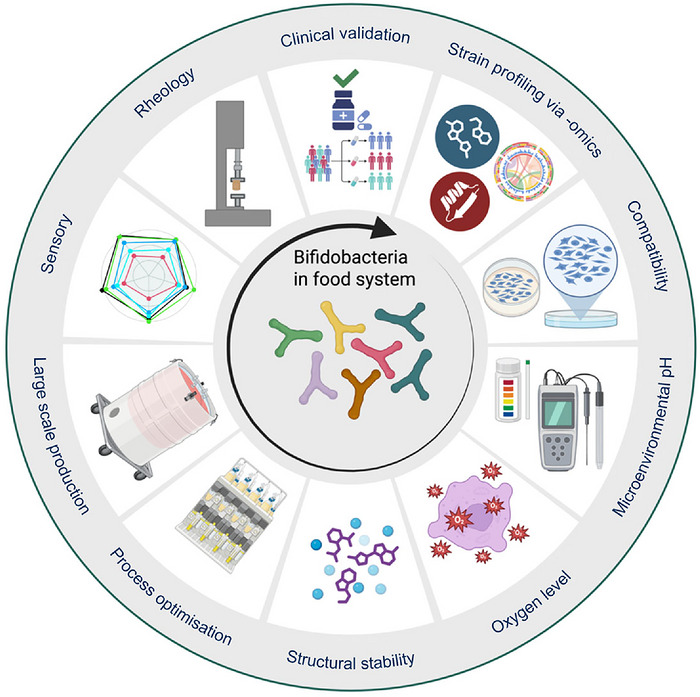
Conceptual overview of the major factors involved in the development of bifidobacteria in dairy foods. Molecular and omics‐based methods can substantially improve the precision with which bifidobacteria are detected, characterized, and assessed for safety in traditional dairy products. After careful strain selection, the chosen bifidobacteria are expected to be introduced into dairy matrices, where each factor shown in the figure should be evaluated to ensure optimal functionality, stability, and product safety.
Diversity and Microbial Ecology of Traditional Fermented Dairy Products (TFDPs): Implications for Bifidobacterial Discovery
Fermented dairy products (FDPs) are milk‐based foods that undergo microbial fermentation, during which LAB, yeasts, and occasionally molds drive biochemical transformations that influence digestibility, nutritional content, shelf life, and sensory characteristics. These microorganisms produce organic acids, antimicrobial compounds, and bioactive metabolites that shape product stability and quality and may contribute to functional properties associated with fermented foods, although such effects depend on microbial composition, viability, and host context (Gänzle2015; Tamime and Robinson2007).
TFDPs occupy a central role in regional diets worldwide and are characterized by artisanal practices, use of raw or minimally processed milk, and reliance on indigenous microbiota. These factors generate highly diverse microbial communities, including genera that contain strains with documented probiotic applications (Gebremichael et al.2025; Sun et al.2022). TFDPs therefore represent important dietary sources of diverse live microorganisms. Their metabolic activity may influence product characteristics and, in some cases, host physiology through metabolite production, immune modulation, or pathogen inhibition; however, such effects are product‐specific and strain‐dependent and not universally demonstrated (Dey et al.2024; Kaindi et al.2018).
Understanding the microbial composition and fermentation dynamics of TFDPs is essential for preserving traditional food systems and for identifying microorganisms with technological or probiotic potential (Xia et al.2022). Factors such as fermentation practices, milk origin, and regional processing methods strongly influence community structure and stability (Table1). Rather than representing uniform commercial products, TFDPs comprise heterogeneous ecological systems whose characteristics determine whether bifidobacteria can persist, interact with other microorganisms, and, critically, whether they can be reliably isolated as candidate strains for downstream functional and probiotic evaluation.
Table: Microbial profiles of traditional fermented dairy products (TFDPs) across regions.
Table: Key microbial communities involved in traditional fermented dairy products (TFDPs) and their association with bifidobacteria.
Microbial Drivers of Fermentation: A Framework for Assessing Bifidobacterial Niches
TFDPs can be ecologically classified according to the dominant fermentation processes, including lactic, yeast‐lactic, mold‐lactic, and propionic and acetic acid fermentations. While numerous fermented foods and beverages exist globally, this section focuses specifically on milk‐based fermentation systems, as these environments represent the primary matrices in which bifidobacteria have been investigated within traditional dairy ecosystems. Although originally based on sensory attributes or dominant taxa (Caetano et al.2024; Voidarou et al.2020), this classification also provides a functional framework for evaluating the ecological compatibility ofBifidobacteriumspp. in diverse dairy systems.
Lactic acid fermentation, the most common type, is driven by LAB such asL. delbrueckiisubsp.bulgaricus,Streptococcus thermophilus, andLactococcus lactis. These organisms convert lactose to lactic acid, reducing pH and redox potential and creating mildly acidic and low‐oxygen conditions (Zapaśnik et al.2022). While such environments may transiently support obligate anaerobes, culture‐based studies rarely recover viable bifidobacteria from products such as yogurt or dahi (a traditional fermented milk product similar to yogurt and widely consumed in South Asian countries), and detections are typically limited to low or inconsistent abundance, often detected only as DNA signals (Solís et al.2010; Zapaśnik et al.2022). This suggests limited ecological compatibility under standard fermentation conditions, likely due to slow growth rates and competitive exclusion (Prasanna et al.2014).
Yeast‐lactic fermentations, such as kefir, koumiss (Central and East Asian TFDP from mare milk), and viili (Nordic fermented milk), feature metabolically diverse consortia of LAB and yeasts includingKluyveromyces marxianusandSaccharomyces cerevisiae. These systems generate lactic acid, ethanol, and CO2, supporting broader metabolic networks that facilitate micronutrient exchange and cross‐feeding (Afzaal et al.2021). Yeasts may also reduce oxygen levels and release B vitamins and amino acids, which may support anaerobic microorganisms. These interactions may enhance ecological opportunity for bifidobacteria; however, stable detection remains limited, with metagenomic studies reporting low and inconsistent abundance (Marsh et al.2013).
Mold‐lactic fermentations, typical of blue cheeses, introduce aerobic fungi likePenicillium roqueforti, which increase oxygen availability and drive extensive proteolysis and lipolysis during ripening (López‐Díaz et al.2023). These conditions are generally unfavorable for bifidobacteria, which are highly sensitive to oxygen. As a result, viable bifidobacteria are unlikely to persist under typical conditions, and detections are often limited to DNA signatures that may not reflect metabolic activity or survival (Smid and Kleerebezem2014).
Propionic and acetic acid fermentations, observed in Swiss cheeses and kefir‐derived products, present a more complex scenario. WhilePropionibacterium freudenreichiiand acetic acid bacteria (AAB) such asGluconobacterspp. may reduce oxygen tension and interact with LAB, they also produce inhibitory metabolites such as propionic acid and acetic acid, which can constrain bifidobacterial growth. Nonetheless, spatial heterogeneity within these systems, such as microaerophilic niches in cheese matrices, may permit limited survival (Liu et al.2012; Rabah et al.2018).
Table2synthesises these ecological relationships by mapping key microbial groups in TFDPs with their known or proposed interactions with bifidobacteria. In addition, Figure2conceptualizes the ecological classification by illustrating how fermentation type influences bifidobacterial compatibility across key parameters, including pH, oxygen availability, microbial competition, and metabolite interactions. This framework highlights TFDPs as dynamic ecological systems in which environmental conditions, rather than simple microbial presence, determine the potential for bifidobacterial persistence and recovery.
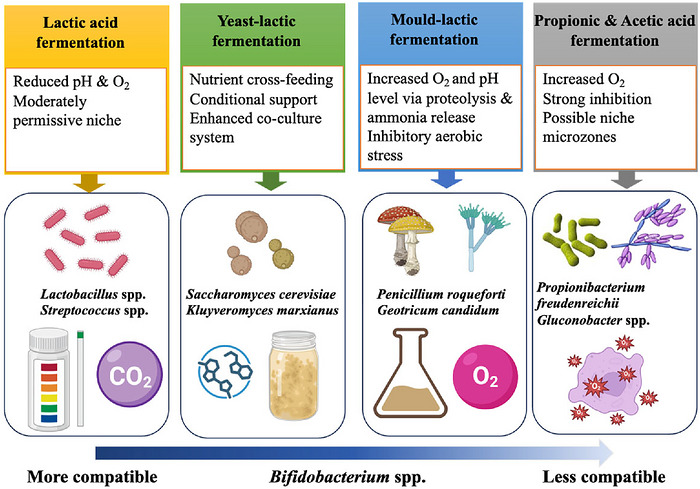
Ecological compatibility of traditional dairy fermentation systems withBifidobacteriumspp. Schematic representation of four major traditional dairy fermentation systems highlighting their ecological characteristics and compatibility withBifidobacteriumspp. The blue arrow represents the decreasing ecological compatibility forBifidobacteriumspp., integrating physicochemical and microbial dynamics.
Traditional Products as Microbial Reservoirs for Bifidobacteria: Contextualizing Regional and Process Variability
TFDPs exhibit a striking heterogeneity shaped by regional practices, raw milk microbiota, and artisanal processing techniques (Caetano et al.2024; Tamang et al.2016). While these differences are often highlighted to underscore cultural diversity, they also create distinct ecological contexts that may variably support or constrain bifidobacterial persistence. Understanding bifidobacteria within these systems therefore requires moving beyond geographic or typological descriptions toward a critical analysis of the microbial selection pressures that govern their occurrence.
Spontaneous fermentations, especially in rural or artisanal settings, typically rely on raw milk and environmental inoculation. These conditions generate complex microbial consortia and may facilitate the transient introduction or survival of bifidobacteria, including environmental or host‐associated strains. However, this microbial openness also introduces interpretative uncertainty. Reports of bifidobacteria in products such as artisanal dahi, labneh, or other raw milk‐derived fermentations are often difficult to contextualize, as post‐processing contamination from handling, water sources, or suboptimal hygiene conditions cannot be excluded (Kariyawasam et al.2021; Mudgal and Prajapati2017). Consequently, the detection of bifidobacteria alone cannot be interpreted as evidence of ecological integration within these systems.
Some fermented products, including shubat (fermented camel milk) and kurut (dried fermented milk shaped as balls), have shown preliminary evidence of compatibility as niches for bifidobacteria. However, these findings are frequently based on low‐resolution culture‐based methods or genus‐level molecular approaches, without sufficient strain‐level validation to confirm endogenous origin (Manaer et al.2015; Afzaal et al.2021; Shingisov and Alibekov2017; Tang et al.2020; Liu et al.2012; Zhang et al.2014). As a result, their ecological role, whether as commensal residents, transient populations, or contaminants, often remains unresolved.
A comparative synthesis of available studies (Table1) underscores these methodological limitations. Many investigations lack standardized protocols for sample collection, enrichment, and strain typing, making cross‐study comparisons challenging. In addition, the geographic concentration of studies in South and Central Asian TFDPs leaves other traditional dairy systems underexplored. Critically, few studies incorporate metabolomic, transcriptomic, or viability‐based approaches to assess functional activity, leaving it unclear whether detected bifidobacteria are metabolically active or simply dormant or non‐viable.
To meaningfully position TFDPs as reservoirs of bifidobacteria, research must transition from sporadic detection to ecological validation. This requires integrated approaches combining strain‐resolved genomics to distinguish endogenous strains from contaminants, viability assays to confirm survival and metabolic activity, and longitudinal studies to assess persistence across fermentation batches and storage. Only through such integrated approaches can TFDPs be identified as genuine reservoirs of bifidobacterial strains with reproducible ecological persistence and demonstrable functional activity. These attributes must subsequently be confirmed through strain‐level isolation and validation prior to any consideration of translational application. This distinction is critical because stable or niche‐adapted populations are more likely to represent ecologically integrated strains with reproducible functional traits and greater potential for successful isolation and downstream probiotic development, whereas transient populations may reflect incidental presence without translational relevance.
Such integrative approaches, further elaborated in Section4, provide a structured pathway for progressing from descriptive detection to evidence‐based identification of bifidobacterial strains with translational potential.
Microbial Interactions: Synergies, Competition, and Knowledge Gaps
Microbial interactions within TFDPs represent a critical determinant of whether bifidobacteria can persist, remain metabolically active, or be recoverable for downstream characterization. TFDPs are dynamic microbial ecosystems in which community structure and function are governed by complex inter‐microbial interactions rather than individual taxa alone (Gänzle2015; Tamang et al.2016). These interactions determine not only fermentation outcomes but also the capacity of specific microorganisms, including bifidobacteria, to persist or contribute functionally within the system. For bifidobacteria, ecological success depends on the balance between potentially supportive interactions and strong competitive or inhibitory pressures from dominant community members (Hill et al.2014; Linares et al.2017).
LAB dominate most TFDPs and play a central role in shaping the fermentation environment through rapid lactose metabolism, acidification, and reduction of redox potential (Zapaśnik et al.2022). These changes may transiently create conditions that are more compatible with the oxygen‐sensitive physiology of bifidobacteria. In addition, LAB metabolism generates peptides, amino acids, SCFAs, B vitamins, or other metabolites that may act as co‐substrates or growth‐promoting factors (Gänzle2015; O'Callaghan and van Sinderen2016). However, these potentially beneficial effects are counterbalanced by strong competitive interactions. LAB typically exhibit faster growth rates, more efficient carbohydrate utilization, and the ability to produce antimicrobial compounds, such as bacteriocins or bacteriocin‐like inhibitory substances (BLIS), which can suppress slow‐growing anaerobes, includingBifidobacteriumspp. Notably, bifidobacteria themselves have been shown to produce BLIS in dairy‐based media, underscoring the dynamic and bidirectional nature of these interactions (Balciunas et al.2016; Martinez et al.2015).
Several mechanistic processes have been proposed to explain how bifidobacteria may persist within TFDP ecosystems, although empirical support remains limited and context‐dependent. Cross‐feeding interactions are among the most widely suggested mechanisms, whereby proteolytic activity of LAB releases peptides, amino acids, and growth factors from casein hydrolysis that may support bifidobacterial metabolism (Gänzle2015; Rivière et al.2016). While such interactions are well documented in simplified co‐culture systems, their relevance in complex fermentation consortia remains uncertain, as competition for primary substrates often outweighs potential metabolic cooperation (Lee and O'Sullivan2010; Prasanna et al.2014).
Oxygen modulation represents another potential facilitating mechanism. Yeast and facultatively anaerobic LAB can reduce oxygen levels through respiratory activity, thereby creating microaerophilic niches (containing lower levels of dioxygen than atmosphere) that are more compatible with the strictly anaerobic nature of bifidobacteria (Afzaal et al.2021). In yeast‐LAB co‐fermentations like kefir or koumiss, additional metabolic exchanges may occur, including the provision of vitamins (e.g., biotin and folate), amino acids, and redox‐active compounds that could alleviate physiological stress (Afzaal et al.2021; Zhang et al.2014). However, metagenomic studies consistently report low‐abundance and high variability of bifidobacteria in these systems, suggesting that such interactions are insufficient to support stable colonization (Marsh et al.2013).
Matrix‐mediated protection has also been proposed as a mechanism influencing microbial persistence. Exopolysaccharide (EPS) production by LAB and other microorganisms can alter the physical structure of the fermentation matrix, potentially creating microenvironments that buffer pH fluctuations, limit oxygen diffusion, and enhance microbial stability (Gänzle2015; Rivière et al.2016). Such structural effects may transiently support the survival of oxygen‐sensitive microorganisms. However, direct experimental evidence linking matrix microstructure to sustained bifidobacterial viability in TFDPs remains limited.
Recent metabolomic studies have provided additional insight into microbial interactions by linking co‐culture activity to metabolite exchange within fermentation systems. Analytical approaches such as LC–MS and GC–MS have demonstrated that mixed fermentations can result in increased concentrations of SCFAs, free amino acids, and bioactive peptides compared to single‐strain systems (Rivière et al.2016; Afzaal et al.2021). These metabolites may serve as secondary substrates or signaling molecules influencing bifidobacterial metabolic activity (O'Callaghan and van Sinderen2016). However, most metabolomic findings remain correlative, and there is still limited direct evidence linking specific metabolite fluxes to bifidobacterial growth dynamics or functional expression within complex TFDP matrices.
Despite these mechanistic insights, it is important to recognize that most supporting evidence originates from simplified in vitro or model systems that do not fully replicate the ecological complexity of TFDPs. In real TFDP ecosystems, potentially cooperative interactions are frequently outweighed by competitive pressures, including rapid acidification, substrate depletion, and antimicrobial activity of dominant microorganisms (Gänzle2015; Zapaśnik et al.2022). Consequently, bifidobacteria are often detected at low abundance and more likely to represent transient or residual populations rather than stable, ecologically integrated members of the microbial community.
Importantly, the presence of microbial interactions or co‐occurring taxa does not imply stable ecological integration or functional contribution of bifidobacteria within TFDPs. Distinguishing between transient occurrence and sustained ecological adaptation is therefore essential, particularly in the context of identifying strains with potential for isolation and downstream application.
Overall, while microbial interactions in TFDPs provide a theoretical basis for bifidobacterial survival, empirical evidence supporting consistent persistence or functional integration remains limited. Their ecological success is highly context‐dependent and rarely sustained under typical TFDP conditions, reinforcing the view that bifidobacteria are more often transient members of these systems rather than stable components.
Presence and Relevance of Bifidobacteria in Traditional Fermented Dairy Products (TFDPs)
Bifidobacteria have been intermittently reported in a range of TFDPs, including yogurt, kefir, airag, and raw‐milk cheeses, particularly those produced through spontaneous or artisanal fermentation (Table3). Although earlier microbiological surveys frequently overlooked these taxa, recent metagenomic and culture‐dependent studies (summarized in Table3) have improved the resolution of detection methods and, in some cases, enabled recovery of viable isolates from naturally fermented dairy systems. However, their occurrence is typically sporadic, low in abundance, and inconsistent across studies. While certain fermentation or storage conditions may permit survival or transient persistence, such occurrences rarely indicate stable ecological integration within the fermentation community. Moreover, the presence of bifidobacteria does not exclude contamination or the identification of non‐viable cells, and therefore requires careful ecological interpretation.
Table: List of traditional fermented dairy products (TFDPs) containing Bifidobacteria: Their sensory attributes, microbial consortia, and functional implications.
Beyond their microbiological interest, TFDPs carry deep cultural and nutritional significance across Asia, Africa, and Europe, serving both as dietary staples and income sources in rural communities (Agyei et al.2020; Mathara et al.2004; Owusu‐Kwarteng et al.2017). From a scientific perspective, understanding the occurrence and behavior of bifidobacteria within these traditional systems is relevant for strain discovery and probiotic bioprospecting. However, this does not imply that TFDPs themselves function as probiotic products. Rather, detection within these matrices should be interpreted as an indicator of potential strain sources, requiring subsequent isolation, characterization, and validation before any functional or health‐related claims can be made.
Ecological and Process‐Related Factors Influencing Bifidobacterial Persistence
While detection of bifidobacteria in TFDPs confirms of their presence, it does not necessarily indicate ecological adaptation or functional relevance. Distinguishing whether these microorganisms are transient, contaminant, or actively integrated members of the fermentation ecosystem requires careful evaluation of the environmental and technological conditions that govern their survival and persistence. This distinction is critical for assessing whether TFDPs can serve as potential reservoirs of bifidobacteria relevant to strain discovery and probiotic development.
The distinction between transient and stable populations is not merely ecological but has direct implications for strain discovery and selection. Stable or niche‐adapted populations are more likely to exhibit functional integration, technological robustness, and reproducibility, making them stronger candidates for downstream isolation and probiotic development, whereas transient populations may reflect environmental contamination or short‐term survival without functional or translational relevance (Sanders et al.2018).
Bifidobacterial survival within dairy environments depends on a complex interplay between raw‑milk ecology, fermentation dynamics, and post‑processing conditions. Key determinants include the initial microbial load, hygienic practices during milking, fermentation parameters (pH, temperature, and oxygen), and the nutritional composition of the milk matrix.
The milk substrate plays a defining ecological role. Protein, fat, and carbohydrate composition influence microbial adhesion, metabolism, and acid tolerance. For example, buffalo milk, with its higher protein and lipid content, has been reported to support improved bifidobacterial survival compared with cow milk, possibly due to enhanced buffering capacity and substrate availability (Habiba et al.2025; Linares et al.2017). Nonetheless, most isolates characterized to date originate from cow‑milk‑based TFDPs, with few investigations targeting buffalo milk and even fewer focusing on camel milk (Table3).
Environmental factors such as oxygen tension and acidity critically constrainBifidobacteriumviability. Bifidobacteria generally exhibit optimal growth in low‑oxygen, moderately acidic conditions (pH 4.5–6.5) and temperatures of 30°C–40°C (Roy2001). Excessive acidification or prolonged aeration can reduce viable counts. Adaptation strategies include co‑culturing with oxygen‑scavenging LAB, microencapsulation, and modifying fermentation times to optimize micro‑niche conditions (Sionek et al.2024; Wendel2022). However, inconsistencies persist between laboratory and real‑world fermentation outcomes, with commercial products often showing variable retention of viable bifidobacteria at the end of shelf life (Shah2000; Hang et al.2026).
In traditional dairy ecosystems, bifidobacteria may enter via multiple routes, including maternal transmission (colostrum), environmental contact (teat surface, equipment, housing), or faecal shedding. While such transmission pathways ofBifidobacteriumare well‐documented in humans (Milani et al.2017; Mitsuoka1984), evidence in ruminants remains limited and largely inferred from milk microbiome studies (Oikonomou et al.2012). Once introduced, these microbes can persist through practices such as back‑slopping or continuous fermentation, where microbial consortia are recycled between batches. However, such practices also support microbial variability and contamination risk. Figure3illustrates these transmission pathways, depicting the cyclical link between animal microbiota, environmental exposure, and milk fermentation. This continuity mirrors broader host‑microbiome dynamics: the mammary gland, once assumed sterile, is now recognized as a microbial niche (Martín et al.2007; Oikonomou et al.2012). As these host‐associated microbial populations can be transferred into raw milk and subsequently carried into fermentation processes, traditional dairy fermentations may represent secondary reservoirs of host‑associated commensals, including bifidobacteria, bridging the animal gut‐milk‐fermentation continuum. Recognizing this ecological linkage helps explain how host‐associated microorganisms can enter dairy fermentation systems and provides a biological basis for investigating bifidobacteria within TFDPs.
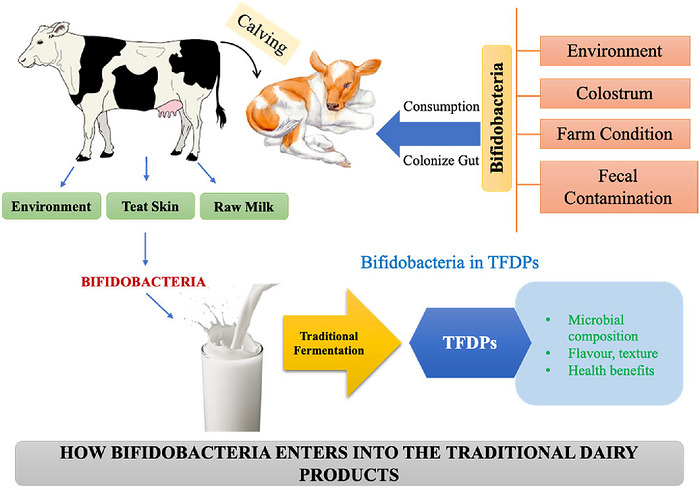
Proposed ecological routes of bifidobacterial transmission in traditional dairy systems, illustrating environmental, maternal, and process‑driven pathways contributing to microbial continuity from the farm ecosystem to the fermented product.
Over time, some dairy‑associatedBifidobacteriumstrains have undergone ecological domestication, adapting to the milk environment and later being incorporated intentionally as components of commercial probiotic formulations. Isolates such asB. longumandB. animalisdemonstrate survival through cheese ripening and transient detection in the human gut following consumption (Milani et al.2019). This progression from spontaneous to controlled fermentation underscores the translational potential of TFDP‑derived bifidobacteria.
Functional and Technological Properties of Bifidobacteria in Traditional Fermented Dairy Products (TFDPs)
Bifidobacteria may influence both health‑related, nutritional, and technological aspects of TFDPs, and some strains exhibit traits commonly associated with probiotic functionality (He et al.2022; Jena and Choudhury2025). However, the presence of such traits in vitro does not establish probiotic status or clinical efficacy, which requires strain‐level identification, adequate viable dose at consumption, and evidence of health benefit in humans. Within TFDP contexts, bifidobacteria are therefore more appropriately discussed in terms of functional attributes and technological performance rather than confirmed probiotic effects.
Many isolates exhibit varying degrees of acid and bile tolerance, characteristics often used as preliminary indicators of potential survival through the gastrointestinal tract (Sánchez et al.2013). Certain strains adhere to intestinal epithelial cells in vitro, suggesting possible host interaction (García‐Cayuela et al.2014; Jungersen et al.2014). In addition, some strains produce organic acids and antimicrobial compounds and have been reported to inhibit pathogens such asE. coli,Staphylococcus aureus, andSalmonella typhimuriumunder laboratory conditions (Collado et al.2007), although their effectiveness in complex food matrices is strain‐specific and context‐dependent.
Beyond potential host interactions, bifidobacteria may contribute directly to product quality. EPS production can enhance viscosity, mouthfeel, and water‑holding capacity, thereby improving sensory properties. EPS may also confer stress protection, supporting bacterial survival during fermentation and storage (Hidalgo‐Cantabrana et al.2014). Their enzymatic activities promote protein and carbohydrate hydrolysis, generating bioactive peptides and volatile compounds that influence flavor and produce metabolites associated with potential health benefits, such as SCFAs and, in some strains, γ‐aminobutyric acid (GABA) (Pokusaeva et al.2011; Rivière et al.2015).
Taken together, available evidence suggests that bifidobacteria detected in TFDPs may, under certain conditions, contribute to product quality rather than being solely incidental members of the microbiota. Nevertheless, the extent of their activity, persistence, and functional significance requires confirmation through strain‐resolved, viability‐based, and matrix‐specific investigations under realistic fermentation conditions.
Evidence From Isolates: Probiotic Screening ofTFDP‐Derived Bifidobacteria
Genomic resources for the genusBifidobacteriumhave expanded considerably in the last decade. More than 215 publicly available genomes representing ∼44 species have now been sequenced, revealing an open pan‐genome of over 30,000 gene clusters and a very small core genome of ∼12 conserved genes, reflecting extensive ecological diversification across the genus (Sharma et al.2018). Despite this breadth, only a small fraction of sequenced strains originates from milk or fermented dairy products, underscoring a major knowledge gap and reinforcing the importance of TFDPs as underexplored reservoirs of potentially novel or functionally distinct bifidobacteria.
Several studies have reported the presence ofBifidobacteriumstrains in TFDPs, yet the depth of functional, probiotic‐relevant characterization varies considerably. Table4summarizes key strains isolated from raw milk, artisanal products, or controlled fermentations, along with their functional traits, ecological origin, and levels of scientific validation.
Table: Probiotic potential ofBifidobacteriumspp. isolated from milk and traditional fermented dairy products (TFDPs).
A critical analysis of these studies reveals that only a minority of isolates have undergone both in vitro and in vivo validation, an essential benchmark for establishing robust probiotic potential. The BT‐series isolates from Iranian traditional dairy products (Collado et al.2007) represent a rare example of comprehensive characterization demonstrating acid/bile resistance, adhesion ability, antimicrobial activity, cholesterol reduction, and host‐modulatory effects in a rat model. Likewise,B. animalissubsp.lactisBB‑12 remains one of the best‐validated strains globally, supported by extensive human and preclinical data demonstrating consistent functional and safety profiles (Jungersen et al.2014).
This inconsistency in scientific validation also highlights a key conceptual limitation. Most studies prioritize detection or preliminary functional assays, while only a small number progress to strain‐level identification, ecological classification, or safety and viability assessments in real food matrices. Such variation reduces cross‐study comparability and constrains the ability to determine which isolates possess genuine translational potential. Furthermore, the lack of standardized protocols for isolation, viability tracking, and genome‐based confirmation limits the establishment of strain provenance across different TFDP ecosystems.
In contrast, several studies document promising traits such as mucin adhesion or pathogen inhibition based exclusively on in vitro assays. Examples include isolates from camel milk (Yasmin et al.2020), Malaysian dairy products (Tham et al.2012), and Saudi artisanal samples (Al‐Hindi2013). Although informative, these studies do not test survival or colonization in vivo, leaving uncertainty about gastrointestinal survival, host interaction, and relevance beyond in vitro screening.
Other taxa, such asB. mongolienseorB. aquikefiri, have been identified through culture‐independent or genomic surveys but lack phenotypic characterization. Although their detection suggests that bifidobacteria may persist in specific fermentation environments, especially in raw or spontaneously fermented products, the absence of functional data limits the ability to assess their candidacy for probiotic development and hinders translational potential.
The link between strain source and fermentation type is also revealing. Spontaneously fermented products, particularly raw milk or camel milk‐based systems, appear to harbor a broader spectrum of bifidobacteria, possibly due to minimal processing and diverse microbial inputs. However, the frequent absence of strain‐level typing or reproducible isolation protocols limits the ecological interpretation (Fugl et al.2017; Yu et al.2021). Conversely, controlled fermentations using commercial starters yield better‐characterized strains but may lack ecological diversity or novelty.
Overall, Table4highlights an imbalance in the field: most studies fall within a medium‐level validation, with limited progression to clinical or in vivo confirmation. This reflects both methodological challenges and a historical focus on presence/absence data rather than functional characterization.
To advance bifidobacterial research in TFDPs, future studies must (i) adopt strain‐resolved multi‐omics (metagenomics, transcriptomics, and metabolomics); (ii) validate survival and metabolic activity using in vitro–in vivo pipelines; and (iii) contextualize findings within the ecological conditions of each fermentation type (e.g., pH, oxygen, and microbial competition as summarized in Figure2). Such a framework would enable progression from isolated reports to a systems‐level understanding of how traditional dairy environments should be considered as reservoirs of functionally relevantBifidobacteriumstrains with potential for downstream isolation and validation.
Unlocking Probiotic‐Relevant Potential of Bifidobacteria in Traditional Dairy: Advances in Detection and Characterization
As discussed in Sections2and3, the ecological status, functional relevance, and strain‐level validity of bifidobacteria detected in TFDPs remain uncertain. Reports of presence alone do not establish ecological integration, viability, or probiotic potential. Addressing these limitations requires methodological approaches capable of moving beyond detection toward functional and translational validation.
Accordingly, this section examines how analytical advances, from classical isolation techniques to multi‐omics platforms, contribute to resolving the ecological ambiguities and validation gaps previously identified. Rather than presenting tools in isolation, the discussion follows a progression from detection to strain‐level characterization and finally to application‐oriented selection, aligning methodological capacity with the biological and technological questions outlined earlier in the review.
From Traditional Isolation to Modern Tools: Methodological Transitions
Early studies relied almost exclusively on culture‐dependent techniques, using selective anaerobic media to isolateBifidobacteriumfrom milk and fermented dairy. These methods were effective for detecting dominant or well‐characterized species but often failed to capture the full microbial spectrum, particularly slow‐growing, low‐abundance, or unculturable strains (Ventura et al.2007). As a result, earlier reports likely underestimated the prevalence and diversity of bifidobacteria in artisanal products.
With the advent of culture‐independent techniques, particularly 16S rRNA amplicon sequencing, the detection landscape changed dramatically. Researchers could now profile entire microbial communities without cultivation, allowing for more consistent detection ofBifidobacteriumin TFDPs where they had previously gone unnoticed. High‐throughput platforms enabled the identification of multiple species, includingB. breve,B. adolescentis, andB. longum, not only in human‐associated niches but also in camel milk, fermented curds, and kefir‐like products (Milani et al.2017; Turroni et al.2012).
However, these methods have their limitations. Amplicon‐based studies lack resolution at the strain level and provide little information on metabolic activity or ecological function. This has led to a shift toward metagenomic and genomic tools, capable of providing both taxonomic depth and functional insight. These methodological transitions directly address the detection limitations discussed in Section2, particularly the difficulty of distinguishing transient DNA signals from viable, ecologically integrated bifidobacterial populations.
Shotgun Metagenomics: Profiling Functional Gene Potentials in Traditional Fermented Dairy Products (TFDPs)
Building upon the need for strain‐level ecological validation highlighted in Section3, shotgun metagenomics enables not only taxonomic identification but also functional inference within complex TFDP matrices. Shotgun metagenomics overcomes many of the limitations of earlier tools by enabling whole‐community profiling at the species and strain levels while also revealing the genetic potential of resident microbes. In the context of TFDPs, this means moving from detection to inference of functional potential. For example, genes associated with carbohydrate utilization, EPS production, bacteriocin synthesis, and SCFA biosynthesis have been detected inBifidobacterium‐dominated metagenomes from spontaneously fermented products (Almeida et al.2019; O'Callaghan and van Sinderen2016). These traits are linked to functions relevant to both probiotic development and technological performance (e.g., texture, stability, and flavor development).
Such findings offer early but compelling evidence that traditional dairy matrices can harbor functionally competentBifidobacteriumstrains, especially when fermentation conditions (e.g., pH, oxygen tension, substrate availability) align with their ecological preferences, as shown in Figure2. Still, most TFDP‐focused metagenomic studies remain exploratory. Without paired culture‐based isolation, transcriptomic validation, or in vivo studies, the functional relevance of these detected traits remains provisional.
Whole Genome Sequencing: From Gene Presence to Safety and Strain Designation
While metagenomics clarifies community‐level potential, whole genome sequencing (WGS) is essential for resolving strain‐level identity, safety, and functional credibility, a prerequisite for moving from ecological detection to probiotic candidacy (Li et al.2025). WGS has become the gold standard for strain‐level characterization. It allows researchers to do the following:Confirm genetic determinants associated with probiotic functionality (e.g., acid/bile tolerance, adhesion factors, vitamin biosynthesis),Screen for undesirable genes (e.g., antimicrobial resistance determinants, virulence‐associated genes),Compare functional pathways acrossBifidobacteriumstrains from different origins (dairy, gut, honeybee, environment), andEstablish phylogenetic links between strains isolated from TFDPs and strains used in probiotic products.
For example, WGS has shown that certainB. animalissubsp.lactisstrains used in fermented dairy differ markedly in EPS operons and adhesion islands, directly affecting their performance in both food matrices and host systems (Bottacini et al.2014). Similar analyses are emerging forB. mongolienseandB. pseudolongumstrains recovered from traditional Asian fermented milks, though full safety profiles remain incomplete. Importantly, WGS also supports rational selection of candidate strains for product development, linking TFDP‐derived isolates to specific probiotic or techno‐functional outcomes. As Table4shows, most isolates have been evaluated primarily through in vitro assays, whereas only a limited number, including well‐characterized strains such asB. animalissubsp.lactisBB‐12 has undergone comprehensive genomic characterization and functional validation.
Methodological and Ecological Challenges in Traditional Fermented Dairy Products (TFDPs) Microbiome Characterization
Despite notable progress in sequencing technologies and culture‐omics strategies, studyingBifidobacteriumwithin TFDPs presents several methodological, ecological, and interpretative challenges. Importantly, culture‐dependent and molecular approaches provide complementary and mutually informative insights: sequencing‐based methods reveal community structure and diversity, while cultivation remains essential for confirming microbial viability and enabling functional characterization of candidate strains. These obstacles are not only technical but also conceptual, stemming from the intrinsic variability of traditional fermentation systems, the physiological nature of bifidobacteria, and limitations in current analytical pipelines.
Sampling inconsistency remains a major barrier. Many TFDPs are produced in artisanal or rural settings without sterile handling, controlled temperature, or standardized equipment. As a result, microbial populations may shift during transport or storage before analysis, making it difficult to distinguish live and active microbes from damaged or dormant cells (Giraffa,2004). Sample degradation can obscure low‐abundance but biologically relevant taxa such as bifidobacteria, leading to underestimation of their presence and ecological contribution.
The oxygen sensitivity and slow growth rate ofBifidobacteriumfurther complicate isolation efforts. Strict anaerobic conditions are required to prevent viability loss during culturing, yet such conditions are rarely feasible during initial fermentation, sampling, or laboratory processing. In mixed TFDP communities dominated by rapidly growing LAB, bifidobacteria are easily outcompeted, often leading to false negatives in culture‐based studies even when molecular evidence indicates their presence.
Fermentation heterogeneity also poses a significant challenge. Batch‐to‐batch variation due to differences in milk origin, handling practices, vessel type, fermentation duration, and back‐slopping traditions leads to inconsistent microbial profiles within the same product type (Tigga et al.2025; You et al.2024). These variations make it difficult to determine whether detected bifidobacteria are stable ecosystem members, transient entrants, or contamination introduced during processing or sampling. Without repeated batch analysis or strain‐level tracking, ecological significance cannot be confirmed.
Limitations in molecular methods further constrain strain‐level interpretation. While 16S rRNA amplicon sequencing is widely used, it cannot reliably resolve bifidobacteria beyond the genus level, nor can it determine metabolic functionality, viability, or ecological role. Even shotgun metagenomics may fail to capture strain‐level dynamics in low‐abundance populations unless complemented by targeted enrichment, genome binning, or long‐read sequencing approaches. Moreover, DNA‐based methods cannot differentiate live from dead or metabolically active cells, highlighting the need for complementary tools such as viability qPCR, PMA‐based assays (e.g., propidium monoazide treatment prior to PCR to selectively inhibit amplification of DNA from membrane‐compromised cells), transcriptomics, and metabolomics (Emerson et al.2017; Fujimoto and Watanabe2013; García‐Cayuela et al.2009).
An additional conceptual gap is the limited understanding of niche adaptation and matrix‐specific selection pressures. TFDP‐associated bifidobacteria may exhibit unique ecotypes shaped by the milk environment, interaction with LAB consortia, or exposure to fermentation metabolites; however, current methods seldom capture these microecological dynamics. Mapping spatial distribution, micro‐niche preferences, and metabolic cross‐feeding would provide deeper insight into functional integration rather than mere presence.
Addressing these methodological and ecological challenges will require integrated multi‐omics, spatial microbiology, and comparative ecological modeling approaches. Establishing curated reference genomes from TFDP‐derived bifidobacteria, improving anaerobic culture workflows, and applying functional viability assays will be essential to move beyond descriptive detection and toward meaningful ecological and technological characterization.
From Detection to Application: Integrating Genomics With Probiotic Development
Having addressed detection and characterization, the remaining challenge lies in translating genomic potential into validated probiotic function within real TFDP systems. As summarized in Table4and expanded in Section4.6, severalBifidobacteriumstrains isolated from TFDPs, particularly those from camel milk, kefir, or artisanal curd, have demonstrated traits associated with probiotic functionality in screening assays. However, only a subset of these have progressed to strain‐level validation through WGS or in vivo studies, or clinical evaluation. This gap reflects multiple constrains, including prioritization of isolates with strong initial phenotypes, the technical and infrastructural demands of genomic and animal studies, regulatory requirements governing probiotic development, and the complexity of demonstrating functional efficacy within heterogenous food matrices. Collectively, these challenges highlight that the transition from microbial detection to validated probiotic application remains a critical bottleneck.
Linking genomic traits (e.g., SCFA pathways, adhesion genes, EPS clusters) with phenotypic outcomes (e.g., pathogen inhibition, colonization, texture enhancement) provides a rational basis for selecting candidate strains. This integrative approach enables the identification of bifidobacterial strains that are not only viable but also functionally compatible with specific food matrices and technological processes.
Approaches such as in situ enrichment of native bifidobacterial populations within TFDP matrices may enhance their relative abundance or metabolic activity; however, such strategies should be interpreted within the context of functional food development rather than probiotic designation. From a translational and regulatory perspective, the isolation, strain‐level characterization, and reintroduction of selected bifidobacteria into controlled food systems remain the primary pathway for developing validated probiotic products (Hill et al.2014; Sanders et al.2018).
Following isolation and validation, candidate bifidobacterial strains may be incorporated into controlled fermentation systems designed to support their viability and functional performance. In this context, optimization strategies should focus on previously isolated and validated strains rather than native microbial communities. These may include the following:enriching the growth and metabolic activity of validated bifidobacterial strains through targeted prebiotic supplementation (e.g., galacto‐oligosaccharides, fructo‐oligosaccharides, or milk‐derived oligosaccharides),co‐fermentation with synergistic microorganisms (e.g., LAB or yeasts) to improve stability, viability, and functional performance of introduced strains, an approach explored in commercial and pilot‐scale dairy production in countries including Germany, China, the United States, and Australia (Anumudu et al.2024; Geng et al.2026; Sun et al.2025).Engineering fermentation parameters (e.g., reducing oxygen, lowering redox potential, and controlled pH modulation) to support survival, metabolic activity, and functional expression of selected strains.
Importantly, such strategies are applicable to controlled or reformulated systems inspired by TFDPs, rather than traditional products themselves, which remain inherently variable and are not suitable for direct probiotic designation under current regulatory frameworks.
These translational frameworks enable progression beyond descriptive detection toward design and evaluation of scientifically validated food systems incorporating defined probiotic strains. The intersection of TFDP microbial diversity with advanced sequencing and characterization tools presents a significant opportunity to identify novel bifidobacterial candidates. However, functional validation, including strain‐level characterization, viability assessment, and clinical substantiation, remains the critical step in realizing this potential. By integrating detection, characterization, and ecological insight within a structured translational pathway, TFDPs can be effectively leveraged as reservoirs for the discovery of bifidobacterial strains with relevance for next‐generation functional foods and probiotic applications.
Advances in Isolation Strategies and Metabolomics for Validating TFDP‐Derived Bifidobacteria
Although culture‐independent methods have transformed detection, the isolation of bifidobacteria from TFDPs remains a critical bottleneck. Their low abundance, oxygen sensitivity, and competition from rapidly growing LAB often hinder successful recovery (Roy2001; Tham et al.2012). Recent advances, including culturomics‐based anaerobic workflows, selective enrichment strategies; modified media such as BIM‐25 or mMRS; colony‐PCR screening; and MALDI‐TOF identification, have begun to improve isolation success rates from complex dairy matrices (Howe et al.2024; Nebra and Blanch1999; Wang et al.2024). These approaches are particularly relevant for bifidobacteria. Modified media such as BIM‐25 or mMRS are designed to favor the growth of bifidobacteria while suppressing competing LAB and other background microbiota, thereby improving recovery of low‐abundance populations (Nebra and Blanch1999; Roy2001). Anaerobic culturing workflows further enhance isolation by accommodating the oxygen‐sensitive physiology of bifidobacteria (Tham et al.2012). In addition, colony‐PCR screening and MALDI‐TOF identification enable rapid discrimination of bifidobacterial isolates from morphologically similar LAB, improving isolation efficiency and accuracy (Howe et al.2024; Wang et al.2024).
Importantly, in silico predictions derived from metagenomics or whole‐genome analyses must be confirmed through wet‐lab validation, as gene presence does not necessarily indicate phenotypic expression (Ayyash et al.2021; Bottacini et al.2014; Ruiz et al.2013). Key traits, including acid and bile tolerance (Ruiz et al.2013), adhesion (Westermann et al.2016), EPS production (Sadeghi et al.2024), antimicrobial activity, and metabolic outputs, still require verification through targeted assays and, ideally, clinical study involving animal or human trials.
Metabolomics has also emerged as a powerful complementary tool, providing direct evidence of metabolic functionality. Untargeted high‐resolution LC‐MS platforms, such as Orbitrap or quadrupole time‐of‐flight (QTOF) systems, enable comprehensive profiling of metabolites produced during fermentation, while targeted LC‐MS/MS or GC‐MS approaches (e.g., multiple reaction monitoring or selected ion monitoring) allow accurate quantification of specific compounds. These methods have been used to characterize metabolites including SCFAs, organic acids, amino‐acid derivatives, flavor‐active volatiles, and other postbiotic compounds produced during traditional dairy fermentation (Caboni et al.2019; Rehman et al.2024; Sun et al.2021).
In the context of bifidobacterial research, such metabolomic approaches provide functional evidence of metabolic activity and help link strain‐level presence to ecological performance and technological relevance. Importantly, these metabolites also influence sensory attributes such as flavor, aroma, and texture, making metabolomics particularly valuable for connecting microbial function with product quality in TFDP systems.
Collectively, the integration of anaerobic culturing, strain‐resolved genomics, viability assays, and metabolomics provides a pathway for transforming descriptive reports into evidence‐based identification of functionally relevant bifidobacteria. When aligned with the ecological framework established in Section2and the functional criteria outlined in Section3, these tools allow TFDPs to be evaluated not merely as fermented foods but as dynamic microbial ecosystems with potential to yield rigorously validated bifidobacterial strains for future functional applications.
Challenges and Limitations
Despite growing interest in TFDPs as potential sources of bifidobacteria, the translation of their presence into validated probiotic applications remains constrained by a set of interrelated ecological, methodological, technological, and regulatory challenges. These constraints do not operate independently; rather, they form a coupled system in which limitations in detection, viability, functional validation, and regulatory compliance reinforce one another (Hill et al.2014; Sanders et al.2018; Sibanda et al.2024). As a result, the pathway from ecological occurrence to probiotic application remains fragmented, highlighting a fundamental disconnect between microbial discovery in complex fermentation systems and the stringent requirements for probiotic designation (O'Callaghan and van Sinderen2016; Turroni et al.2014).
A central limitation lies in the distinction between microbial detection and functional relevance. Many studies report the presence of bifidobacteria in TFDPs using culture‐dependent or molecular approaches, yet detection alone does not confirm viability, metabolic activity, or ecological integration (Lee and O'Sullivan2010; Rivière et al.2016). DNA‐based methods may detect low‐abundance or non‐viable populations, while culture‐based approaches often underestimate diversity due to the fastidious and anaerobic nature of bifidobacteria (O'Callaghan and van Sinderen2016). This methodological gap complicates interpretation and limits the ability to distinguish between active community members and transient or incidental populations.
Closely linked to detection is the challenge of viability and functional persistence across the product lifecycle. Even when viable cells are detected at the end of fermentation, their survival during storage and at the point of consumption is rarely assessed. Moreover, probiotic functionality requires not only survival but also retention of metabolic activity and sufficient viable counts at consumption, criteria that are seldom verified in TFDP studies (Sibanda et al.2024; Schöpping et al.2022).
Strain‐level resolution represents another critical bottleneck. Traits associated with probiotic functionality are inherently strain‐specific, yet many studies report bifidobacteria at the genus or species level without genomic confirmation or phenotypic validation (Hill et al.2014; Sanders et al.2018). This lack of resolution limits the ability to distinguish between functionally relevant strains and those that are ecologically incidental.
These challenges are further compounded by ecological ambiguity. TFDPs are open and heterogeneous systems influenced by raw materials, environmental microbiota, artisanal practices, and batch variability. This complexity makes it difficult to determine whether detected bifidobacteria are stable community members or transient populations (Rivière et al.2016).
Technological and industrial constraints further limit translation. Even when promising strains are identified, their incorporation into dairy systems is challenged by oxygen sensitivity, stress intolerance, and incompatibility with standard processing conditions (Sibanda et al.2024). At the same time, regulatory frameworks require strain‐level identification, safety validation, and clinical evidence of health benefit, criteria that TFDP‐derived strains rarely meet (Hill et al.2014; Sanders et al.2018).
Taken together, these interconnected challenges create a bottleneck that restricts the progression from exploratory identification of bifidobacteria in TFDPs to their development as validated probiotic strains.
Viability and Functional Integrity across Traditional Fermented Dairy Products (TFDPs) Lifecycle
As outlined above in Sections3and4, viability represents a central constraint linking ecological detection to functional relevance. A persistent challenge in deploying bifidobacteria in TFDPs is ensuring viability throughout production, storage, and consumption. Many strains identified in artisanal dairy matrices are sensitive to environmental stresses common in traditional settings, such as oxygen exposure, thermal instability, acidic pH, and absence of cold chain infrastructure (Ku et al.2024; Schöpping et al.2022). Unlike LAB species, bifidobacteria generally lack robust stress‐response systems, rendering them susceptible to functional loss even when they remain viable. This has important implications for their potential probiotic efficacy, as a threshold of 106CFU/g at the point of consumption is widely accepted as a minimum concentration often cited for potential probiotic efficacy in regulated products (Habiba et al.2025; Uhegwu and Anumudu2025).
Few TFDP studies evaluate microbial viability longitudinally or verify whether detected bifidobacteria remain viable and functionally active at the point of consumption; most assess survival only at the end of fermentation, not after packaging, during storage or during gastrointestinal transit, making functional persistence uncertain (Table4). As outlined in Table4, the majority of bifidobacterial isolates reported from TFDPs have been evaluated only through in vitro assays, with relatively few progressing to in vivo validation and only one strain (B. animalissubsp.lactisBB‐12) supported by clinical evidence. Several isolates demonstrate acid and bile tolerance, adhesion capacity, antimicrobial activity, or EPS production under laboratory conditions; however, these assessments rarely extend to strain‐level genomic confirmation or longitudinal viability tracking within the original product matrix. Notably, most published studies do not report the proportion of samples yielding bifidobacteria, making it difficult to derive comparable isolation‐rate statistics across TFDPs.
Studies on related dairy systems, including yogurt and kefir, similarly report strain‐dependent survival during storage, with viability often declining over time (Desfossés‐Foucault et al.2012; Matias et al.2016; Meng et al.2010). Although novel strains have been isolated from traditional fermentations such as water kefir (Breselge et al.2024; Laureys et al.2016), longitudinal persistence and functional validation remain limited.
Collectively, these findings indicate that while TFDP‐derived bifidobacteria may exhibit promising functional traits, robust evidence of sustained viability and validated probiotic performance across the product lifecycle remains scarce. Protective approaches, such as microencapsulation, oxygen‐scavenging LAB or prebiotic incorporation, have shown potential to enhance survival in fermented dairy matrices (Meybodi et al.2020; Norouzbeigi et al.2021). However, these approaches are rarely evaluated within authentic TFDP contexts, where artisanal variability and process heterogeneity further complicate reproducibility. Addressing these gaps will require systematic longitudinal studies integrating viable counts, functional assays, and genomic validation across production and storage phases to substantiate the probiotic integrity of TFDP‐derived bifidobacteria.
Strain‐Specific Variability and Ecological Ambiguity
In addition to viability, strain‐level variability further complicates the interpretation of bifidobacterial presence. Traits associated with probiotic functionality inBifidobacteriumare highly strain‐specific, with significant intra‐species variability in functional properties like acid/bile resistance, SCFA production, epithelial adhesion, and immunomodulation capacity (Hill et al.2014; O'Callaghan and van Sinderen2016; Sanders et al.2018). This creates a paradox in TFDP research: although several strains isolated from fermented camel milk, kefir, or dahi exhibit promising in vitro phenotypes (see Table4), most lack comprehensive genomic, phenotypic, and safety validation for probiotic designation. As a result, strains may appear functionally promising at the laboratory level while remaining translationally uncertain. Consequently, probiotic designation of TFDP‐derived strains remains provisional until supported by strain‐resolved genomic characterization and human clinical evidence.
In addition, the ecological integration of TFDP‐associated bifidobacteria remains incompletely resolved. As noted earlier, distinguishing stable fermentation residents from transient or non‐viable populations requires longitudinal, strain‐level tracking within authentic production systems. Resolving this uncertainty is essential to substantiate functional relevance within traditional dairy matrices.
Regulatory Hurdles and Labeling Constraints
These scientific limitations are further reinforced by regulatory requirements governing probiotic designation. The global regulatory landscape governing probiotic claims remains fragmented, with country‐specific requirements for strain documentation, functionality, and safety that rarely accommodate the variability and lack of standardization inherent to traditional fermented products (Bhardwaj et al.2025; Mukherjee et al.2022). Regulatory oversight in regions such as the United States, the European Union, and Australia is administered by the US food and drug administration (FDA), the European Food Safety Authority (EFSA), and Food Standards Australia New Zealand (FSANZ), respectively. Comparable regulatory authorities operate in other jurisdictions, including Health Canada and the National Medical Products Administration (China), although evidentiary requirements and approval pathways vary across regions.
These authorities require strain‐level identification, validated functional claims, and demonstrated safety through in vivo studies and genome sequencing before probiotic designation or health claims can be approved (Komala et al.2023; Tan et al.2024). Very few TFDP‐derived strains reported in the literature meet these standards, and none of the studies in Table4provide regulatory‐ready dossiers. Efforts to harmonise probiotic guidelines, including initiatives under the Codex Alimentarius Commission, remain non‐binding and largely focused on industrially produced probiotic foods (Bhardwaj et al.2025; Roe et al.2022). This regulatory gap limits the ability to label TFDPs as probiotic products or to support health claims in international markets. Most TFDPs are produced in non‐industrial settings with limited documentation, traceability, and process control, creating a mismatch between traditional practices and modern regulatory expectations. Labeling presents an additional challenge, as small‐scale producers rarely have the capacity to guarantee the presence and stability of specific strains at efficacious levels throughout a product's shelf life (Bentahar et al.2024; Colautti et al.2024). Calls for greater rigor in quality control and labeling accuracy have been made to ensure probiotic safety, viability, and efficacy (International Probiotics Association,2017; Kolaček et al.2017).
Research Gaps and Translational Bottlenecks
Collectively, these challenges highlight several key research gaps that must be addressed. Despite increasing interest, TFDP‐focused research remains geographically narrow and methodologically uneven. Studies are disproportionately concentrated in South and Central Asia, with underrepresentation from traditional dairy systems in the Middle East, Africa, Eastern Europe, or Latin America. Even whereBifidobacteriumdetection has occurred, functional and clinically relevant data are sparse, with most studies relying on PCR‐based presence/absence or culture‐based enumeration without deeper validation. This limitation reflects several factors, including the technical challenges associated with isolating low‐abundance obligate anaerobes from complex dairy matrices, limited access to genomic and animal‐model facilities in regions where TFDPs are traditionally produced, and the high financial and regulatory burden associated with conducting human clinical trials. Consequently, research efforts have often prioritized detection and preliminary phenotypic screening over comprehensive translational validation.
Table4reveals that less than a third of studies employed genomic tools, and even fewer performed phenotypic assays such as adhesion, antimicrobial activity, or SCFA profiling. Human clinical validation, a key requirement for probiotic designation, is virtually absent. Additionally, batch reproducibility, matrix‐strain interactions, and long‐term stability have received minimal attention, despite being critical for industrial translation.
Technologically, the scale‐up of TFDPs poses inherent challenges: maintaining microbial diversity, ensuring quality control, and preserving bifidobacterial viability are difficult in large‐volume or export‐oriented formats. These bottlenecks require engineering solutions (e.g., oxygen control, modular fermentation), but such innovations are rarely tested in TFDP contexts. Additionally, translating TFDP‐derived bifidobacteria into validated probiotic products or industrial applications requires rethinking conventional scale‐up strategies, since characteristics such as strain sensitivity, matrix dependency, and ecological variability may not align with highly standardized commercial production workflows. Developing flexible, modular fermentation strategies that preserve microbial diversity while ensuring safety and viability will therefore be key to bridging the gap between artisanal origin and industrial applicability.
Toward Sustainable and Culturally Rooted Probiotic Solutions
Amidst these limitations, the emerging genomic and functional insights into TFDP‐derivedBifidobacteriumstrains offer cause for optimism. As outlined by O'Callaghan and van Sinderen (2016) and Turroni et al. (2014), a systems‐level approach linking metagenomics, strain‐level genomics, and fermentation ecology can help identify strains best suited for functional, stable, and scalable applications.
In summary, TFDPs represent promising but under‐validated reservoirs of bifidobacteria, with substantial limitations spanning viability, strain resolution, regulatory compliance, and translational scalability. While numerous studies report the presence of bifidobacteria and associated functional traits, these observations remain largely disconnected from robust validation frameworks required for probiotic development.
A key unifying challenge is the fragmentation of evidence, where ecological detection, functional characterization, and clinical validation are rarely integrated within a single framework. This limits the ability to establish causal links between microbial presence, functional performance, and health outcomes.
Beyond these constraints, the presence of bifidobacteria in TFDPs should be interpreted as an ecological signal rather than evidence of probiotic functionality per se. The critical question is therefore not simply whether bifidobacteria are present, but whether they represent stable, functionally active members of fermentation ecosystems capable of meeting probiotic criteria.
Addressing this challenge will require coordinated approaches integrating ecological analysis, strain‐resolved genomics, functional validation, and controlled application studies. Such integration is essential to move TFDP‐derived bifidobacteria from descriptive occurrence toward evidence‐based probiotic development.
Future Perspectives
A key challenge moving forward is to transition from descriptive detection of bifidobacteria in TFDPs to evidence‐based identification of functionally relevant strains. This will require the development of integrated validation pipelines that systematically connect ecological data with functional and clinical outcomes. Such pipelines should combine strain‐resolved metagenomics, viability assessment, metabolomic profiling, and controlled in vitro and in vivo validation. Importantly, this approach shifts the focus from “presence‐driven” discovery to “function‐driven” selection, enabling a more targeted and translationally relevant exploration of TFDP‐derived bifidobacteria.
This review positions TFDPs not as probiotic foods per se, but as valuable ecological reservoirs for the identification of bifidobacterial strains with translational potential. Future research should prioritize the isolation, strain‐level validation, and controlled application of these microorganisms within defined food systems, alongside optimization of carrier matrices to ensure viability, functionality, and regulatory compliance. Strategies based solely on in situ enrichment of native bifidobacterial populations should be interpreted within the context of functional food development rather than probiotic designation, which requires validated strains and controlled delivery systems.
In parallel, research must address strain–matrix compatibility. Rather than pursuing generic probiotic incorporation strategies, future work should focus on fermentation‐type–specific optimization, including co‐culture design, oxygen management, and metabolite modulation, to support the viability and functional performance of validated bifidobacterial strains within defined food matrices.
Advances in culture‐omics, high‐resolution metabolomics, and comparative genomics provide powerful tools to refine strain selection based on ecological fitness and functional performance. Integrating these approaches with longitudinal viability tracking will enable more rigorous assessment of probiotic candidacy under realistic processing and storage conditions.
From an application standpoint, controlled or reformulated systems inspired by TFDPs may serve as platforms for regionally adapted formulations incorporating validated bifidobacterial strains. Such approaches align with precision fermentation strategies and culturally contextualized nutrition innovation, offering pathways for locally developed functional foods that meet regulatory standards without eroding traditional practices.
To operationalize this transition, future work should focus on a set of coordinated priorities, including (i) rigorous clinical validation through strain‐specific, randomized trials aligned with regulatory expectations; (ii) technological optimization strategies to stabilize oxygen‐sensitive bifidobacteria, such as microencapsulation and controlled fermentation conditions; and (iii) longitudinal assessment of strain viability across production, storage, and gastrointestinal simulation. In addition, integrated omics frameworks linking genomic potential to confirmed metabolic and functional outcomes will be essential, alongside cross‐disciplinary collaboration bridging microbiology, food engineering, regulatory science, and socio‐cultural research.
Collectively, these directions outline a shift from descriptive surveys toward evidence‐based development. TFDP‐associated bifidobacteria represent a promising interface between microbial ecology and functional food science; however, their successful translation depends on rigorous strain‐level validation, technological optimization, and alignment with regulatory frameworks governing probiotic application.
Author Contributions
Mst. Umme Habiba: conceptualization, writing – original draft, writing – review and editing, investigation, visualization, methodology, formal analysis, data curation, validation.Md. Morshedur Rahman: conceptualization, writing – review and editing.Mary Ann Augustin: writing – review and editing.Cristian Varela: visualization, writing – review and editing.Helen Morris: writing – review and editing.Hayriye Bozkurt: conceptualization, writing – original draft, investigation, writing – review and editing, project administration, supervision, funding acquisition, resources, methodology, validation, formal analysis, data curation.
Conflicts of Interest
The authors declare no conflicts of interest
References
- Adesulu‐Dahunsi, A. T. , S. O. Dahunsi, andA. Olayanju. 2020. “Synergistic Microbial Interactions Between Lactic Acid Bacteria and Yeasts During Production of Nigerian Indigenous Fermented Foods and Beverages. ”Food Control110: 106963. . doi.org/10.1016/j.foodcont.2019.106963
- Afshar, N. , K. Amini, H. Mohajerani, andS. Saki. 2024. “Evaluation of Probiotic Bifidobacteria Strains From Iranian Traditional Dairy Products for Their Anti‐Hyperlipidemic Potential. ”Folia Microbiologica69, no. 4: 875–887. . doi.org/10.1007/s12223-023-01124-1
- Afzaal, M. , F. Saeed, F. Anjum, et al. 2021. “Nutritional and Ethnomedicinal Scenario of Koumiss: A Concurrent Review. ”Food Science & Nutrition9, no. 11: 6421–6428. . doi.org/10.1002/fsn3.2595
- Agyei, D. , J. Owusu‐Kwarteng, F. Akabanda, andS. Akomea‐Frempong. 2020. “Indigenous African Fermented Dairy Products: Processing Technology, Microbiology and Health Benefits. ”Critical Reviews in Food Science and Nutrition60, no. 6: 991–1006. . doi.org/10.1080/10408398.2018.1555133
- Ajibola, W. G. , S. M. Adeyemo, andB. O. Omafuvbe. 2021. “Effect of Starter Culture Fermentation of Milk on the Production, Sensory Attributes and Storage of Wara (a Nigerian unripened soft cheese). ”Ife Journal of Science22, no. 3: 107–117. . doi.org/10.4314/ijs.v22i3.9
- Alegría, Á. , P. Szczesny, B. Mayo, J. Bardowski, andM. Kowalczyk. 2012. “Biodiversity in Oscypek, a Traditional Polish Cheese, Determined by Culture‐Dependent and Independent Approaches. ”Applied and Environmental Microbiology78, no. 6: 1890–1898. . doi.org/10.1128/AEM.06081-11
- Al‐Hindi, R. R. 2013. “Isolation, Identification and Probiotic Potential ofBifidobacteriumandLactobacillusspp. From Traditional Fermented Dairy Products in Saudi Arabia. ”Journal of Probiotics & Health1, no. Suppl. 1: 13. Presented at the 2nd International Conference and Exhibition on Probiotics & Functional Food. . doi.org/10.4172/2329-8901.S1.013
- Almeida, A. , A. L. Mitchell, M. Boland, et al. 2019. “A New Genomic Blueprint of the Human Gut Microbiota. ”Nature568, no. 7753: 499–504. . doi.org/10.1038/s41586-019-0965-1
- Angelakis, E. , M. Million, M. Henry, andD. Raoult. 2011. “Rapid and Accurate Bacterial Identification in Probiotics and Yoghurts by MALDI‐TOF Mass Spectrometry. ”Journal of Food Science76, no. 8: M568–M572. . doi.org/10.1111/j.1750-3841.2011.02369.x
- Anjum, N. , S. Maqsood, T. Masud, A. Ahmad, A. Sohail, andA. Momin. 2014. “Lactobacillus Acidophilus: Characterization of the Species and Application in Food Production. ”Critical Reviews in Food Science and Nutrition54, no. 9: 1241–1251. . doi.org/10.1080/10408398.2011.621169
- Anumudu, C. K. , T. Miri, andH. Onyeaka. 2024. “Multifunctional Applications of Lactic Acid Bacteria: Enhancing Safety, Quality, and Nutritional Value in Foods and Fermented Beverages. ”Foods13, no. 23: 3714. . doi.org/10.3390/foods13233714
- Anyogu, A. , A. Olukorede, C. Anumudu, et al. 2021. “Microorganisms and Food Safety Risks Associated With Indigenous Fermented Foods From Africa. ”Food Control129: 108227. . doi.org/10.1016/j.foodcont.2021.108227
- Ayyash, M. M. , A. K. Abdalla, N. S. AlKalbani, et al. 2021. “Invited Review: Characterization of New Probiotics From Dairy and Non Dairy Products‐Insights Into Acid Tolerance, Bile Metabolism and Tolerance, and Adhesion Capability. ”Journal of Dairy Science104, no. 8: 8363–8379. . doi.org/10.3168/jds.2021-20398
- Bakry, A. M. , andP. H. Campelo. 2018. “Minireview on Functional Characteristics of Viili and Manufacturing Process. ”Journal of Food Biotechnology Research2: 1–7.
- Balamurugan, R. , A. S. Chandragunasekaran, G. Chellappan, K. Rajaram, G. Ramamoorthi, andB. S. Ramakrishna. 2014. “Probiotic Potential of Lactic Acid Bacteria Present in Home Made Curd in Southern India. ”Indian Journal of Medical Research140, no. 3: 345–355.
- Balciunas, E. M. , S. Al Arni, A. Converti, J. G. Leblanc, andR. P. S. Oliveira. 2016. “Production of Bacteriocin‐Like Inhibitory Substances (BLIS) byBifidobacterium LactisUsing Whey as a Substrate. ”International Journal of Dairy Technology69, no. 2: 236–242. . doi.org/10.1111/1471-0307.12247
- Bentahar, M. C. , D. Benabdelmoumene, V. Robert, et al. 2024. “Evaluation of Probiotic Potential and Functional Properties ofLactobacillusStrains Isolated From Dhan, Traditional Algerian Goat Milk Butter. ”Foods13, no. 23: 3781. . doi.org/10.3390/foods13233781
- Bhardwaj, S. , K. Yadav, V. Tomar, A. Gillespie, N. Vallala, andA. K. M. 2025. “Probiotics as Nutraceuticals: Bridging Science, Health and Regulation. ”Regulatory Rapporteur. .
- Bocchio, F. , L. Mancabelli, C. Milani, et al. 2024. “Compendium ofBifidobacteriumBased Probiotics: Characteristics and Therapeutic Impact on Human Diseases. ”Microbiome Research Reports4, no. 1: 2. . doi.org/10.20517/mrr.2024.52
- Bottacini, F. , M. O'Connell Motherway, J. Kuczynski, et al. 2014. “Comparative Genomics of theBifidobacterium Brevetaxon. ”BMC Genomics15, no. 1: 170. . doi.org/10.1186/1471-2164-15-170
- Bourrie, B. C. T. , B. P. Willing, andP. D. Cotter. 2016. “The Microbiota and Health Promoting Characteristics of the Fermented Beverage Kefir. ”Frontiers in Microbiology7: 647. . doi.org/10.3389/fmicb.2016.00647
- Breselge, S. , P. Bellassi, C. Barcenilla, A. Álvarez‐Ordóñez, L. Morelli, andP. D. Cotter. 2024. “Bifidobacterium Fermentumsp. nov. AndBifidobacterium Aquikefiricolasp. nov. , Isolated From Water kefir. ”International Journal of Systematic and Evolutionary Microbiology74, no. 10: 6549. . doi.org/10.1099/ijsem.0.006549
- Bunesova, V. , J. Killer, E. Vlkova, et al. 2014. “Isolation and Characterization of Bifidobacteria From Ovine Cheese. ”International Journal of Food Microbiology188: 26–30. . doi.org/10.1016/j.ijfoodmicro.2014.07.001
- Caboni, P. , D. Maxia, P. Scano, et al. 2019. “A Gas Chromatography‐Mass Spectrometry Untargeted Metabolomics Approach to Discriminate Fiore Sardo Cheese Produced From Raw or Thermized Ovine Milk. ”Journal of Dairy Science102, no. 6: 5005–5018. . doi.org/10.3168/jds.2018-15885
- Caetano, R. G. , I. B. Xavier, V. Feldmann, andI. C. A. Lacerda. 2024. “Traditional Fermented Products: Potential Origin for Probiotic Strains. ”Current Food Science and Technology Reports2, no. 2: 201–211. . doi.org/10.1007/s43555-024-00030-y
- Ceugniez, A. , B. Taminiau, F. Coucheney, et al. 2017. “Use of a Metagenetic Approach to Monitor the Bacterial Microbiota of “Tomme D' Orchies” Cheese During the Ripening Process. ”International Journal of Food Microbiology247: 65–69. . doi.org/10.1016/j.ijfoodmicro.2016.10.034
- Chen, J. , X. Chen, andC. L. Ho. 2021. “Recent Development of Probiotic Bifidobacteria for Treating Human Diseases. ”Frontiers in Bioengineering and Biotechnology9: 770248. . doi.org/10.3389/fbioe.2021.770248
- Choi, A. ‐R. , J. K. Patra, W. J. Kim, andS. ‐S. Kang. 2018. “Antagonistic Activities and Probiotic Potential of Lactic Acid Bacteria Derived From a Plant‐Based Fermented Food. ”Frontiers in Microbiology9: 1963. . doi.org/10.3389/fmicb.2018.01963
- Colautti, A. , F. Ginaldi, L. Camprini, G. Comi, A. Reale, andL. Iacumin. 2024. “Investigating Safety and Technological Traits of a Leading Probiotic Species: Lacticaseibacillus Paracasei. ”Nutrients16, no. 14: 2212. . doi.org/10.3390/nu16142212
- Collado, M. C. , J. Meriluoto, andS. Salminen. 2007. “Measurement of Aggregation Properties Between Probiotics and Pathogens: In Vitro Evaluation of Different Methods. ”Journal of Microbiological Methods71, no. 1: 71–74. . doi.org/10.1016/j.mimet.2007.07.005
- Council for Responsible Nutrition and International Probiotics Association. 2017. Best practices guidelines for probiotics. .
- Cuamatzin‐García, L. , P. Rodríguez‐Rugarcía, E. G. El‐Kassis, et al. 2022. “Traditional Fermented Foods and Beverages From Around the World and Their Health Benefits. ”Microorganisms10, no. 6: 1151. . doi.org/10.3390/microorganisms10061151
- De Bellis, P. , andC. G. Rizzello. 2024. “Advances in the Use of Beneficial Microorganisms to Improve Nutritional and Functional Properties of Fermented Foods. ”Foods13, no. 1: 155. . doi.org/10.3390/foods13010155
- de Oliveira, J. M. C. , A. E. C. Antunes, G. F. C. Sales, et al. 2025. “Influence of Autochthonous Lactic Acid Bacteria Cultures on the Microbiota and Biogenic Amine Production in Medium‐Ripened Artisan Goat Cheese. ”Foods14, no. 9: 1561. . doi.org/10.3390/foods14091561
- Delcenserie, V. , B. Taminiau, F. Gavini, et al. 2013. “Detection and Characterization ofBifidobacterium CrudilactisandB. mongolienseAble to Grow During the Manufacturing Process of French Raw Milk Cheeses. ”BMC Microbiology13, no. 1: 239. . doi.org/10.1186/1471-2180-13-239
- Desfossés‐Foucault, E. , V. Dussault‐Lepage, C. Le Boucher, P. Savard, G. LaPointe, andD. Roy. 2012. “Assessment of Probiotic Viability During Cheddar Cheese Manufacture and Ripening Using Propidium Monoazide‐pcr Quantification. ”Frontiers in Microbiology3: 350. . doi.org/10.3389/fmicb.2012.00350
- Dey, G. , R. C. Ray, andS. Paramithiotis. 2024. “Public Health Policies and Fermented Food consumption. ”InTrending Topics on Fermented Foods, 427–444. Springer. . doi.org/10.1007/978-3-031-72000-0_17
- Dutra, M. E. D. , D. A. Paggi, L. M. Reguse, A. C. S. D. Chaves, andD. H. B. Ribeiro. 2016. “Development and Evaluation of Sundae Type Coalhada ContainingLactobacillus Paracaseiand Blueberry (Vaccinium ashei) Preparation. ”African Journal of Microbiology Research10, no. 38: 1607–1611. . doi.org/10.5897/AJMR2016.7997
- Emerson, J. B. , R. I. Adams, C. M. B. Román, et al. 2017. “Schrödinger's Microbes: Tools for Distinguishing the Living From the Dead in Microbial Ecosystems. ”Microbiome5, no. 1: 86. . doi.org/10.1186/s40168-017-0285-3
- Fernández, M. , J. A. Hudson, R. Korpela, andC. G. de los Reyes‐Gavilán. 2015. “Impact on Human Health of Microorganisms Present in Fermented Dairy Products: An Overview. ”BioMed Research International2015, no. 1: 412714. . doi.org/10.1155/2015/412714
- Firrman, J. , S. Deyaert, K. K. Mahalak, et al. 2025. “The Bifidogenic Effect of 2'Fucosyllactose Is Driven by Age‐SpecificBifidobacteriumSpecies, Demonstrating Age as an Important Factor for Gut Microbiome Targeted Precision Medicine. ”Nutrients17, no. 1: 151. . doi.org/10.3390/nu17010151
- Franz, C. M. A. P. , M. Huch, J. M. Mathara, et al. 2014. “African Fermented Foods and Probiotics. ”International Journal of Food Microbiology190: 84–96. . doi.org/10.1016/j.ijfoodmicro.2014.08.033
- Fugl, A. , T. Berhe, A. Kiran, et al. 2017. “Characterisation of Lactic Acid Bacteria in Spontaneously Fermented Camel Milk and Selection of Strains for Fermentation of Camel Milk. ”International Dairy Journal73: 19–24. . doi.org/10.1016/j.idairyj.2017.04.007
- Fujimoto, J. , andK. Watanabe. 2013. “Quantitative Detection of ViableBifidobacterium BifidumBF‐1 Cells in Human Feces by Using Propidium Monoazide and Strain‐Specific Primers. ”Applied and Environmental Microbiology79, no. 7: 2182–2188. . doi.org/10.1128/AEM.03294-12
- Fuka, M. M. , S. Wallisch, M. Engel, G. Welzl, J. Havranek, andM. Schloter. 2013. “Dynamics of Bacterial Communities During the Ripening Process of Different Croatian Cheese Types Derived From Raw Ewe's Milk Cheeses. ”PLoS One8, no. 11: e80734. . doi.org/10.1371/journal.pone.0080734
- Gänzle, M. G. 2015. “Lactic Metabolism Revisited: Metabolism of Lactic Acid Bacteria in Food Fermentations and Food Spoilage. ”Current Opinion in Food Science2: 106–117. . doi.org/10.1016/j.cofs.2015.03.001
- García‐Cayuela, T. , A. M. Korany, I. Bustos, et al. 2014. “Adhesion Abilities of DairyLactobacillus PlantarumStrains Showing an Aggregation Phenotype. ”Food Research International57: 44–50. . doi.org/10.1016/j.foodres.2014.01.010
- García‐Cayuela, T. , R. Tabasco, C. Peláez, andT. Requena. 2009. “Simultaneous Detection and Enumeration of Viable Lactic Acid Bacteria and Bifidobacteria in Fermented Milk by Using Propidium Monoazide and Real‐Time PCR. ”International Dairy Journal19, no. 6: 405–409. . doi.org/10.1016/j.idairyj.2009.02.001
- Gebremichael, G. , H. L. Didanna, andA. Ayza. 2025. “Assessing Indigenous Knowledge and Practices of Dairy Production, Milk Quality and Traditional Dairy Foods for Sustainable Food System. ”Applied Food Research5, no. 1: 100921. . doi.org/10.1016/j.afres.2025.100921
- Geng, C. , S. Q. Liu, andY. Lu. 2026. “Co‐fermentation of Probiotic Lactic Acid Bacteria andPichia KluyveriEnhances the Probiotic Viability and Flavor Profile of Enzyme‐Hydrolyzed Kombu (Saccharina japonica) Slurry. ”International Journal of Food Microbiology447: 111553. . doi.org/10.1016/j.ijfoodmicro.2025.111553
- Giraffa, G. 2004. “Studying the Dynamics of Microbial Populations During Food Fermentation. ”FEMS Microbiology Reviews28, no. 2: 251–260. . doi.org/10.1016/j.femsre.2003.10.005
- Gobbetti, M. , R. D. Cagno, andM. De Angelis. 2010. “Functional Microorganisms for Functional Food Quality. ”Critical Reviews in Food Science and Nutrition50, no. 8: 716–727. . doi.org/10.1080/10408398.2010.499770
- Gopal, P. K. , J. Prasad, J. Smart, andH. S. Gill. 2001. “in vitro Adherence Properties ofLactobacillus RhamnosusDR20 andBifidobacterium LactisDR10 Strains and Their Antagonistic Activity Against an EnterotoxigenicEscherichia coli. ”International Journal of Food Microbiology67, no. 3: 207–216. . doi.org/10.1016/S0168-1605(01)00440-8
- Gulitz, A. , J. Stadie, M. A. Ehrmann, W. Ludwig, andR. F. Vogel. 2013. “Comparative Phylobiomic Analysis of the Bacterial Community of Water Kefir by 16S rRNA Gene Amplicon Sequencing and ARDRA Analysis. ”Journal of Applied Microbiology114, no. 4: 1082–1091. . doi.org/10.1111/jam.12124
- Guzel‐Seydim, Z. B. , T. Kok‐Tas, A. K. Greene, andA. C. Seydim. 2011. “Review: Functional Properties of kefir. ”Critical Reviews in Food Science and Nutrition51, no. 3: 261–268. . doi.org/10.1080/10408390903579029
- Habiba, M. U. , S. Ahmed, A. Ahmed, andM. M. Rahman. 2023. “Growth Inhibition ofSalmonellabyLeuconostocSpecies Isolated From Buffalo Milk Curd. ”Annals of Bangladesh Agriculture27, no. 1: 93–104. . doi.org/10.3329/aba.v27i1.70899
- Habiba, M. U. , M. A. Augustin, C. Varela, H. Morris, M. M. Rahman, andH. Bozkurt. 2025. “Probiotic Dairy Innovations: Exploring Buffalo Milk Potential for Food Product Development. ”Comprehensive Reviews in Food Science and Food Safety24, no. 4: e70236. . doi.org/10.1111/1541-4337.70236
- Habiba, M. U. , M. N. Hoque, S. Ahmed, M. T. Islam, G. K. Deb, andM. M. Rahman. 2024a. “Genomic Insights Into Antibiotic Resistance Genes inLeuconostoc citreumStrains Isolated From Artisanal Buffalo Milk Curd in Bangladesh Through Whole‐Genome Sequencing. ”Microbiology Resource Announcements13, no. 3: e01289–23. . doi.org/10.1128/mra.01289-23
- Habiba, M. U. , M. N. Hoque, S. Ahmed, T. Islam, G. K. Deb, andM. M. Rahman. 2024b. “Draft Genome Sequence ofLeuconostoc FalkenbergenseIsolated From Naturally Fermented Buffalo Milk Curd. ”Microbiology Resource Announcements13, no. 5: e00148–24. . doi.org/10.1128/mra.00148-24
- Habiba, M. U. , A. A. Jhinuk, S. M. R. Sumon, et al. 2021. “Artisanal Buffalo Milk Curd From Charfassion Upazila of Bhola District in Bangladesh as a Potent Source of Bifidobacteria. ”Journal of Agriculture, Food and Environment2, no. 1: 70–76. . doi.org/10.47440/JAFE.2021.2112
- Hang, G. , Y. Guo, andW. Li. 2026. “Exploring Bifidobacteria‐Fermented Dairy Products: Innovations, Challenges, and Health‐Related Insights. ”Current Microbiology83, no. 4: 180. . doi.org/10.1007/s00284-026-04784-7
- He, B. L. , Y. Xiong, T. G. Hu, M. H. Zong, andH. Wu. 2022. “Bifidobacteriumspp. As Functional Foods: A Review of Current Status, Challenges, and Strategies. ”Critical Reviews in Food Science and Nutrition63: 8048–8065. . doi.org/10.1080/10408398.2022.2054934
- Hernández‐Velázquez, R. , L. Flörl, A. Lavrinienko, et al. 2024. “The Future is Fermented: Microbial Biodiversity of Fermented Foods is a Critical Resource for Food Innovation and Human Health. ”Trends in Food Science & Technology150: 104569. . doi.org/10.1016/j.tifs.2024.104569
- Hidalgo‐Cantabrana, C. , B. Sánchez, C. Milani, M. Ventura, A. Margolles, andP. Ruas‐Madiedo. 2014. “Genomic Overview and Biological Functions of Exopolysaccharide Biosynthesis inBifidobacteriumspp. ”Applied and Environmental Microbiology80, no. 1: 9–18. . doi.org/10.1128/AEM.02977-13
- Hill, C. , F. Guarner, G. Reid, et al. 2014. “Expert Consensus Document. The International Scientific Association for Probiotics and Prebiotics Consensus Statement on the Scope and Appropriate Use of the Term Probiotic. ”Nature Reviews Gastroenterology & Hepatology11, no. 8: 506–514. . doi.org/10.1038/nrgastro.2014.66
- Howe, S. , Z. Liu, B. Zuo, andJ. Zhao. 2024. “Culturomics: a Critical Approach in Studying the Roles of Human and Animal Microbiota. ”Animal Nutriomics1: e6. . doi.org/10.1017/anr.2024.6
- Intel Market Research. 2025. "Probiotics Market Growth Analysis, Dynamics, Key Players and Innovations, Outlook and Forecast 2025–2032. ".
- Jena, R. , andP. K. Choudhury. 2025. “Bifidobacteria in Fermented Dairy Foods: A Health Beneficial Outlook. ”Probiotics and Antimicrobial Proteins17, no. 3: 1–22. . doi.org/10.1007/s12602-023-10189-w
- Jungersen, M. , A. Wind, E. Johansen, J. E. Christensen, B. Stuer‐Lauridsen, andD. Eskesen. 2014. “The Science Behind the Probiotic StrainBifidobacterium animalissubsp. LactisBB‐12. ”Microorganisms2, no. 2: 92–110. . doi.org/10.3390/microorganisms2020092
- Kaindi, D. W. M. , W. Kogi‐Makau, G. N. Lule, et al. 2018. “Investigating the Association Between African Spontaneously Fermented Dairy Products, Faecal Carriage ofStreptococcus Infantariussubsp. Infantariusand Colorectal Adenocarcinoma in Kenya. ”Acta Tropica178: 10–18. . doi.org/10.1016/j.actatropica.2017.10.018
- Kariyawasam, K. M. G. M. M. , N. ‐K. Lee, andH. D. Paik. 2021. “Fermented Dairy Products as Delivery Vehicles of Novel Probiotic Strains Isolated From Traditional Fermented Asian Foods. ”Journal of Food Science and Technology58, no. 7: 2467–2478. . doi.org/10.1007/s13197-020-04857-w
- Khankhalaeva, I. A. , I. S. Khamagaeva, andA. P. Nikiforova. 2017. Effects of propionic‐acid bacteria and bifidobacteria on the quality of raw smoked sausages. . doi.org/10.21179/2308-4057-2017-1-20-29
- Kolaček, S. , I. Hojsak, R. Berni Canani, et al. 2017. “Commercial Probiotic Products. ”Journal of Pediatric Gastroenterology and Nutrition65, no. 1: 117–124. . doi.org/10.1097/mpg.0000000000001603
- Komala, M. G. , S. G. Ong, M. U. Qadri, L. M. Elshafie, C. A. Pollock, andS. Saad. 2023. “Investigating the Regulatory Process, Safety, Efficacy and Product Transparency for Nutraceuticals in the USA, Europe and Australia. ”Foods12, no. 2: 427. . doi.org/10.3390/foods12020427
- Ku, S. , M. A. Haque, M. J. Jang, et al. 2024. “The Role ofBifidobacteriumin Longevity and the Future of Probiotics. ”Food Science and Biotechnology33, no. 9: 2097–2110. . doi.org/10.1007/s10068-024-01631-y
- Latif, A. , A. Shehzad, S. Niazi, et al. 2023. “Probiotics: Mechanism of Action, Health Benefits and Their Application in Food Industries. ”Frontiers in Microbiology14: 1216674. . doi.org/10.3389/fmicb.2023.1216674
- Laureys, D. , M. Cnockaert, L. De Vuyst, andP. Vandamme. 2016. “Bifidobacterium Aquikefirisp. nov. , Isolated From Water kefir. ”International Journal of Systematic and Evolutionary Microbiology66, no. 3: 1281–1286. . doi.org/10.1099/ijsem.0.000877
- Lee, J. ‐H. , andD. J. O'Sullivan. 2010. “Genomic Insights Into Bifidobacteria. ”Microbiology and Molecular Biology Reviews74, no. 3: 378–416. . doi.org/10.1128/MMBR.00004-10
- Li, J. , Y. Wang, X. Xu, et al. 2025. “Safety and Probiotics Evaluation of Bifidobacterial Genomes Isolated From Probiotic Products. ”Current Microbiology82, no. 6: 246. . doi.org/10.1007/s00284-025-04139-8
- Linares, D. M. , C. Gómez, E. Renes, et al. 2017. “Lactic Acid Bacteria and Bifidobacteria With Potential to Design Natural Biofunctional Health‐Promoting Dairy Foods. ”Frontiers in Microbiology8: 846. . doi.org/10.3389/fmicb.2017.00846
- Liu, W. J. , Z. H. Sun, Y. B. Zhang, et al. 2012. “A Survey of the Bacterial Composition of Kurut From Tibet Using a Culture Independent Approach. ”Journal of Dairy Science95, no. 3: 1064–1072. . doi.org/10.3168/jds.2010-4119
- López‐Díaz, T. M. , Á. Alegría, J. M. Rodríguez‐Calleja, et al. 2023. “Blue Cheeses: Microbiology and Its Role in the Sensory Characteristics. ”Dairying4, no. 3: 410–422. . doi.org/10.3390/dairy4030027
- Lorenzo, J. M. , P. E. Munekata, R. Dominguez, M. Pateiro, J. A. Saraiva, andD. Franco. 2018. “Main Groups of Microorganisms of Relevance for Food Safety and Stability. ” InInnovative Technologies for Food Preservation, 53–107. Academic Press. . doi.org/10.1016/B978-0-12-811031-7.00003-0
- Maleke, M. S. , M. A. Adefisoye, W. Doorsamy, andO. A. Adebo. 2021. “Processing, Nutritional Composition and Microbiology ofamasi: A Southern African Fermented Milk Product. ”Scientific African12: e00795. . doi.org/10.1016/j.sciaf.2021.e00795
- Manaer, T. , L. Yu, Y. Zhang, X. J. Xiao, andX. H. Nabi. 2015. “Anti‐Diabetic Effects of shubat in Type 2 Diabetic Rats Induced by Combination of High‐Glucose‐Fat Diet and Low‐Dose Streptozotocin. ”Journal of Ethnopharmacology169: 269–274. . doi.org/10.1016/j.jep.2015.04.032
- Marsh, A. J. , O. O'Sullivan, C. Hill, R. P. Ross, andP. D. Cotter. 2013. “Sequence‐based Analysis of the Microbial Composition of Water Kefir From Multiple Sources. ”FEMS Microbiology Letters348, no. 1: 79–85. . doi.org/10.1111/1574-6968.12248
- Martín, R. , H. G. H. J. Heilig, E. G. Zoetendal, et al. 2007. “Cultivation‐Independent Assessment of the Bacterial Diversity of Breast Milk Among Healthy Women. ”Research in Microbiology158, no. 1: 31–37. . doi.org/10.1016/j.resmic.2006.11.004
- Martinez, F. A. C. , J. M. Domínguez, A. Converti, andR. P. de Souza Oliveira. 2015. “Production of Bacteriocin Like Inhibitory Substance byBifidobacterium Lactisin Skim Milk Supplemented With Additives. ”Journal of Dairy Research82, no. 3: 350–355. . doi.org/10.1017/S0022029915000163
- Mathara, J. M. , U. Schillinger, P. M. Kutima, S. K. Mbugua, andW. H. Holzapfel. 2004. “Isolation, Identification and Characterisation of the Dominant Microorganisms ofKule Naoto: the Maasai Traditional Fermented Milk in Kenya. ”International Journal of Food Microbiology94, no. 3: 269–278. . doi.org/10.1016/j.ijfoodmicro.2004.01.008
- Matias, N. S. , M. Padilha, R. Bedani, andS. M. I. Saad. 2016. “in vitro Gastrointestinal Resistance ofLactobacillus AcidophilusLa‐5 andBifidobacterium animalisBb‐12 in Soy and/or Milk‐Based Synbiotic Apple Ice Creams. ”International Journal of Food Microbiology234: 83–93. . doi.org/10.1016/j.ijfoodmicro.2016.06.037
- Medici, M. , C. G. Vinderola, andG. Perdigón. 2004. “Gut Mucosal Immunomodulation by Probiotic Fresh Cheese. ”International Dairy Journal14, no. 7: 611–618. . doi.org/10.1016/j.idairyj.2003.10.011
- Medina, R. B. , R. Oliszewski, M. C. Abeijón Mukdsi, C. P. Van Nieuwenhove, andS. N. González. 2011. “Sheep and Goat's Dairy Products From South America: Microbiota and Its Metabolic Activity. ”Small Ruminant Research101, no. 1: 84–91. . doi.org/10.1016/j.smallrumres.2011.09.028
- Meng, X. C. , R. Pang, C. Wang, andL. Q. Wang. 2010. “Rapid and Direct Quantitative Detection of Viable Bifidobacteria in Probiotic Yogurt by Combination of Ethidium Monoazide and Real‐Time PCR Using a Molecular Beacon Approach. ”Journal of Dairy Research77, no. 4: 498–504. . doi.org/10.1017/S0022029910000658
- Meybodi, N. M. , A. M. Mortazavian, M. Arab, andA. Nematollahi. 2020. “Probiotic Viability in Yoghurt: A Review of Influential Factors. ”International Dairy Journal109: 104793. . doi.org/10.1016/j.idairyj.2020.104793
- Milani, C. , G. Alessandri, L. Mancabelli, et al. 2019. “Bifidobacterial Distribution Across Italian Cheeses Produced From Raw Milk. ”Microorganisms7, no. 12: 599. . doi.org/10.3390/microorganisms7120599
- Milani, C. , S. Duranti, F. Bottacini, et al. 2017. “the First Microbial Colonizers of the Human Gut: Composition, Activities, and Health Implications of the Infant Gut Microbiota. ”Microbiology and Molecular Biology Reviews81, no. 4: e0003617. . doi.org/10.1128/mmbr.00036-17
- Mitsuoka, T. 1984. “Taxonomy and Ecology of Bifidobacteria. ”Bifidobacteria and Microflora3, no. 1: 11–28.
- Mudgal, S. P. , andJ. B. Prajapati. 2017. “Dahi‐An Indian Naturally Fermented Yogurt. ” InYogurt in Health and Disease Prevention, edited byN. P. Shah, 353–369. Academic Press. . doi.org/10.1016/B978-0-12-805134-4.00020-1
- Mukherjee, A. , B. Gómez‐Sala, E. M. O'Connor, J. G. Kenny, andP. D. Cotter. 2022. “Global Regulatory Frameworks for Fermented Foods: A Review. ”Frontiers in Nutrition9: 902642. . doi.org/10.3389/fnut.2022.902642
- Nebra, Y. , andA. R. Blanch. 1999. “A New Selective Medium forBifidobacteriumspp. ”Applied and Environmental Microbiology65, no. 11: 5173–5176. . doi.org/10.1128/AEM.65.11.5173-5176.1999
- Norouzbeigi, S. , L. Vahid‐Dastjerdi, R. Yekta, M. Farhoodi, andA. M. Mortazavian. 2021. “Effects of Using Different O2Scavengers on the Qualitative Attributes of Bifidus Yogurt During Refrigerated Storage. ”Food Research International140: 109953. . doi.org/10.1016/j.foodres.2020.109953
- O'Callaghan, A. , andD. van Sinderen. 2016. “Bifidobacteria and Their Role as Members of the human Gut Microbiota. ”Frontiers in Microbiology7: 925. . doi.org/10.3389/fmicb.2016.00925
- Oikonomou, G. , V. S. Machado, C. Santisteban, Y. H. Schukken, andR. C. Bicalho. 2012. “Microbial Diversity of Bovine Mastitic Milk as Described by Pyrosequencing of Metagenomic 16s rDNA. ”PLoS One7, no. 10: e47671. . doi.org/10.1371/journal.pone.0047671
- Osvik, R. D. , S. Sperstad, E. M. Breines, et al. 2013. “Bacterial Diversity of Amasi, a South African Fermented Milk Product, Determined by Clone Library and Denaturing Gradient Gel Electrophoresis Analysis. ”African Journal of Microbiology Research7, no. 32: 4146–4158. . doi.org/10.5897/ajmr12.2317
- Owusu‐Kwarteng, J. , F. Akabanda, P. Johansen, L. Jespersen, andD. S. Nielsen. 2017. “Nunu, a West African Fermented Yogurt‐Like Milk Product. ” InYogurt in Health and Disease Prevention, edited byN. P. Shah, 275283. Academic Press. . doi.org/10.1016/B978-0-12-805134-4.00015-8
- Özdemir, N. , T. Kök‐Taş, andZ. Guzel‐Seydim. 2015. “Effect ofGluconacetobacterspp. On Kefir Grains and Kefir Quality. ”Food Science and Biotechnology24, no. 1: 99–106. . doi.org/10.1007/s10068-015-0015-1
- Parker, M. , S. Zobrist, C. Donahue, et al. 2018. “Naturally Fermented Milk From Northern Senegal: Bacterial Community Composition and Probiotic Enrichment WithLactobacillus rhamnosus. ”Frontiers in Microbiology9: 2218. . doi.org/10.3389/fmicb.2018.02218
- Piwowarek, K. , E. Lipińska, E. Hać‐Szymańczuk, M. Kieliszek, andI. Ścibisz. 2018. “Propionibacteriumspp. Source of Propionic Acid, Vitamin B12, and Other Metabolites Important for the Industry. ”Applied Microbiology and Biotechnology102, no. 2: 515–538. . doi.org/10.1007/s00253-017-8616-7
- Pokusaeva, K. , G. F. Fitzgerald, andD. van Sinderen. 2011. “Carbohydrate Metabolism in Bifidobacteria. ”Genes & Nutrition6, no. 3: 285–306. . doi.org/10.1007/s12263-010-0206-6
- Prajapati, J. , andB. Nair. 2003. “Handbook of Fermented Functional. ” InFoodsthe History of Fermented Foods, 1–25. CRC Press Inc. .
- Prasanna, P. H. P. , A. S. Grandison, andD. Charalampopoulos. 2014. “Bifidobacteria in Milk Products: An Overview of Physiological and Biochemical Properties, Exopolysaccharide Production, Selection Criteria of Milk Products and Health Benefits. ”Food Research International55: 247–262. . doi.org/10.1016/j.foodres.2013.11.013
- Rabah, H. , O. Ménard, F. Gaucher, F. L. R. do Carmo, D. Dupont, andG. Jan. 2018. “Cheese Matrix Protects the Immunomodulatory Surface Protein SlpB ofPropionibacterium FreudenreichiiDuring in vitro Digestion. ”Food Research International106: 712–721. . doi.org/10.1016/j.foodres.2018.01.035
- Raheem, A. , L. Liang, G. Zhang, andS. Cui. 2021. “Modulatory Effects of Probiotics During Pathogenic Infections With Emphasis on Immune Regulation. ”Frontiers in Immunology12: 616713. . doi.org/10.3389/fimmu.2021.616713
- Rawat, K. , A. Kumari, R. Kumar, P. Ahlawat, andS. C. Sindhu. 2022. “Spray‐dried Lassi Powder: Process Optimisation Using RSM and Physicochemical Properties During Storage at Room and Refrigerated Temperature. ”International Dairy Journal131: 105374. . doi.org/10.1016/j.idairyj.2022.105374
- Rehman, H. , K. Saipriya, A. K. Singh, et al. 2024. “A Metabolomics Approach to Establish the Relationship Between the Techno‐Functional Propertiesand Metabolome of Indian Goat Yoghurt. ”Foods13, no. 6: 913. . doi.org/10.3390/foods13060913
- Richmond, R. V. , U. Mageswary, A. Ali, et al. 2025. “Therapeutic Potential ofBifidobacterium Longumsubsp. InfantisB8762 on Gut and Respiratory Health in Infant. ”International Journal of Molecular Sciences26, no. 3: 1323. . doi.org/10.3390/ijms26031323
- Riquelme, C. , S. Câmara, M. D L. N. Enes Dapkevicius, et al. 2015. “Characterization of the Bacterial Biodiversity in Pico Cheese (an artisanal Azorean food). ”International Journal of Food Microbiology192: 86–94. . doi.org/10.1016/j.ijfoodmicro.2014.09.031
- Rivière, A. , M. Gagnon, S. Weckx, D. Roy, andL. De Vuyst. 2015. “Mutual Cross‐Feeding Interactions BetweenBifidobacterium Longumsubsp. LongumNCC2705 andEubacterium RectaleATCC 33656 Explain the Bifidogenic and Butyrogenic Effects of Arabinoxylan Oligosaccharides. ”Applied and Environmental Microbiology81, no. 22: 7767–7781. . doi.org/10.1128/AEM.02089-15
- Rivière, A. , M. Selak, D. Lantin, F. Leroy, andL. De Vuyst. 2016. “Bifidobacteria and Butyrate‐Producing Colon Bacteria: Importance and Strategies for Their Stimulation in the Human Gut. ”Frontiers in Microbiology7: 979. . doi.org/10.3389/fmicb.2016.00979
- Roe, A. L. , M. ‐E. Boyte, C. A. Elkins, et al. 2022. “Considerations for Determining Safety of Probiotics: A USP Perspective. ”Regulatory Toxicology and Pharmacology136: 105266. . doi.org/10.1016/j.yrtph.2022.105266
- Roy, D. 2001. “Media for the Isolation and Enumeration of Bifidobacteria in Dairy Products. ”International Journal of Food Microbiology69, no. 3: 167–182. . doi.org/10.1016/S0168-1605(01)00496-2
- Ruiz, L. , A. Margolles, andB. Sánchez. 2013. “Bile Resistance Mechanisms inLactobacillusandBifidobacterium. ”Frontiers in Microbiology4: 396. . doi.org/10.3389/fmicb.2013.00396
- Sadeghi, M. , B. Haghshenas, andY. Nami. 2024. “BifidobacteriumExopolysaccharides: New Insights Into Engineering Strategies, Physicochemical Functions, and Immunomodulatory Effects on Host Health. ”Frontiers in Microbiology15: 1396308. . doi.org/10.3389/fmicb.2024.1396308
- Saleena, L. A. K. , S. K. Chang, K. Simarani, et al. 2024. “A Comprehensive Review ofBifidobacteriumspp: As a Probiotic, Application in the Food and Therapeutic, and Forthcoming Trends. ”Critical Reviews in Microbiology50, no. 5: 581–597. . doi.org/10.1080/1040841X.2023.2243617
- Sánchez, B. , L. Ruiz, M. Gueimonde, P. Ruas‐Madiedo, andA. Margolles. 2013. “Adaptation of Bifidobacteria to the Gastrointestinal Tract and Functional Consequences. ”Pharmacological Research69, no. 1: 127–136. . doi.org/10.1016/j.phrs.2012.11.004
- Sanders, M. E. , D. Merenstein, C. A. Merrifield, andR. Hutkins. 2018. “Probiotics for Human Use. ”Nutrition Bulletin43, no. 3: 212–225. . doi.org/10.1111/nbu.12334
- Sangoyomi, T. , A. Owoseni, andO. Okerokun. 2010. “Prevalence of Enteropathogenic and Lactic Acid Bacteria Species in Wara: A Local Cheese From Nigeria. ”African Journal of Microbiology Research4, no. 15: 1624–1630.
- Sarita, B. , D. Samadhan, M. Z. Hassan, andE. G. Kovaleva. 2025. “A Comprehensive Review of Probiotics and human Health‐Current Prospective and Applications. ”Frontiers in Microbiology15: 1487641. . doi.org/10.3389/fmicb.2024.1487641
- Saturio, S. , A. M. Nogacka, G. M. Alvarado‐Jasso, et al. 2021. “Role of Bifidobacteria on Infant Health. ”Microorganisms9, no. 12: 2415. . doi.org/10.3390/microorganisms9122415
- Schöpping, M. , A. A. Zeidan, andC. J. Franzén. 2022. “Stress Response in Bifidobacteria. ”Microbiology and Molecular Biology Reviews86, no. 4: e0017021. . doi.org/10.1128/mmbr.00170-21
- Selhub, E. M. , A. C. Logan, andA. C. Bested. 2014. “Fermented Foods, Microbiota, and Mental Health: Ancient Practice Meets Nutritional Psychiatry. ”Journal of Physiological Anthropology33, no. 1: 2. . doi.org/10.1186/1880-6805-33-2
- Sen, A. , T. Nishimura, S. Yoshimoto, et al. 2023. “Comprehensive Analysis of Metabolites Produced by co‐Cultivation ofBifidobacterium breveMCC1274 With Human iPS‐Derived Intestinal Epithelial Cells. ”Frontiers in Microbiology14: 115543. . doi.org/10.3389/fmicb.2023.1155438
- Shah, N. P. 2000. “Probiotic Bacteria: Selective Enumeration and Survival in Dairy Foods. ”Journal of Dairy Science83, no. 4: 894–907. . doi.org/10.3168/jds.S0022-0302(00)74953-8
- Sharma, V. , F. Mobeen, andT. Prakash. 2018. “Exploration of Survival Traits, Probiotic Determinants, Host Interactions, and Functional Evolution of Bifidobacterial Genomes Using Comparative Genomics. ”Genes9, no. 10: 477. . doi.org/10.3390/genes9100477
- Shingisov, A. U. , andR. S. Alibekov. 2017. “Analysis of the Moisture Evaporation Process During Vacuum Freeze‐Drying of koumiss and shubat. ”Heat and Mass Transfer53, no. 5: 1571–1578. . doi.org/10.1007/s00231-016-1920-4
- Shokryazdan, P. , M. Faseleh Jahromi, J. B. Liang, andY. W. Ho. 2017. “Probiotics: From Isolation to Application. ”Journal of the American College of Nutrition36, no. 8: 666–676. . doi.org/10.1080/07315724.2017.1337529
- Sibanda, T. , T. A. Marole, U. L. Thomashoff, M. S. Thantsha, andE. M. Buys. 2024. “BifidobacteriumSpecies Viability in Dairy‐Based Probiotic Foods: Challenges and Innovative Approaches for Accurate Viability Determination and Monitoring of Probiotic Functionality. ”Frontiers in Microbiology15: 1327010. . doi.org/10.3389/fmicb.2024.1327010
- Sionek, B. , A. Szydłowska, M. Trząskowska, andD. Kołożyn‐Krajewska. 2024. “The Impact of Physicochemical Conditions on Lactic Acid Bacteria Survival in Food Products. ”Fermentation10, no. 6: 298. . doi.org/10.3390/fermentation10060298
- Smid, E. J. , andM. Kleerebezem. 2014. “Production of Aroma Compounds in Lactic Fermentations. ”Annual Review of Food Science and Technology5: 313–326. . doi.org/10.1146/annurev-food-030713-092339
- Soares, M. B. , C. N. Almada, E. P. R. Pereira, et al. 2023. “Review—Sporeforming Probiotic Bacteria: Characteristics, Health Benefits, and Technological Aspects for Their Applications in Foods and Beverages. ”Trends in Food Science & Technology138: 453–469. . doi.org/10.1016/j.tifs.2023.06.029
- Solís, G. , C. G. de los Reyes‐Gavilan, N. Fernández, A. Margolles, andM. Gueimonde. 2010. “Establishment and Development of Lactic Acid Bacteria and Bifidobacteria Microbiota in Breast Milk and the Infant Gut. ”Anaerobe16, no. 3: 307–310. . doi.org/10.1016/j.anaerobe.2010.02.004
- Sun, H. Z. , K. L. Peng, M. Xue, andJ. Liu. 2021. “Metagenomics Analysis Revealed the Distinctive Ruminal Microbiome and Resistive Profiles in Dairy Buffaloes. ”Animal Microbiome3, no. 1: 44. . doi.org/10.1186/s42523-021-00103-6
- Sun, X. , M. Jiang, Y. Lan, C. Duan, andG. Yan. 2025. “Co‐Fermentation ofL. plantarumand Enological Yeasts Enhances the Quality of a Multi‐Substrate Fermented Beverage: Physicochemical, Bioactive and Flavor Profiles. ”Food Bioscience69: 106942. . doi.org/10.1016/j.fbio.2025.106942
- Sun, Y. , J. Yang, J. Yuan, et al. 2022. “Evaluation of Lactic Acid Bacterial Communities in Spontaneously‐Fermented Dairy Products From Tajikistan, Kyrgyzstan and Uzbekistan Using Culture‐Dependent and Culture‐Independent Methods. ”International Dairy Journal130: 105281. . doi.org/10.1016/j.idairyj.2021.105281
- Tamang, J. P. , K. Watanabe, andW. H. Holzapfel. 2016. “Review: Diversity of Microorganisms in Global Fermented Foods and Beverages. ”Frontiers in Microbiology7: 377. . doi.org/10.3389/fmicb.2016.00377
- Tamime, , A. Y. , andRobinson, , R. K. Eds. 2007. “Appendix III—Volume Units. ”InTamime and Robinson's Yoghurt, 759–760. Woodhead Publishing. . doi.org/10.1016/B978-1-84569-213-1.50018-1
- Tan, Y. Q. , H. C. Ong, A. M. H. Yong, V. Fattori, andK. Mukherjee. 2024. “Addressing the Safety of New Food Sources and Production Systems. ”Comprehensive Reviews in Food Science and Food Safety23, no. 3: e13341. . doi.org/10.1111/1541-4337.13341
- Tang, H. , H. Ma, Q. Hou, et al. 2020. “Profiling of koumiss Microbiota and Organic Acids and Their Effects on koumiss Taste. ”BMC Microbiology20, no. 1: 85. . doi.org/10.1186/s12866-020-01773-z
- Tham, C. S. ‐C. , K. ‐K. Peh, R. Bhat, andM. ‐T. Liong. 2012. “Probiotic Properties of Bifidobacteria and Lactobacilli Isolated From Local Dairy Products. ”Annals of Microbiology62, no. 3: 1079–1087. . doi.org/10.1007/s13213-011-0349-8
- Thierry, A. , S. ‐M. Deutsch, H. Falentin, M. Dalmasso, F. J. Cousin, andG. Jan. 2011. “New Insights Into Physiology and Metabolism ofPropionibacterium freudenreichii. ”International Journal of Food Microbiology149, no. 1: 19–27. . doi.org/10.1016/j.ijfoodmicro.2011.04.026
- Thomashoff, U. L. , T. Sibanda, andE. M. Buys. 2026. “Enhancing Survival ofBifidobacteriumspp. In Yoghurt Through Oxidative Stress Adaptation. ”International Journal of Dairy Technology79, no. 1: e70093. . doi.org/10.1111/1471-0307.70093
- Tigga, A. , R. H. Mallappa, S. K. Muniyappa, et al. 2025. “16S metagenomics and Metabolomics Unveil the Microbial Compositions and Metabolite Profiles in Dahi, a Traditional Indian Fermented Milk Product Prepared by the Backslopping Method. ”Journal of Food Science and Technology62, no. 3: 584–597. . doi.org/10.1007/s13197-024-06050-9
- Tullio, V. 2024. “Probiotic Yeasts: A Developing Reality?”Journal of Fungi10, no. 7: 489. . doi.org/10.3390/jof10070489
- Turroni, F. , S. Duranti, F. Bottacini, S. Guglielmetti, D. Van Sinderen, andM. Ventura. 2014. “Bifidobacterium bifidumas an Example of a Specialized Human Gut Commensal. ”Frontiers in Microbiology5: 437. . doi.org/10.3389/fmicb.2014.00437
- Turroni, F. , C. Milani, S. Duranti, et al. 2017. “Bifidobacteria and the Infant Gut: An Example of co‐Evolution and Natural Selection. ”Cellular and Molecular Life Sciences75, no. 1: 103–118. . doi.org/10.1007/s00018-017-2672-0
- Turroni, F. , C. Milani, M. Ventura, andD. van Sinderen. 2022. “The human Gut Microbiota During the Initial Stages of Life: Insights From Bifidobacteria. ”Current Opinion in Biotechnology73: 81–87. . doi.org/10.1016/j.copbio.2021.07.012
- Turroni, F. , C. Peano, D. A. Pass, et al. 2012. “Diversity of Bifidobacteria Within the Infant Gut Microbiota. ”PLoS One7, no. 5: e36957. . doi.org/10.1371/journal.pone.0036957
- Uhegwu, C. C. , andC. K. Anumudu. 2025. “Probiotic Potential of Traditional and Emerging Microbial Strains in Functional Foods: From Characterization to Applications and Health Benefits. ”Microorganisms13, no. 11: 2521. . doi.org/10.3390/microorganisms13112521
- Ventura, M. , C. Canchaya, A. Tauch, et al. 2007. “Genomics of Actinobacteria: Tracing the Evolutionary History of an Ancient Phylum. ”Microbiology and Molecular Biology Reviews71, no. 3: 495–548. . doi.org/10.1128/mmbr.00005-07
- Verce, M. , L. De Vuyst, andS. Weckx. 2019. “Shotgun Metagenomics of a Water Kefir Fermentation Ecosystem Reveals a NovelOenococcusSpecies. ”Frontiers in Microbiology10: 479. . doi.org/10.3389/fmicb.2019.00479
- Vijayalakshmi, S. , R. Chelliah, K. Barathikannan, G. Sultan, andD. H. Oh. 2025. “Exopolysaccharides: Exploring Their Role as Postbiotics. ” InPostbiotics, 181–206. Academic Press. . doi.org/10.1016/B978-0-443-22188-0.00011-5
- Vinayamohan, P. , D. Joseph, L. S. Viju, S. A. Baskaran, andK. Venkitanarayanan. 2024. “Efficacy of Probiotics in Reducing Pathogenic Potential of Infectious Agents. ”Fermentation10, no. 12: 599. . doi.org/10.3390/fermentation10120599
- Voidarou, C. , M. Antoniadou, G. Rozos, et al. 2020. “Fermentative Foods: Microbiology, Biochemistry, Potential Human Health Benefits and Public Health Issues. ”Foods10, no. 1: 69. . doi.org/10.3390/foods10010069
- von Gastrow, L. , M. N. Madec, V. Chuat, et al. 2020. “Microbial Diversity Associated With Gwell, a Traditional French Mesophilic Fermented Milk Inoculated With a Natural Starter. ”Microorganisms8, no. 7: 982. . doi.org/10.3390/microorganisms8070982
- Walsh, A. M. , F. Crispie, K. Daari, et al. 2017. “Strain Level Metagenomic Analysis of the Fermented Dairy Beverage Nunu Highlights Potential Food Safety Risks. ”Applied and Environmental Microbiology83, no. 16: e01144–17. . doi.org/10.1128/AEM.01144-17
- Wang, F. , L. Yu, Y. Ren, et al. 2024. “An Optimized Culturomics Strategy for Isolation of Human Milk Microbiota. ”Frontiers in Microbiology15: 1272062. . doi.org/10.3389/fmicb.2024.1272062
- Watanabe, K. , H. Makino, M. Sasamoto, Y. Kudo, J. Fujimoto, andS. Demberel. 2009. “Bifidobacterium Mongoliensesp. nov. , From airag, a Traditional Fermented Mare's Milk Product From Mongolia. ”International Journal of Systematic and Evolutionary Microbiology59, no. 6: 1535–1540. . doi.org/10.1099/ijs.0.006247-0
- Wendel, U. 2022. “Assessing Viability and Stress Tolerance of Probiotics—A Review. ”Frontiers in Microbiology12: 818468. . doi.org/10.3389/fmicb.2021.818468
- Westermann, C. , M. Gleinser, S. C. Corr, andC. U. Riedel. 2016. “A Critical Evaluation of Bifidobacterial Adhesion to the Host Tissue. ”Frontiers in Microbiology7: 1220. . doi.org/10.3389/fmicb.2016.01220
- Wszolek, M. , B. Kupiec‐Teahan, H. Skov Guldager, andA. Y. Tamime. 2006. “Production of Kefir, Koumiss and Other Related Products. ” InFermented Milks, 174–216. John Wiley & Sons, Ltd. . doi.org/10.1002/9780470995501.ch8
- Xia, A. , Y. Jiang, B. Li, et al. 2022. “Indigenous Chinese Fermented Dairy Products: Microbial Diversity, Flavour, and Health Benefits. ”International Dairy Journal135: 105479. . doi.org/10.1016/j.idairyj.2022.105479
- Yang, Q. , H. Yao, S. Liu, andJ. Mao. 2022. “Interaction and Application of Molds and Yeasts in Chinese Fermented Foods. ”Frontiers in Microbiology12: 664850. . doi.org/10.3389/fmicb.2021.664850
- Yao, S. , Z. Zhao, W. Wang, andX. Liu. 2021. “Bifidobacterium longum: Protection Against Inflammatory Bowel Disease. ”Journal of Immunology Research2021, no. 1: 8030297. . doi.org/10.1155/2021/8030297
- Yasmin, I. , M. Saeed, W. A. Khan, et al. 2020. “In Vitro Probiotic Potential and Safety Evaluation (hemolytic, cytotoxic activity) ofBifidobacteriumStrains Isolated From Raw Camel Milk. ”Microorganisms8, no. 3: 354. . doi.org/10.3390/microorganisms8030354
- Yassunaka Hata, N. N. , M. Surek, D. Sartori, R. V. Serrato, andW. A. Spinosa. 2023. “Role of Acetic Acid Bacteria in Food and Beverages. ”Food Technology and Biotechnology61, no. 1: 85–103. . doi.org/10.17113/ftb.61.01.23.7811
- You, L. , C. Yang, H. Jin, et al. 2024. “Shotgun Metagenomic Analysis of Microbiota Dynamics During Long‐Term Backslopping Fermentation of Traditional Fermented Milk in a Controlled Laboratory Environment. ”Journal of Dairy Science107, no. 10: 7619–7630. . doi.org/10.3168/jds.2023-23710
- Yu, J. , H. M. Wang, M. S. Zha, et al. 2015. “Molecular Identification and Quantification of Lactic Acid Bacteria in Traditional Fermented Dairy Foods of Russia. ”Journal of Dairy Science98, no. 8: 5143–5154. . doi.org/10.3168/jds.2015-9460
- Yu, Z. , C. Peng, L. Kwok, andH. Zhang. 2021. “The Bacterial Diversity of Spontaneously Fermented Dairy Products Collected in Northeast Asia. ”Foods10, no. 10: 2321. . doi.org/10.3390/foods10102321
- Zapaśnik, A. , B. Sokołowska, andM. Bryła. 2022. “Role of Lactic Acid Bacteria in Food Preservation and Safety. ”Foods11, no. 9: 1283. . doi.org/10.3390/foods11091283
- Zhang, H. , X. Chen, T. Dan, andJ. Dong. 2014. “Traditional Chinese Fermented Dairy Foods. ” InSpringer EBooks, 493–535. Springer. . doi.org/10.1007/978-94-017-8841-0_8
- Zhong, Z. , F. Sun, S. Xu, et al. 2025. “Co‐CulturingBifidobacterium animalis ssp. LactisWithLactobacillus HelveticusAccelerates Its Growth and Fermentation in Milk Through Metabolic Interactions. ”Journal of Dairy Science108, no. 1: 229–241. . doi.org/10.3168/jds.2024-25301
- Zuo, F. , S. Chen, andH. Marcotte. 2020. “Engineer Probiotic Bifidobacteria for Food and Biomedical Applications‐Current Status and Future Prospective. ”Biotechnology Advances45: 107654. . doi.org/10.1016/j.biotechadv.2020.107654
Republished from the open web under CC-BY. Authors: Habiba MU, Rahman MM, Augustin MA, Varela C, Morris H, Bozkurt H. Read the original.